From Prompt to Production: The FutureX Playbook
A step-by-step FutureX playbook for non-developers that turns a natural language prompt into a production-ready SaaS while avoiding the debt and security traps of vibe coding.

Vibe coding has made it possible for people with zero engineering background to type an idea into a chat window and watch software appear. The gap between that demo and a production-ready SaaS, though, is where most projects quietly die. This is a FutureX playbook: a step-by-step path from a natural language prompt to a deployed product, built around FutureX, FIM's agentic coding engine. It treats planning, security, and verification as first-class concerns, which is what separates AI code generation from vibe coding.
The Vibe Coding Trap and the Production Gap#
Vibe coding best practices are not about typing more prompts. They are about structuring the way you generate, review, and harden code. When you generate an entire app in one shot, you inherit three problems.
Technical Debt Is Generated at the Same Speed as the Code#
A single prompt can produce a thousand lines of code in seconds. That code has no test suite, no error handling strategy, and no explicit dependency policy. It works on your machine. The moment a second user logs in, the assumptions break. Non-developer SaaS builders often do not see this debt until it is too late, because nothing visibly fails during the demo.
Security Is Invisible Until It Is Exploited#
The most dangerous code is the code that runs without anyone having audited it. Hard-coded API keys, open database ports, missing authentication on admin routes, and SQL injection are common in vibe-coded apps. For a SaaS, these are not hypotheticals. They are the difference between a launch and a breach.
The Demo Deception#
A locally running app with seed data is a prototype, not a product. Getting from one to the other requires deployment, monitoring, backups, and recovery procedures. Those are engineering tasks, but with the right agent, they are not engineering-only tasks.
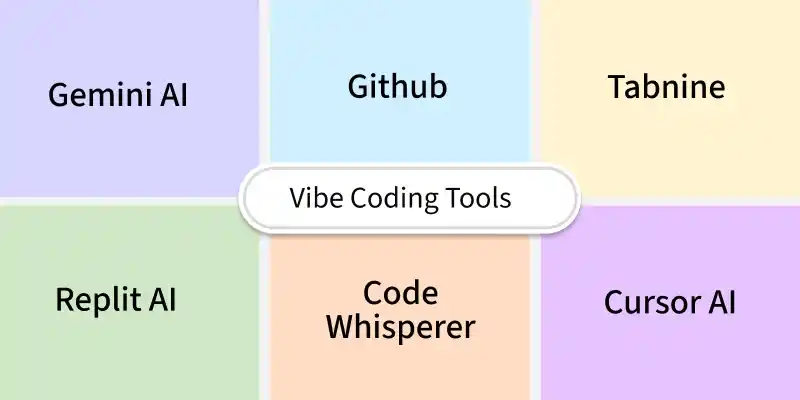
Source: geeksforgeeks.org
This is the gap that the FutureX playbook closes.
Step 1: Turn a Prompt into a Spec#
Every build starts with a conversation. The difference is what FutureX does with your words. Instead of immediately generating code, it asks clarifying questions and translates your answers into a structured specification: entities, user roles, workflows, and acceptance criteria.
A good starting prompt looks like this:
I want a multi-tenant SaaS where users can create projects, invite teammates, and track tasks. Each workspace has its own data isolation. Billing is out of scope for now, but the data model should not make it painful to add later.
FutureX responds with a spec, a proposed data model, and a task breakdown. You review it in plain English. This is the non-developer SaaS guide equivalent of getting the architecture reviewed before writing a single line of code. It is also the first and most important vibe coding best practice: never let the first prompt be the last word.

Source: techloghub.com
Step 2: Let FutureX Plan the Build, Then Execute#
FutureX is an AI agent for building SaaS, not a code autocomplete. That distinction matters. Where a vibe coding tool generates a response and stops, FutureX plans a sequence of steps and executes them with verification between each one.
The agent creates the project structure and configuration files, implements the data layer and migrations, builds authentication and authorization, generates tests alongside the features, and runs those tests, fixing failures before moving on.
This loop keeps technical debt manageable. Code is generated in small, reviewable increments, and each increment is checked against the spec before the next one starts. For a non-developer, that is the difference between a black box and a transparent process.
Step 3: Bake Security into the Build Loop#
Security is where vibe coding best practices matter most. FutureX treats it as a build step, not an afterthought.
Secrets and Configuration#
Environment variables are managed explicitly. The agent never hard-codes credentials and provides a template that keeps keys out of the repository. If a secret is committed, the workflow flags it.
Dependency and Vulnerability Checking#
Every dependency is pinned and scanned. When a package has a known vulnerability, FutureX proposes an upgraded version and runs the test suite to confirm nothing breaks.
Access Control by Default#
Default routes are protected. The agent applies authentication middleware, role checks, and input validation as part of the generated code. A non-developer should not have to know what CSRF or CORS are; FutureX handles those decisions and explains them in plain language when you review the pull request.
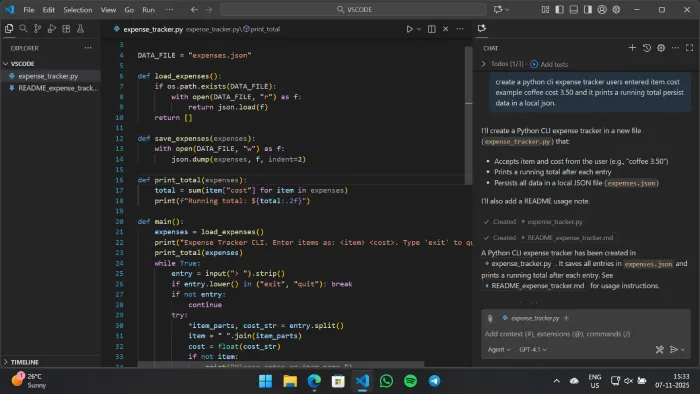
Source: geeksforgeeks.org
Step 4: Get to Production Without a DevOps Degree#
Once the code passes its tests, the next barrier is deployment. This is where most non-developer SaaS guides stop being helpful. FutureX does not stop.
The agent scaffolds a deployment target, configures the production database, sets up a CI/CD pipeline, and provides health checks and structured logging. When something breaks in production, the logs are correlated with the release that introduced the problem.
For the SaaS builder, production is reached through the same natural language workflow that started the project. Describe the deployment target — deploy to a single server with Docker, use Postgres, and enable automatic backups — and FutureX turns that into configuration, deploys it, and verifies that the health endpoint responds.
Step 5: Keep the Loop Alive#
A SaaS is never finished. Feature requests arrive, bugs surface, and the data model evolves. The FutureX playbook handles this as a continuous loop: describe the change, review the plan, let the agent implement and test it, then ship.
This is where early decisions are either paid down or compounded. By keeping every change small, tested, and verified, FutureX keeps the production system stable. AI code generation is not just about the first build; it is about the hundredth change.
The Bottom Line#
Vibe coding opened the door, but it did not build the house. The FutureX playbook is a non-developer SaaS guide that treats the entire lifecycle, from prompt to production and beyond, as one continuous agentic process. The core ideas are simple: start with a spec, build in verified increments, enforce security by default, and deploy with the same rigor you used to generate the code.
If you are building a SaaS without a development team, FutureX is the AI agent for building SaaS that fills the gap. Follow the playbook, and your first prompt becomes a production system instead of a prototype that stays on your laptop.
Related reading
Vibe Coding in VS Code: How FutureX Makes AI-Assisted Development Feel Natural
FutureX, the AI coding agent integrated into VS Code, enables vibe coding by allowing developers to describe features in plain language and receive working code, streamlining development workflows.
vibe coding5 min read
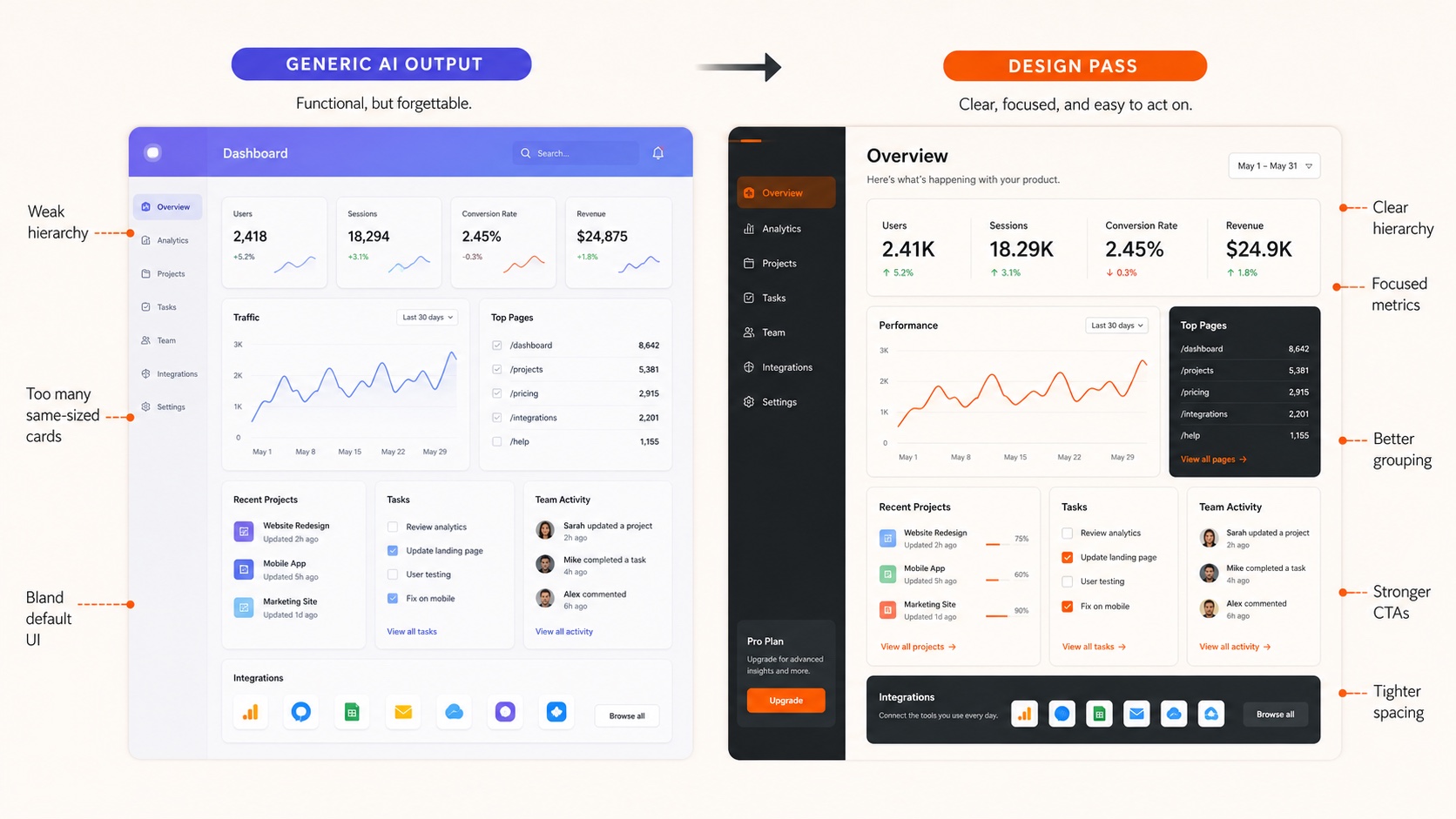
Breaking the Vibe-Coding Template with Design Fundamentals
Vibe coding produces generic AI-generated UI by default; this practical guide shows how FutureX applies typography, color theory, and visual hierarchy to create unique web design.
vibe coding6 min read

The Reality Check: What Vibe Coding Still Doesn't Do for You (and How FutureX Fills the Gaps)
An honest look at where vibe coding breaks down and how FutureX's iterative, human-in-the-loop workflow covers debugging, security, and scaling.
vibe coding5 min read