The Reality Check: What Vibe Coding Still Doesn't Do for You (and How FutureX Fills the Gaps)
An honest look at where vibe coding breaks down and how FutureX's iterative, human-in-the-loop workflow covers debugging, security, and scaling.
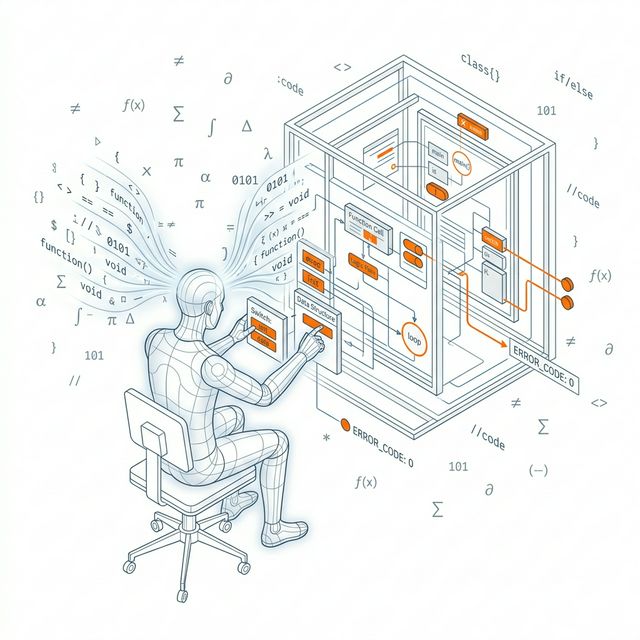
Vibe coding — describing what you want in plain language and letting an AI agent generate the application — feels like magic. For non-developers, it unlocks building tools that would have required months of study. But magic has a failure mode. The reality is that vibe coding stops working precisely at the point where software engineering starts: debugging broken logic, securing a real deployment, and scaling beyond a single script. FIM's coding agent, FutureX, is built to cover those gaps without turning you into a full-time engineer.
The Promise and the Pitfalls of Vibe Coding#
Vibe coding is the fastest way to go from an idea to a working prototype. Describe the UI, the data flow, the behavior, and the model does the heavy lifting. That is genuinely powerful. But the prototypes that vibe coding produces are often deceptively complete. The interface renders, the buttons respond, and everything looks great — until it isn't.
When the Code Runs but Doesn't Work#
The most common vibe coding pitfalls show up in the first real test. A form submits, but the data is lost. A date filter returns the wrong week. A background job silently times out. For a developer, these are debugging problems; for a non-coder, they are walls. You can paste the error into the chat and ask for a fix, but the next error appears seconds later, and the loop repeats.
Debugging with AI in a purely conversational setting is a cycle of guess-and-check. The model cannot see your state, cannot run your tests, and cannot inspect the failing request. It is answering blind.
Source: futureim.medium.com
AI Code Review Security: The Hidden Risk#
Security is where vibe coding gets genuinely dangerous. AI models are trained on vast amounts of public code, and public code contains a lot of insecure patterns. Hardcoded API keys, missing authentication checks, SQL queries built by string concatenation, overly permissive CORS policies — these appear in generated output as casually as any other line.
AI code review security is not about trusting the model's judgment; it is about establishing a checkpoint where a human deliberately looks at what was produced. The problem for non-coders is that a code review is only as good as your ability to read code. FutureX addresses this by making the review happen at a level you can actually engage with: explaining what each change does, flagging risky patterns in plain language, and never assuming that because the code works, it is safe.
Human-in-the-Loop by Default#
FutureX's iterative workflow treats every change as a proposal. The agent generates code, summarizes what it did and why, and waits for your approval before moving on. That human-in-the-loop design turns the security review from a wall into a conversation. You do not need to be a security expert; you need to be present and curious. FutureX will tell you when a change touches authentication, data access, or external services, which are exactly the places where AI-generated code tends to cut corners.
Scaling AI-Generated Code#
The second wall is scale. Vibe coding works beautifully for a single script or a small app. Then the app grows. New features are added as fresh prompts, and each prompt produces another file that the model believes fits the project. Soon you have three different ways of calling the same API, a database schema that contradicts itself, and a startup sequence that depends on the order in which files were generated.
Scaling AI-generated code is not about writing more code; it is about maintaining coherence as the codebase grows. FutureX approaches this from the terminal rather than a disposable chat window. The FutureX terminal workflow means the agent operates inside your actual project — reading the existing structure, following the conventions already in place, and making changes that fit the codebase rather than floating on top of it.

Source: opc.community
Tests as the Safety Net#
Part of scaling is verification, and verification requires tests. FutureX can write tests alongside features and run them as part of the workflow. When a new change breaks an old behavior, you find out in the same session, not in production. For vibe coders, this is the difference between a hobby project and something you could actually deploy.
How FutureX's Iterative Workflow Fills the Gaps#
The core difference between FutureX and a generic chat assistant is the loop. In a chat, the conversation is the product; the code is a side effect. With FutureX, the project is the product, and the conversation is the control surface.
Every task is broken into small, reviewable steps. Each step includes a plain-language explanation of what changed and why. You can approve, request changes, or ask questions. This is the practical version of vibe coding best practices: keep the human in the loop, verify each increment, and never let the agent run unattended on code you do not understand.
Debugging with AI, Done Properly#
When something breaks, FutureX can actually investigate. It reads the error, traces the relevant code paths, runs the failing test, and iterates on the fix. Then it explains what was wrong in terms you can follow. That is debugging with AI as it should work: the machine does the tedious investigation, and the human stays in control of the decisions.
Source: futureim.medium.com
Vibe Coding Best Practices, Built In#
- Treat the AI as a pair programmer, not an oracle. Review everything it proposes.
- Keep security conversations explicit. Ask FutureX to flag anything touching auth, data, or secrets.
- Write tests as you go. FutureX generates them, and passing tests are the only honest definition of "done."
- Stay in the terminal. Working inside the real project prevents the disjointed, disconnected-output problem that plagues chat-based coding.
- Accept that scaling is an engineering problem. Use tools that were built for engineering, not just for conversation.
Conclusion#
Vibe coding is not a myth, but it is incomplete. It gets you from zero to a prototype faster than anything before it, and then it leaves you at the exact moment the real work begins. Debugging, security, and scaling are not optional extras; they are the difference between software that demos well and software that survives contact with users.
FutureX does not ask you to become a developer. It asks you to stay in the process: review the changes, ask the questions, and let the agent handle the code. That is the reality check, and it is also the way forward. Vibe coding gets you started; FutureX gets you finished.
Related reading
Scaling with FutureX: How to Maintain Code Quality as Your AI-Built Project Grows
Discover how FutureX helps you refactor, add tests, and manage technical debt as your AI-built project scales — without sacrificing code quality.
FutureX4 min read
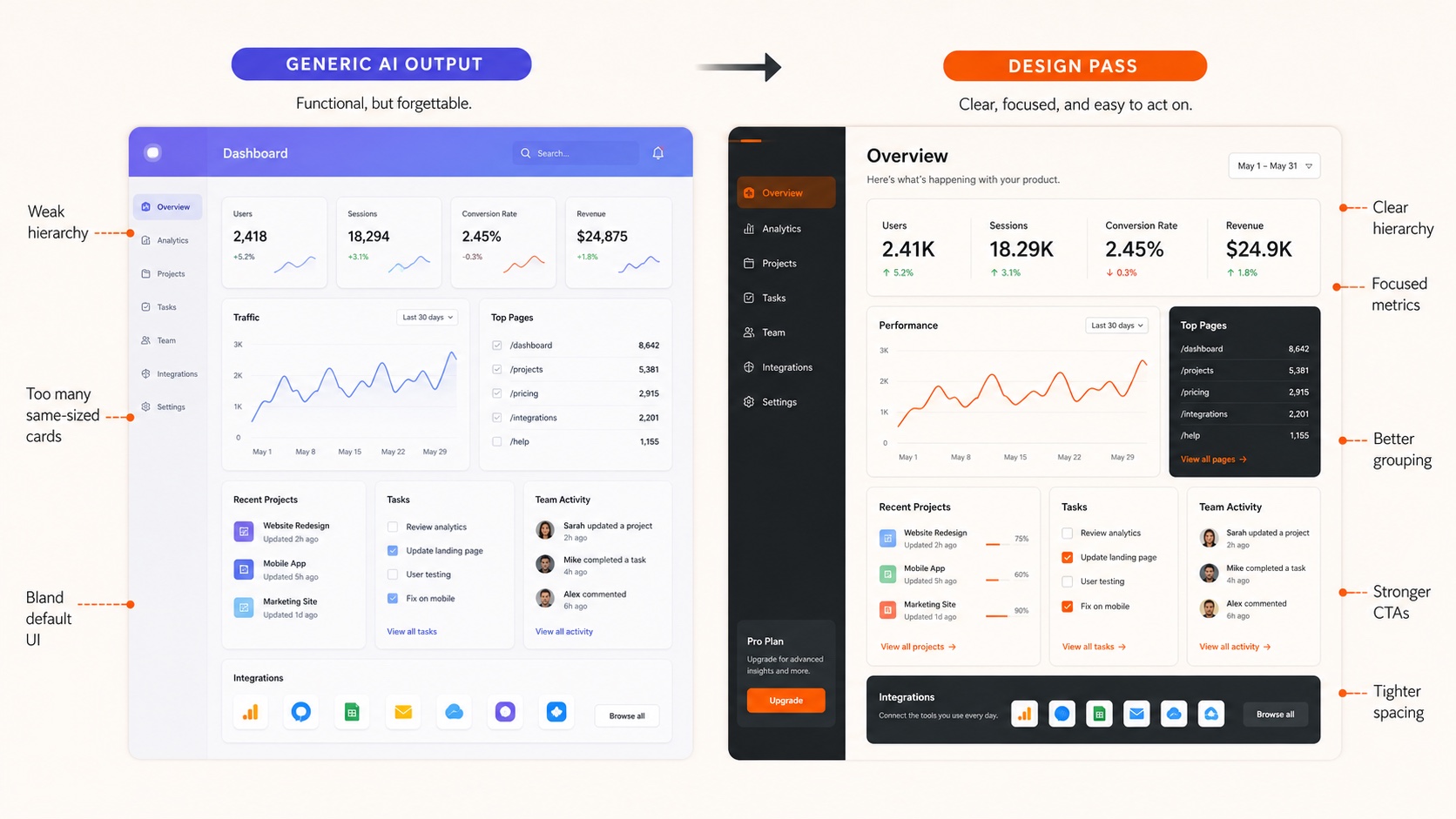
Breaking the Vibe-Coding Template with Design Fundamentals
Vibe coding produces generic AI-generated UI by default; this practical guide shows how FutureX applies typography, color theory, and visual hierarchy to create unique web design.
vibe coding6 min read

From Prompt to Production: The FutureX Playbook
A step-by-step FutureX playbook for non-developers that turns a natural language prompt into a production-ready SaaS while avoiding the debt and security traps of vibe coding.
FutureX5 min read