Beyond the Vibe: Choosing Between Vibe Coding and Agentic Engineering
Vibe coding and agentic engineering are not quality levels but different practices for different contexts — here is a senior developer's framework for choosing between exploration and production.

The conversation around AI-assisted development has settled into a false binary: vibe coding for the careless, "real" engineering for the serious. That framing is wrong, and senior developers can feel it. Vibe coding and agentic engineering are not quality levels on the same ladder. They are different practices calibrated for different contexts — one for exploration, the other for production. Choosing between them is a judgment call, not a status signal.
Vibe Coding Is a Mode of Exploration#
Vibe coding describes a workflow where a developer sketches intent in natural language and lets an AI agent translate it into running code with minimal intervention. The developer reads the output, adjusts the prompt, and iterates. It is fast, fluid, and deliberately loose. The point is to learn what is possible before committing to anything.
That looseness is a feature, not a defect. Vibe coding is the right tool when the goal is a disposable prototype, a one-off data munging script, a spike to validate an approach, or a local tool whose failure costs nothing. In those contexts, imposing full engineering discipline is overhead that buys nothing. The senior developer recognizes exploration when they see it and refuses to gold-plate it.

Source: tripleminds.co
The trap is not using vibe coding. The trap is using it where the output outlives its context — where a quick script becomes a critical path, or a prototype gets promoted to a customer-facing service without ever changing its process.
Agentic Engineering Is a Mode of Production#
Agentic engineering treats the AI agent as a member of the engineering team that happens to write a lot of code. That means the same obligations that apply to any contribution: it must be reviewed, tested, observable, and deployable. It means the agent works inside a scaffold of CI/CD, code review, security scanning, and environment parity. The definition of done is not "the code runs" but "the code runs in production under load, is monitored, and can be rolled back."
Where vibe coding optimizes for speed of insight, agentic engineering optimizes for reliability of delivery. Production code carries an implicit contract: it has users, it holds data, it has an uptime number attached to it. When an agent writes production code, the surrounding system must make that contract enforceable.
This is not about being stricter for its own sake. It is about acknowledging that the cost structure of production work is different. A bug in an exploration script costs minutes. A bug in production code costs a pager alert, an incident postmortem, and possibly a customer. The practice must match the blast radius.
The Senior Developer's Decision Framework#
How do you decide which practice applies? The senior developer's decision framework evaluates the task along a handful of dimensions. Score each one, and the answer becomes obvious.
Blast Radius#
What happens if the output is wrong? If the answer is "nothing much," vibe coding is appropriate. If the answer involves users, money, or legal exposure, agentic engineering is the floor. Blast radius is the single strongest signal.
Reversibility#
Can the work be discarded freely? A prototype that will be thrown away is reversible by definition. A migration script that mutates production data is not. High reversibility invites vibe coding; low reversibility demands engineered safeguards.
Requirements Clarity#
Vibe coding thrives on fuzzy, open-ended goals — "explore what this API can do." Agentic engineering requires defined acceptance criteria, because production code must be verifiable. If the requirements are still being discovered, explore first. The moment they are nailed down, switch modes.
Audit Trail#
Who needs to understand the code later? A personal script nobody else will read has different review requirements than a service owned by a team. Production code needs comments, tests, and a history that explains why decisions were made. Agentic engineering preserves that audit trail; the free-form iteration of vibe coding tends not to.
Team Throughput#
When a small team needs to move fast with blast radius under control, vibe coding multiplies output enormously. But as the team and system grow, unconstrained agent output becomes a coordination problem. Multiple agents editing the same production repository require the discipline of agentic engineering to keep the system coherent.
Source: dev.to
Applying the Framework in Practice#
A senior developer does not choose "the AI way" or "the careful way." They choose per task, the way they already choose between a REPL and a test suite.
For a weekend project or a spike: vibe code, and enjoy the iteration speed. For a migration to a new auth provider: agentic engineering, with review gates and rollback plans. For internal tooling that only you will run: vibe code, but checkpoint what you learn. For the billing service: agentic engineering, without negotiation. The framework exists to make these calls explicit instead of accidental.
The pragmatic hybrid is also legitimate: use vibe coding to explore the shape of a solution, then hand the resulting understanding — rather than the raw code — to an agentic workflow that rebuilds it properly. The exploration informs the production work, but does not masquerade as it.
FutureX Is Built for the Production Side#
FIM's coding agent, FutureX, is designed for the contexts where the decision framework lands on production. FutureX operates with structured task definition, explicit acceptance criteria, and a workflow that keeps the developer in the review loop. It is engineered so that agent-generated code arrives with the properties production code needs: it is scoped, reviewable, and testable, and it fails loudly in the safety of CI rather than silently in production.
That does not make FutureX the wrong tool for exploration — but it is optimized for the other end of the framework. When the blast radius is real, when the code must be auditable, when the requirements are known and the bar is production grade, FutureX is the agent a senior developer can trust to work at that bar.
Positioning FutureX as production-grade is not a claim about raw model capability; it is a claim about workflow design. Any agent can emit code. The question is whether the surrounding practice turns that code into production-grade outcomes. FutureX's answer is to make agentic engineering the default operating mode, with the guardrails and review mechanics baked in.
Source: codex.danielvaughan.com
The Practice Must Fit the Context#
Vibe coding vs agentic engineering is not a maturity ladder. The senior developer who sneers at vibe coding is as mistaken as the one who ships a prototype to production and calls it done. The right practice is the one that matches the context: exploration should be fast and disposable, production should be rigorous and traceable.
Adopt the framework, score the task, and choose deliberately. Use vibe coding for the questions, and agentic engineering — with FutureX — for the things that must stand up in production. That is what separates senior judgment from both hype and dogma.
Related reading
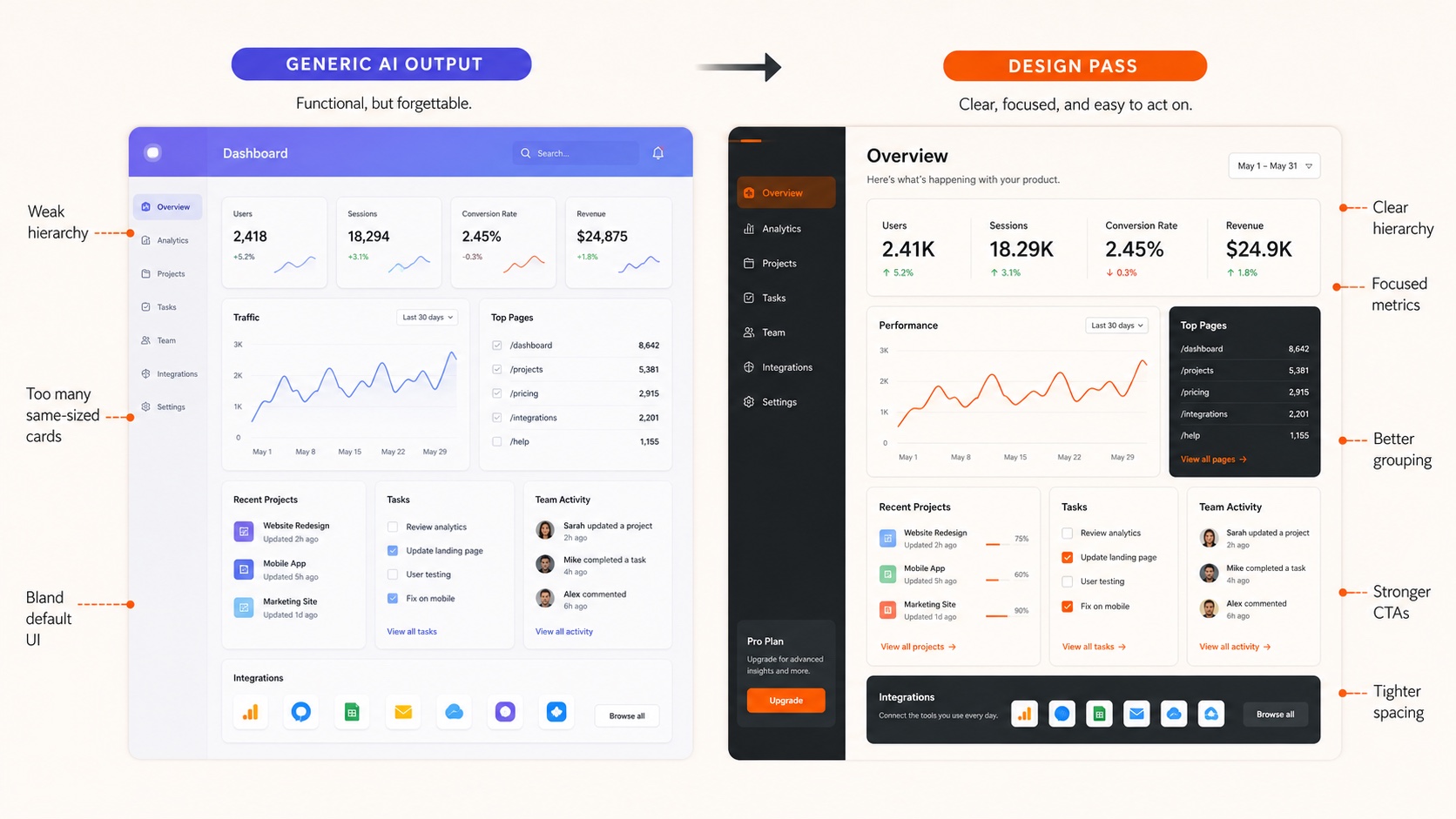
Breaking the Vibe-Coding Template with Design Fundamentals
Vibe coding produces generic AI-generated UI by default; this practical guide shows how FutureX applies typography, color theory, and visual hierarchy to create unique web design.
vibe coding6 min read

From Prompt to Production: The FutureX Playbook
A step-by-step FutureX playbook for non-developers that turns a natural language prompt into a production-ready SaaS while avoiding the debt and security traps of vibe coding.
FutureX5 min read
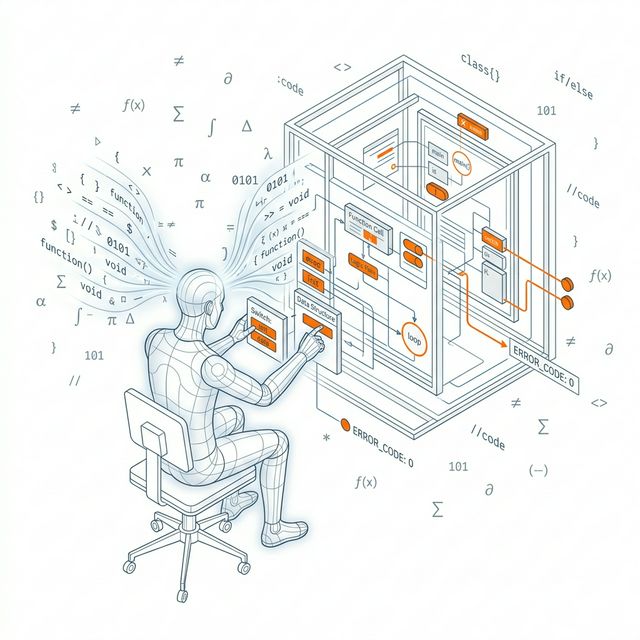
The Reality Check: What Vibe Coding Still Doesn't Do for You (and How FutureX Fills the Gaps)
An honest look at where vibe coding breaks down and how FutureX's iterative, human-in-the-loop workflow covers debugging, security, and scaling.
vibe coding5 min read