Vibe Coding's Next Wave: Decentralized Agents
Mark Zuckerberg's push for decentralized AI is reshaping vibe coding, and FutureX is built to keep your agent stack portable across hosted and local runtimes.

Vibe coding turned software development into a conversation. You describe the behavior you want in plain language, and an AI agent translates that into diffs, tests, and running services. For most of the past two years, that conversation has been mediated by centralized infrastructure: your prompts travel to a hosted model, the completions come back over the wire, and every file you touch is indexed on someone else's servers. The next wave of vibe coding is defined by decentralization. Mark Zuckerberg's highly public push for decentralized AI — open models, local inference, and portable agent stacks — is accelerating a shift where developers run agents on their own hardware and own every layer of the stack. This post examines that shift and the role FutureX plays in it.
The Zuckerberg Effect: Decentralization Goes Mainstream#
Mark Zuckerberg has repeatedly argued that AI should not be a single centralized service controlled by one vendor. His position, echoed across Meta's open model releases, is that users and developers deserve choice over how AI runs, where data lives, and who can build on top of it. Whatever you think of the messenger, the effect is measurable: open-weight models have become the default starting point for serious local AI projects, and the surrounding tooling — inference runtimes, agent frameworks, vector stores — has matured to production quality.
For vibe coding specifically, the Zuckerberg Effect matters because it legitimizes a question developers were already asking: why should your entire agentic loop depend on a hosted API? When models are open and agents are local, the loop stays intact even when the network disappears. The prompt, the tool call, the file edit, the terminal command, the test run — all of it happens on the machine you control. No telemetry except what you choose, no rate limits, no silent deprecation of the API you built your workflow around.

Source: apnews.com
Why Decentralized AI Changes the Vibe#
Vibe coding is a feedback-loop practice. The quality of the experience depends on how quickly the agent can act, observe a result, and correct course. Centralized setups add latency and boundaries at every step: context windows have hard ceilings, large repositories must be uploaded before they can be understood, and each request queues behind shared capacity. Decentralized AI removes most of those boundaries by construction.
The economics flip#
Hosted agents price every turn. When each additional agentic step — a file read, a grep, a test invocation — goes through an API, marginal cost compounds quickly. Run a model locally and the marginal cost of an extra agent turn approaches zero. That flips the economy of vibe coding: instead of optimizing prompts to minimize token spend, you let the agent explore. It can read more files, try more approaches, and keep more context. The binding constraint becomes your hardware, not your wallet.
What you actually own#
Owning your entire stack is more than a licensing question. It means owning the model weights, the agent runtime, the tool definitions, the conversation state, and the artifacts generated along the way. It means the agent can be audited, extended, and pinned to a version you trust. For teams working on proprietary codebases, it removes the uncomfortable reality that a third-party service sees the code before you commit it. Decentralized agents make the source of truth local, which is already the default assumption for most engineering organizations.
The Reference Stack for Local Vibe Coding#
A practical decentralized vibe coding setup has three layers, and each one has open source options mature enough for daily use.
Inference runtime#
The model is the lowest layer. Open-weight models served through Ollama, vLLM, or llama.cpp now run efficiently on consumer GPUs, Apple Silicon, and even CPU-only machines. The point is not that local models beat the largest hosted frontier models on every benchmark; it is that they are good enough for a meaningful slice of coding tasks, and they are improving at a pace that makes the trade-off increasingly attractive.
Agent runtime#
The agent layer is where the vibe actually happens. An agent runtime holds the loop: it takes your natural-language instruction, breaks it into steps, invokes tools, reads results, and iterates. In a decentralized setup, this runtime must be model-agnostic — able to drive a hosted fx-pro model for heavy lifting or a local fx-mini model for routine edits over the same interface.
Tooling and state#
The final layer is the glue: IDE extensions, terminal integrations, git hooks, and local storage for conversation history. Because every piece runs locally, you can wire the agent into your editor exactly the way you want, index your monorepo with a local vector store, and keep the entire trace in a file format you can diff.
FutureX in the Decentralized Shift#
FutureX, the coding agent inside the FIM platform, was designed with this split in mind. The agent itself is independent of where the model runs. Against a hosted endpoint, FutureX can use the highest-capability models — fx-pro for complex architectural work, fx-fast for interactive sessions. Against a local runtime, FutureX targets the same interface at whatever model you have: fx-mini for fast, focused edits, fx-eco for long-running background tasks where cost efficiency matters more than raw capability. The switch is a configuration change, not a rewrite.
This model-agnostic design is central to the open source argument. Because FutureX speaks a standard protocol to the model layer, the agent stack remains portable. If you start with a hosted model and later want to move to local weights — for privacy, for cost, for the principle of owning your stack — the migration path is short. Your prompts, your tool definitions, and your automation scripts stay the same. Only the backend changes.
There is also a security angle that matters more as AI agents gain access to production systems. A decentralized setup keeps the entire agent loop inside your trust boundary. Repository contents, environment variables, and execution traces never leave the machine. For regulated industries and for developers who simply prefer not to send private code to a third party, that changes the calculus from "can we justify using AI agents" to "can we justify the centralized alternative."
The Open Source Ecosystem Is the Enabler#
None of this would be possible without the open source work that surrounds vibe coding: open-weight model releases, local inference runtimes, agent frameworks, and a growing collection of composable tools. The Zuckerberg Effect amplified a trend that was already underway — open source is what makes decentralized AI credible. A closed model with a local runtime would still tie you to a vendor; open weights mean the model itself is reproducible, auditable, and forkable.
Conclusion#
The next wave of vibe coding will be defined less by the quality of a single frontier model and more by the architecture of the agent stack around it. Decentralized AI turns the agent from a hosted utility into infrastructure you own. The Zuckerberg Effect accelerated the conversation, but the underlying forces — privacy, economics, auditability, and the simple desire to control your own toolchain — were already pulling developers in that direction. FutureX's role is to make the agent layer portable across both worlds, so whether you are running an fx-pro session against a hosted model or an fx-eco session entirely on your laptop, the experience stays coherent and your stack stays yours.
Related reading
FutureX vs. Centralized AI: The Open-Source Decentralized Shift
FutureX represents a new class of open-source, decentralized AI agents that give developers full control over vibe coding workflows, unlike closed models from OpenAI and Anthropic.
decentralized AI9 min read
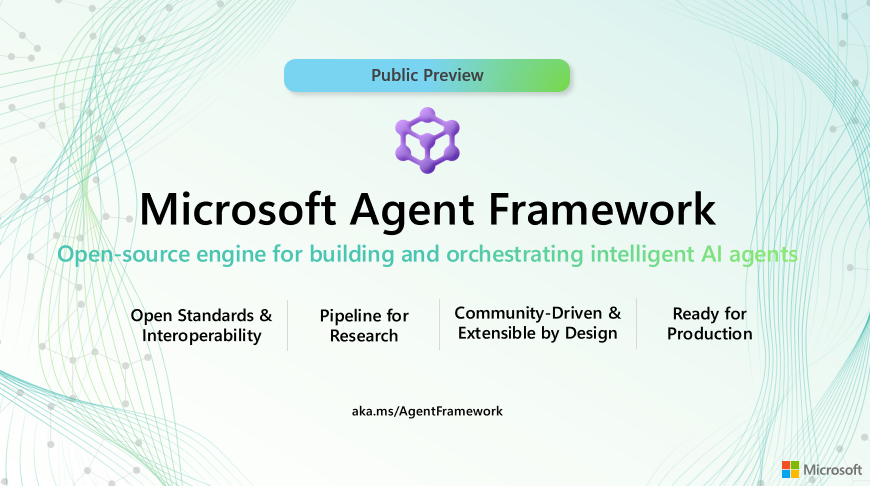
The Open-Source Agent Framework Race: Microsoft's Move and What It Means for AI Coding
Microsoft's Agent Framework enters a crowded open-source field, and developers need to understand how it and other AI agent frameworks shape vibe coding workflows with agents like FutureX.
Microsoft Agent Framework7 min read

Why Vibe Coders Should Care About AI Centralization
The centralization-vs-decentralization AI debate shapes vibe coding directly through model access, costs, and innovation, and model-agnostic agents like FutureX keep your workflows open.
vibe coding5 min read