The Open-Source Agent Framework Race: Microsoft's Move and What It Means for AI Coding
Microsoft's Agent Framework enters a crowded open-source field, and developers need to understand how it and other AI agent frameworks shape vibe coding workflows with agents like FutureX.
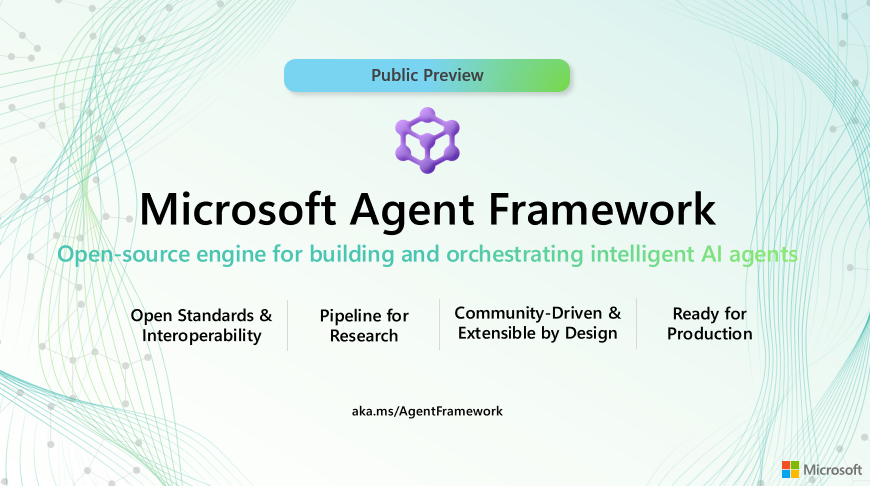
The race to define the default open-source framework for building AI agents is heating up, and Microsoft just put a serious piece of hardware on the table. Its new Agent Framework — a cross-platform orchestration layer that builds on the Semantic Kernel ecosystem — is positioned less as a standalone SDK and more as a unifier for tools like AutoGen and Semantic Kernel. For developers who spend their days writing vibe coding workflows, this matters. It changes how you wire together coding agents like FutureX, how you audit what those agents do, and how you scale from a single autonomous loop to a full multi-agent system.
This post breaks down Microsoft's Agent Framework, compares it with other open-source AI agent frameworks, and shows concrete ways to use these tools to build vibe coding pipelines around FutureX.
What Microsoft Agent Framework Actually Adds#
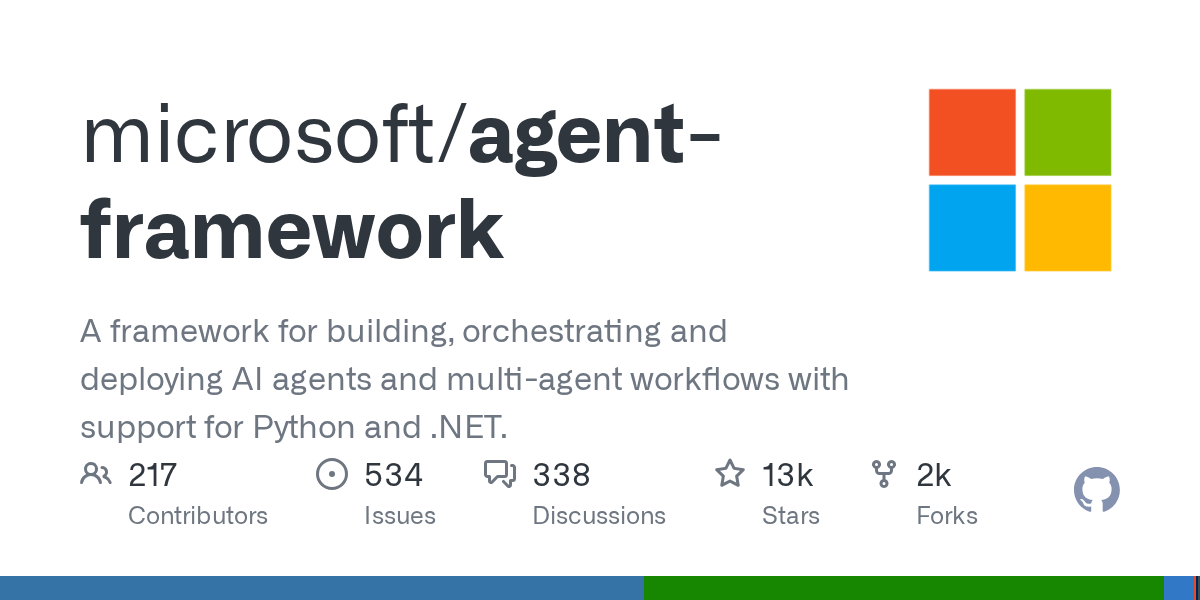
Microsoft's Agent Framework is an open-source runtime and coordination layer designed to let you build agents that work across contexts: local processes, cloud services, even other agents. It isn't a replacement for Semantic Kernel or AutoGen; instead, it sits underneath both, providing common abstractions for agent state, tool invocation, and lifecycle management.
Key features that stand out:
- Cross-platform and language-agnostic core: The framework models agents as state machines, making it easier to port them between Python and .NET without rewriting orchestration logic.
- Pluggable execution backends: You can run the same agent definition on a local worker, in a container, or in a managed cloud service. The execution backend is an interface, not a hard-coded runtime.
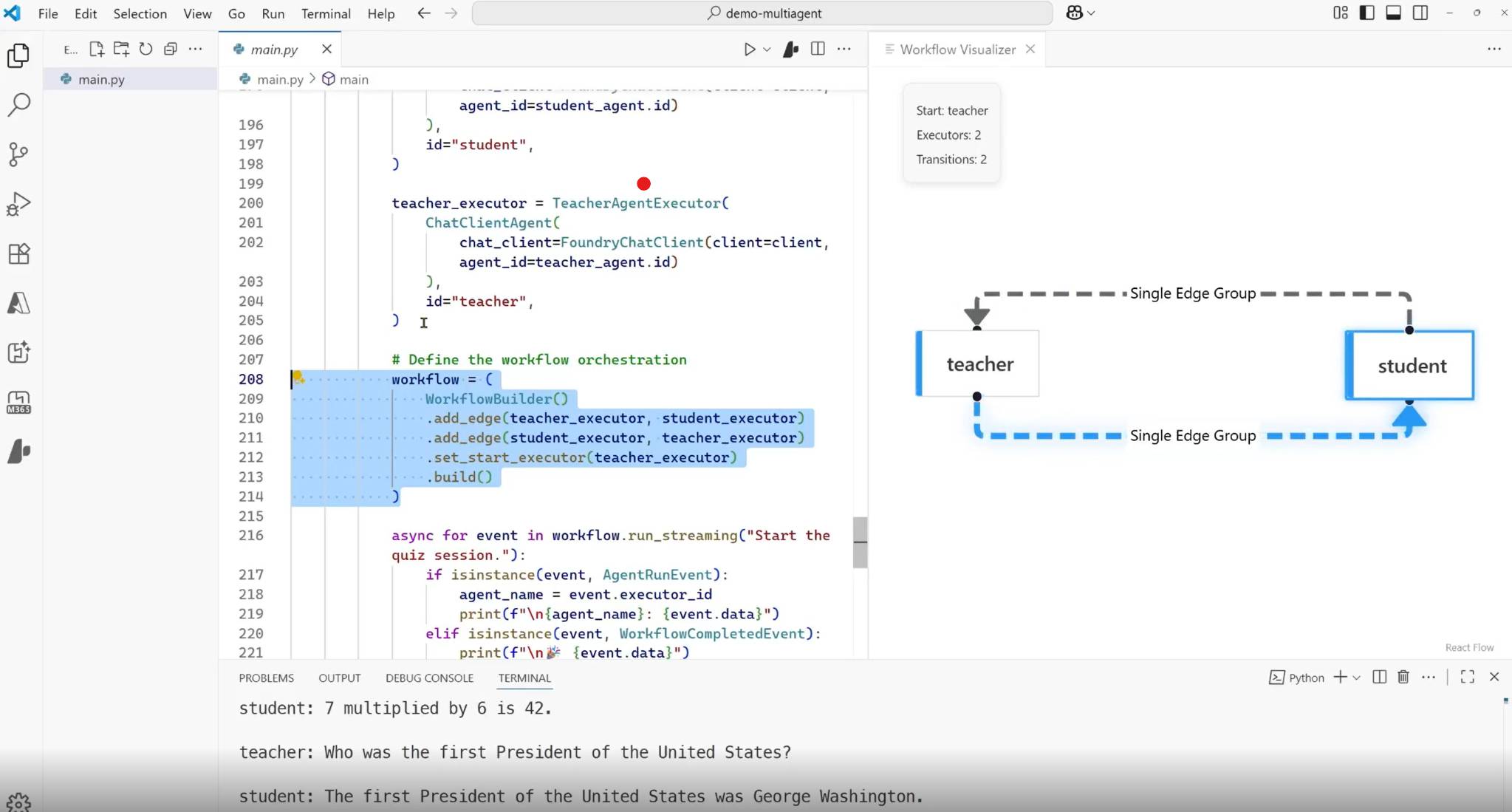
- Built-in handoff semantics: Multi-agent systems are first-class. One agent can yield control, request another agent's output, or run a sub-agent in a bounded context.
- Observability hooks: Every agent transition can emit events for tracing, logging, and metric collection. That's a huge advantage for vibe coding, where you need to see exactly why an agent's edit broke a build.
Source: github.com
One important detail is that the framework is deliberately light on opinions about how you write tool code. You define tools as plain functions or REST endpoints, and the agent decides when to call them. That maps well to how most developers already use FutureX: as a code-aware agent that invokes file editors, test runners, and package managers through clear interfaces.
The role of Semantic Kernel under the hood#
Microsoft's Agent Framework extends Semantic Kernel rather than replacing it. If you've used Semantic Kernel, you already understand a lot of the agent framework's vocabulary: plugins, functions, and prompt templates. The new layer adds a formalized agent model, so your existing Semantic Kernel plugins can become agent tools with minimal changes. That lowers the barrier for teams that have already invested in Microsoft's ecosystem.
Comparing Open-Source AI Agent Frameworks#
Microsoft is late to a busy room. Several open-source AI agent frameworks have already built strong communities and opinionated patterns for orchestrating agents. Here is a practical comparison for someone building coding workflows.
AutoGen (now merged into Microsoft Agent Framework)#
AutoGen pioneered the conversation-as-orchestration model. Agents talk to each other through structured messages, and you can attach human-in-the-loop checkpoints. Its strength is flexibility, but that same flexibility often leads to verbose configuration files and non-deterministic behavior in larger systems. Microsoft's Agent Framework takes AutoGen's best ideas — particularly the notion of agent-to-agent conversation — and puts them inside a more disciplined runtime.
CrewAI#
CrewAI takes a role-based approach. You define agents with specific goals, tools, and memory, then assemble them into a crew that processes tasks in a planned order. For vibe coding, CrewAI shines when you want separate agents for planning, implementation, and review. The downside is that CrewAI agents tend to be more rigid; handoffs are explicit and less dynamic than what you get with Microsoft's state-machine model.
LangGraph#
LangGraph is the graph-based framework from the LangChain ecosystem. Agents are nodes, and edges represent conditional transitions. It's excellent for building deterministic multi-agent systems where you need strict control over when to invoke a coding agent like FutureX versus a static analysis tool. LangGraph gives you a visual mental model, and its checkpointing is far ahead of most alternatives. However, its learning curve is steep, and it pulls in a larger dependency tree than some developers want.
OpenAI Agents SDK#
The OpenAI Agents SDK is a lightweight alternative that focuses on agent loops and handoffs. It's concise and easy to embed inside existing Python services. But because it was developed by OpenAI, its design assumes you will use OpenAI-hosted models for the brain of each agent. With open-source frameworks, you can swap in FutureX or any other coding agent without fighting the SDK's assumptions.

Source: github.com
Where FutureX fits in#
None of these frameworks need to own the coding intelligence itself. FutureX is available through FIM's platform, and you can treat it as a headless code-editing service that any of these frameworks can call. The choice of agent framework is really a choice about orchestration. Do you want the determinism of a graph? The flexibility of a state machine? The simplicity of role-based crews? The answer depends on how much autonomy you want in your vibe coding workflow.
Building Vibe Coding Workflows with FutureX#
Vibe coding is about steering an AI through loosely defined requirements, letting it write code, then reviewing and correcting loops until the result is acceptable. The best agent framework for vibe coding is the one that makes those loops easy to express and safe to run.
A practical workflow with Microsoft Agent Framework and FutureX looks like this:
- Specify intent. A top-level planner agent parses a natural-language request and breaks it into a phased task list.
- Invoke FutureX. For each coding task, the framework hands a structured prompt to FutureX. FutureX edits files, runs tests, and returns a diff summary.
- Inspect and gate. A reviewer agent (or a human via a UI) inspects the diff. If the diff fails static analysis, it routes back to FutureX with error logs.
- Commit and report. Once validation passes, a final agent writes a commit message summarizing what was changed and why.
In code, using Microsoft's Agent Framework with FutureX as an external tool looks roughly like this:
from agent_framework import Agent, Tool, orchestrator

async def run_futurex(prompt: str, workspace_path: str) -> str:
    # This calls FIM's API to invoke FutureX with a given prompt and workspace.
    result = await fim_agent.edit(prompt=prompt, path=workspace_path)
    return result.diff_summary

coding_tool = Tool(name="FutureX", invoke=run_futurex)
planner = Agent("Planner", tools=[coding_tool])
reviewer = Agent("Reviewer", tools=[static_analysis_tool])

workflow = orchestrator.create_workflow(planner, reviewer)
await workflow.run("Add rate limiting to the public API")
The key is that FutureX isn't coupled to any particular orchestration model. It exposes a clean input-output contract: prompt and workspace in, diff and metrics out. That makes it a drop-in tool for CrewAI roles, LangGraph nodes, or Microsoft's agent state machine.
Patterns that work#
Three patterns consistently produce better vibe coding results in multi-agent systems:
- Cycle limits: Always cap the number of times an agent can ping-pong between planner and reviewer. A hard limit prevents runaway loops that burn tokens and stall progress.
- Artifact-based handoffs: Instead of passing raw messages, have agents write artifacts (diffs, test logs, design notes) to a shared store. This makes the system auditable and resumable after a crash.
- Human checkpoint in the middle: For non-trivial architectural changes, force a manual review between the first FutureX pass and the final refactor. Vibe coding works best when the human keeps strategic control.
Selecting a Framework for Your Coding Stack#
The open-source agent framework race is not about finding the one framework to rule them all. It's about matching orchestration semantics to your team's tolerance for autonomy and your need for transparency.
Choose Microsoft Agent Framework if you already use Semantic Kernel, want a formal state-machine model, or need a runtime that can migrate between local development and cloud deployment without rewriting the agent logic.
Choose LangGraph if you need deterministic, auditable control flow with strong checkpointing and don't mind the dependency weight.
Choose CrewAI if you want the simplest role-based mental model and your workflows naturally decompose into a fixed pipeline of specialist agents.
Choose a lighter SDK if you're embedding a single agent loop into an existing service and don't need full multi-agent chatter.
Source: devblogs.microsoft.com
No matter which framework you pick, open source is the right call for vibe coding. It lets you inspect how tools are invoked, override default behaviors, and add your own logging. Proprietary frameworks hide those details behind a black box, which is dangerous when the agent writes code into your production repository.
The Road Ahead#
Microsoft's Agent Framework legitimizes the idea that agent orchestration deserves a dedicated runtime layer, not just a library of helpers. Its arrival will push other open-source AI agent frameworks to improve their observability and cross-language story. For vibe coders, the immediate benefit is choice. You can build a multi-agent system with FutureX at the core, using whichever orchestration style fits the task, and switch later without rewriting your agent tooling.
The frameworks will keep evolving, but the underlying contract is stable: an agent receives a prompt, operates in a workspace, and produces artifacts. FutureX already fits that contract. The race is about making the surrounding system more predictable, more observable, and more useful for real coding work. That's good news for anyone who wants to code at the speed of thought.
Related reading
Vibe Coding's Next Wave: Decentralized Agents
Mark Zuckerberg's push for decentralized AI is reshaping vibe coding, and FutureX is built to keep your agent stack portable across hosted and local runtimes.
decentralized AI6 min read
FutureX vs. Centralized AI: The Open-Source Decentralized Shift
FutureX represents a new class of open-source, decentralized AI agents that give developers full control over vibe coding workflows, unlike closed models from OpenAI and Anthropic.
decentralized AI9 min read

Why Vibe Coders Should Care About AI Centralization
The centralization-vs-decentralization AI debate shapes vibe coding directly through model access, costs, and innovation, and model-agnostic agents like FutureX keep your workflows open.
vibe coding5 min read