FutureX vs. Centralized AI: The Open-Source Decentralized Shift
FutureX represents a new class of open-source, decentralized AI agents that give developers full control over vibe coding workflows, unlike closed models from OpenAI and Anthropic.
The AI agent ecosystem is splitting into two camps. On one side are the centralized platforms from OpenAI and Anthropic, which offer powerful models behind opaque APIs. On the other is the new open-source movement, where developers run, modify, and trust AI agents on their own infrastructure. FutureX is designed for that second world: an AI agent that thrives in a decentralized AI ecosystem and turns vibe coding from a closed experiment into an open practice.
The Centralized AI Default#
For the last few years, "AI agent" has mostly meant a black box. OpenAI and Anthropic host their models on private infrastructure, expose them through rate-limited APIs, and decide what the agent can and cannot do. The developer's job is to prompt, chain calls, and hope the provider does not change behavior overnight. Centralized AI is convenient, but it is also fragile. You do not own the agent's memory, its tools, or its execution environment. You are renting behavior, and the provider retains the right to reshape that behavior whenever it ships a new safety policy or updates a model's latent preferences.
This model creates a subtle but serious problem for serious development work. When the agent's actions are opaque, debugging becomes guesswork. When the context window is truncated on a server you cannot inspect, you lose the thread of a multi-hour vibe coding session. When fine-tuning or custom tooling is forbidden, you are stuck with the provider's opinion of what coding assistance should look like. None of that is acceptable for developers who treat their toolchain as part of their own craft.
The open-source movement takes a different stance. The weights are available to inspect, the serving layer is under your control, and the agent's tools can be extended with anything from a small shell script to a local vector database. That shift matters for vibe coding, because vibe coding is not just about generating text; it is about building a workspace that reacts to you in real time.
What Decentralized AI Actually Changes#
Decentralized AI is not simply about where the model runs. It is about who controls the loop between the model, the tools, and the data. In a centralized setup, every aspect of that loop is mediated by a third party. In a decentralized setup, the developer owns the whole circuit.
From API Boundaries to Local Control#
When you use a centralized AI agent, every action runs through a hosted gateway. The provider observes the context, applies global policies, and gates access to third-party services. If you want the agent to call an internal API or read a file from a private repository, you first have to tunnel through a compliance layer that was not designed for your specific workflow. With a decentralized AI agent like FutureX, the agent runs in your environment. You decide which models to call, which tools are available, and what happens to the conversation history. The agent becomes an extension of your development machine rather than a guest on someone else's.
That local control is not just a privacy feature. It also gives you the ability to swap model providers on the fly. A disruptive task might call for the raw capability of fx-pro, while a quick refactor might be better served by the cheaper, faster response time of fx-eco. FutureX treats model selection as a routing decision inside your own stack, not a monthly subscription change on a vendor dashboard.
Agent Identity and Portability#
In a centralized ecosystem, your agent's identity lives on the provider's servers. Move to a different tool and you lose the context, the custom instructions, and the integration with your local codebase. FutureX keeps the agent's state in portable formats. You can export a project's context, share it with a teammate, and continue the same session on another machine. This is a fundamental shift for teams that practice vibe coding across different hardware and trust boundaries.
Portability also composes with version control. Because the agent's memory is files, you can commit that memory to a repository, review changes, roll back a bad decision, and create branches for alternative approaches. A vibe coding session becomes as reproducible as any other part of your codebase.

Why FutureX Fits the Open-Source Movement#
FIM built FutureX around the assumption that the best AI agent is one you can run anywhere. FutureX supports multiple model tiers — fx-pro, fx-fast, fx-mini, and fx-eco — but it does not force you into a single closed runtime. The agent is first-class in open-source development workflows: it reads your repository, understands your local tools, and can be wired into the same CI/CD pipeline that ships your code. It can run as a local CLI, as a background daemon, or inside a container in your cluster. That flexibility is the essence of the open-source ethos: no vendor lock-in, no mandatory telemetry, no hidden default.
The platform itself, FIM, is designed as an open layer for AI agents. Developers can compose FutureX with local models, private inference endpoints, or any provider that exposes a standard API. That makes FutureX a practical bridge between the raw power of open-source models and the ergonomics of a coding agent that actually completes tasks.
Governance You Can Inspect#
Centralized AI hides its governance. OpenAI and Anthropic are understandably cautious about what their agents are allowed to do, but that caution becomes a bottleneck when you need an agent to operate legally inside a regulated environment. FutureX gives you policy control at the source level. You can see exactly where the agent evaluates a tool call, where it stores state, and where it talks to an external model. For developers doing vibe coding, this transparency is not a luxury; it is the reason they can trust the output.
Inspectability also matters when the agent makes a mistake. With a closed service, the only debugging tool you have is a new prompt that asks the agent to try again. With an open agent, you can read the decision trace, patch the tool definition, and rerun the exact same task to verify the fix. That closed loop of observation and correction is what separates a useful AI agent from a magic box.
Vibe Coding with Open Agents#
Vibe coding is a style of development where you give the agent a loose prompt, observe the result, and react. The loop is fast, iterative, and often driven by gut feeling. Centralized AI can do part of this, but the round trips to a remote API and the hidden context limits make it feel like coding with a delay. You write a prompt, wait for the streaming response, then copy the output into your editor and hope the next response still remembers what you asked for three minutes ago.
FutureX changes the rhythm. Because the agent lives closer to your workspace, it can watch file changes, run tests, and respond to errors without you having to copy-paste stack traces into a web chat. Vibe coding becomes a conversation with your codebase rather than a series of isolated requests. The agent can also keep multiple threads open: one for the feature you are building, another for a bug you suspect is related, and a third for the documentation you want updated when the code stabilizes.
Scaffolding a New Feature#
A typical FutureX session starts with a one-line prompt: "Create a paginated table for the users endpoint that fits the existing UI." The agent scans the repository, identifies the current patterns, and writes code that matches the surrounding structure. It does not ask you to configure model parameters or switch between several prompts. It just starts. If the repository has a linter and a test runner, FutureX invokes them immediately and reports the result in the same session context.
Iterating on Feedback#
This is where vibe coding shines. You read the generated code, say "actually make the page size configurable and add a debounced search field," and FutureX updates the relevant files. Because the agent tracks context in memory and on disk, it knows which files belong to the feature. It does not make the same mistake twice. When you change your mind, the agent sees the diff and adjusts its plan instead of blindly generating a new version from scratch.
The iteration loop is also a learning loop. FutureX remembers which patterns you tend to reject and which ones you keep. That does not require a global training run; it requires a local, transparent context store. In a decentralized AI ecosystem, such memory belongs to you and your team, not to a vendor who might use it to train a future model.
Shipping Without the Maze#
When the feature works, FutureX can run the linter, execute the test suite, and open a pull request against your favorite Git host. The entire loop — from the first vibe prompt to the final PR — stays in the open. You can audit every change, revert any step, and reuse the agent's context elsewhere. Centralized agents often stop at code generation because they have no stable connection to the rest of your toolchain. FutureX is built as an agent candidate in that toolchain, so shipping is not an afterthought; it is part of the same session.
Decentralized AI and the Future of Vibe Coding#
The walled-garden approach to AI agents will not disappear. OpenAI and Anthropic continue to push the boundaries of reasoning and language understanding, and their hosted tools are excellent for many tasks. But the open-source movement is moving faster when it comes to trust, customization, and multi-agent interoperability. FutureX is positioned to take advantage of that speed.
As decentralized AI matures, agents will no longer be single scripts bound to one provider. They will be portable workers that move between model backends, share task contexts with each other, and run on hardware owned by the user. Vibe coding will feel less like using a service and more like directing a team of reliable junior engineers who work on your machine, under your rules, and always leave the source code open for inspection.
The same shift will affect how teams collaborate. An open agent file becomes a reviewable artifact. A prompt log becomes a test suite for agent behavior. A shared context bundle becomes a knowledge base that new team members can load into their own instance of FutureX. None of these workflows are possible when the agent is locked inside a hosted API.
Conclusion#
Choosing FutureX over a centralized AI is not just a preference for open source. It is a decision about who owns the agent's loop — the prompts, the tools, the context, and the final code. With FutureX, you get the polish of a modern AI agent and the freedom of a decentralized AI ecosystem. For developers who live in vibe coding workflows, that combination is the real future. The open-source movement gives you the right to inspect and adapt; FutureX gives you an AI agent that was designed to exercise those rights from the first keystroke.
Related reading

Vibe Coding's Next Wave: Decentralized Agents
Mark Zuckerberg's push for decentralized AI is reshaping vibe coding, and FutureX is built to keep your agent stack portable across hosted and local runtimes.
decentralized AI6 min read
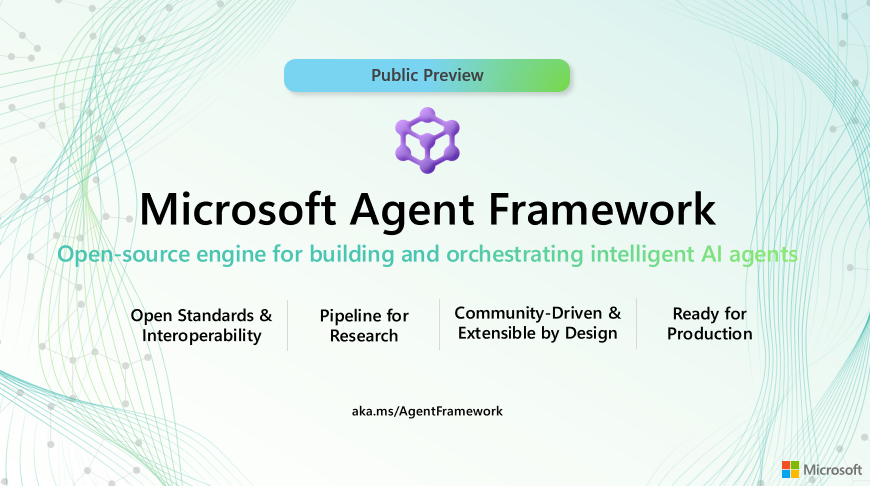
The Open-Source Agent Framework Race: Microsoft's Move and What It Means for AI Coding
Microsoft's Agent Framework enters a crowded open-source field, and developers need to understand how it and other AI agent frameworks shape vibe coding workflows with agents like FutureX.
Microsoft Agent Framework7 min read

Why Vibe Coders Should Care About AI Centralization
The centralization-vs-decentralization AI debate shapes vibe coding directly through model access, costs, and innovation, and model-agnostic agents like FutureX keep your workflows open.
vibe coding5 min read