Scaling Your Vibe: Architecting Large Projects with FutureX
Practical tips for using FutureX to build and maintain large codebases, including modularization strategies and when to step in with manual code.
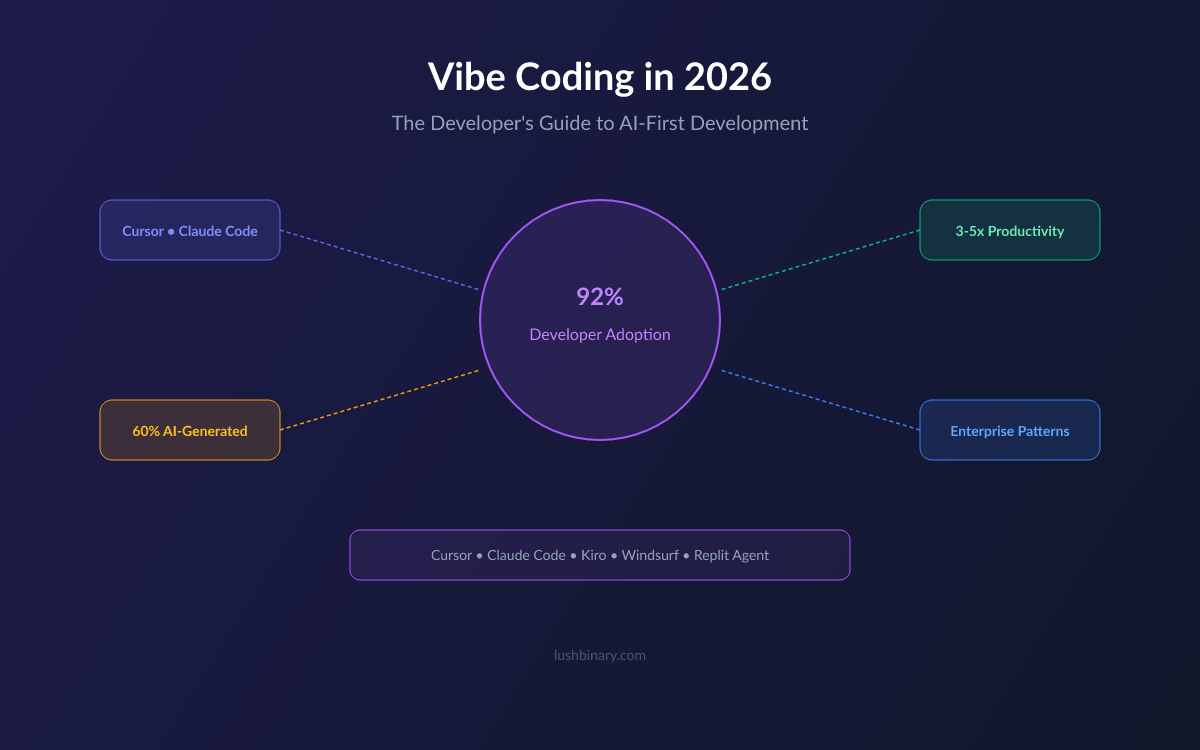
Vibe coding gets you from idea to working prototype faster than any workflow in recent memory. But when that prototype turns into a production system with thousands of files, the same free-form prompting that got you there starts to work against you. FutureX is a powerful coding agent, but it needs the same architectural guidance you would give a new developer on your team. Here is how to scale your vibe coding practice to large codebases without losing velocity.
Why Vibe Coding Breaks at Scale#
A vibe coding session is essentially a conversation. You describe intent, FutureX writes code, you iterate. This works beautifully when the codebase fits in a single mental model: a few files, a clear data flow, no hidden dependencies. As the project grows, three failure modes appear.
First, context overload. FutureX can only reason about what it can see. When every change requires understanding a web of cross-module imports, the agent's suggestions become increasingly speculative. Second, repetition. Without clear boundaries, FutureX will re-implement the same utility in subtly different ways across modules. Third, regression risk. A change in one place silently breaks another, and nobody, human or agent, notices until the tests fail.
The fix is not to abandon vibe coding. It is to impose a scalable architecture that makes the codebase legible to both you and FutureX.

Source: newly.app
Modularization Strategies That Keep FutureX Effective#
The single highest-leverage change you can make for large codebases is modularization. FutureX is at its best when it can make changes that are locally verifiable: touch one module, run its tests, done. A well-factored codebase turns every prompt into a bounded operation.
Package by Feature, Not by Layer#
A classic mistake in software design is organizing code by technical layer, like controllers/, services/, and models/, then letting every layer depend on every other. If you tell FutureX to add a feature, it has to thread changes through all three directories, which multiplies the surface area for error.
Organize by feature instead. Each feature gets its own package containing its interface, implementation, and tests. When you ask FutureX to modify a feature, the blast radius is contained. This is the same advice you would give a human developer, but it matters more for an AI agent, because every extra directory and import adds ambiguity to the prompt.
Keep Modules Small and Dependency-Clean#
Set a hard rule: no module may depend on more than a handful of peer modules, and there must be no circular dependencies. Enforce this with tooling, not hope. FutureX can be instructed to respect boundaries, but it will occasionally take shortcuts, especially when you phrase a request loosely.
Practically, this means maintaining a dependency graph document or a lint rule that fails the build on violations. When FutureX proposes a change that crosses a boundary, you can either refactor the boundary or accept a brief manual intervention.
Contracts as Scaffolding#
For large codebases, define the interfaces between modules explicitly, in one place, with clear type signatures. FutureX operates much more reliably when it can read a contract file and know exactly what a function expects and returns, without hunting through implementations.
Think of these contracts as the scaffolding that lets FutureX build quickly without knocking over walls. In typed languages, this happens naturally through types. In dynamic languages, write lightweight interface modules or protocol stubs that document the shape of the data crossing module boundaries.
The Codebase Map: Giving FutureX Orientation#
Large codebases fail vibe coding because the agent loses situational awareness. The remedy is an explicit codebase map that FutureX can read before making changes.
Write a Project Context File#
Create a CONTEXT.md at the repository root that describes the overall architecture and the reasoning behind it, the main modules and their responsibilities, the dependency rules, and the conventions for testing and naming. This is not documentation for documentation's sake; it is the anchor that keeps FutureX aligned with your scalable architecture across sessions.
When you start a new session, open with a brief reminder, like "read CONTEXT.md and summarize the module boundaries before making changes." FutureX will then be operating with the same orientation you have, which is vastly better than starting cold.
Keep Conventions Enforced and Visible#
Modularization works only if every future change follows the same rules. Keep your formatting, linting, and import-order rules automated. If the codebase has an unusual convention, say, all database access goes through a single repository module, put that in the context file explicitly. FutureX will honor conventions it can see; it will violate conventions it cannot.

Source: newly.app
When to Step In with Manual Code#
Vibe coding does not mean giving up control. There are places where you should always write code by hand, or at least review FutureX's output with exceptional care.
Security-Sensitive Code#
Authentication, authorization, input validation, and anything that touches cryptographic primitives should never be left entirely to an agent. Not because FutureX is careless, but because security is a domain where subtle mistakes are invisible until exploited. Use FutureX to draft, then review line by line, or write these paths manually from the start.
Hot Paths and Performance-Critical Sections#
A vibe-coded solution optimizes for correctness and clarity, not for latency or memory footprint. If a module sits on a hot path, like an API handler that receives thousands of requests per second or a tight loop over a large collection, write the hot loop by hand. Let FutureX handle the surrounding glue code, then step in with manual code where the performance requirements are strict.
Domain Invariants and Business Rules#
The rules that make your product correct, the ones that if broken cause real-world damage, belong in code you fully understand. When a refactor touches domain invariants, pause the agent and make the change yourself, or pair with FutureX by walking through the invariants explicitly in the prompt. In large codebases, the cost of a subtle invariant violation compounds quickly.
The useful heuristic: let FutureX do the broad, mechanical work, like boilerplate, migrations, and test scaffolding, and reserve the deep, consequential work for yourself. That division is what makes vibe coding scale.
Review Loops and Automated Guardrails#
The final pillar of sustainable vibe coding at scale is automatic verification. When FutureX writes code at speed, you need an equally fast way to catch mistakes.
Test-Driven Prompts#
Before asking FutureX to implement a feature, write the tests first, or ask FutureX to write them first. Then instruct it to make the tests pass. This inverts the usual flow and converts the test suite into a specification. For existing large codebases, require that any prompt include the command to run the affected module's tests, and ask FutureX to run them.
CI as the Backstop#
Your continuous integration pipeline is the safety net that makes vibe coding in large codebases possible. Every pull request from FutureX should run the full test suite, linting, type checking, and any dependency-boundary checks you have configured. When CI fails, feed the failure back to FutureX in a follow-up prompt. This closes the loop and keeps the agent honest.
Conclusion#
Vibe coding with FutureX does not stop being useful when your project gets big; it just requires a different shape of effort. Instead of relying on conversational intuition, you build a scalable architecture that the agent can navigate: feature-based modules, explicit contracts, a written codebase map, and automated guardrails at every step. And you keep the hardest parts, security, performance, and domain rules, firmly under your own hands.
The result is a workflow where FutureX carries the bulk of the mechanical work, you provide the architectural judgment, and the codebase stays coherent no matter how large it grows. That is how you scale your vibe: not by trusting the agent more, but by making the codebase legible enough that trust is safe.
Related reading

From Prompts to Production: The 2026 Vibe Coding Skills Stack
A pragmatic breakdown of the core skills developers need to move from prompting to shipping production-grade apps with FutureX, emphasizing architectural thinking and AI orchestration.
vibe coding6 min read
FutureX: The Missing Terminal Agent for Vibe Coders
A practical deep dive into how FutureX brings multi-step, terminal-native automation to the vibe coding workflow without breaking the loop.
vibe coding7 min read
From Vibe to Value: Measuring Productivity Gains When You Code with AI
Move beyond lines of code and learn how to measure the real productivity impact of vibe coding with FutureX using metrics for speed, quality, and skill growth.
vibe coding7 min read