FutureX vs Open-Source Agent Frameworks: Managed vs DIY
A technical comparison of FIM's FutureX against Microsoft Agent Framework, covering ease of use, scalability, and control across team sizes.
Choosing an AI agent framework is one of the first architectural decisions a team makes when building agentic software. The open-source ecosystem — with Microsoft Agent Framework and similar projects — promises freedom and transparency. Managed platforms like FIM's FutureX promise speed and operational simplicity. Neither is objectively better; the right choice depends on your team's size, compliance requirements, and tolerance for building infrastructure.
The Landscape: What Microsoft Agent Framework and Its Peers Offer#
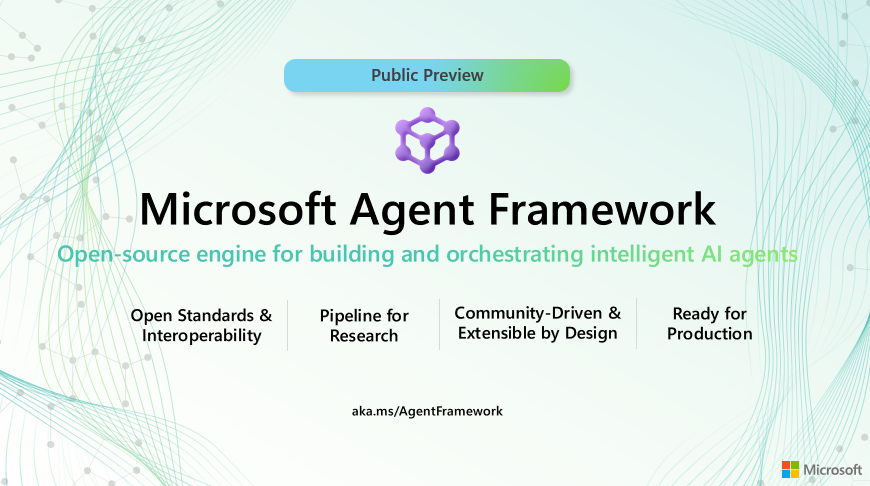
Microsoft Agent Framework is a representative example of open-source agent orchestration. It gives you primitives for defining agents, wiring tools, and managing multi-agent conversations. It is genuinely powerful: you can inspect every message, override every policy, and run everything on your own hardware.
But that power comes with assembly work. You must provision infrastructure, handle authentication, manage state, and build observability plumbing yourself. For a solo developer or a small team experimenting with vibe coding, that overhead can dwarf the time spent on actual agent logic.
The contrast with FutureX is structural. FutureX is a managed AI agent: you describe the workflow or coding task at a high level, and the platform handles scheduling, tool execution, memory, and error recovery. You interact with a product rather than a library.
Source: devblogs.microsoft.com
Ease of Use: Zero Setup vs Assembly Required#
For teams whose priority is shipping, ease of use is the deciding factor.
With FutureX#
Setting up FutureX means creating a project and defining tasks in natural language or structured prompts. The FIM platform manages the execution environment, retries, and the agent's access to sandboxed tools. There is no dependency chain to pin, no agent runtime to upgrade, and no vector store to maintain.
With Microsoft Agent Framework#
Getting started is straightforward if you know the stack: install the SDK, write a Python or TypeScript agent, and register tools. But it is still a development project. You own the lifecycle. A typical setup involves choices around orchestration patterns, storage backends, and transport protocols. Those choices are valuable — but they are also decisions your team must make and maintain.
For vibe coding workflows, where the goal is rapid iteration on agent behavior, the managed approach wins. You can validate an agent idea in minutes rather than days.
Scalability and Enterprise Agent Deployment#
Scalability is where managed AI agents have the largest structural advantage.
Elastic capacity#
FutureX runs on FIM's infrastructure. When your agent workload spikes, capacity follows without you provisioning a single node. In an open-source framework, scaling is your problem: you are designing for horizontal scaling, partitioning state, and coping with race conditions across concurrent agent runs.
Operational burden#
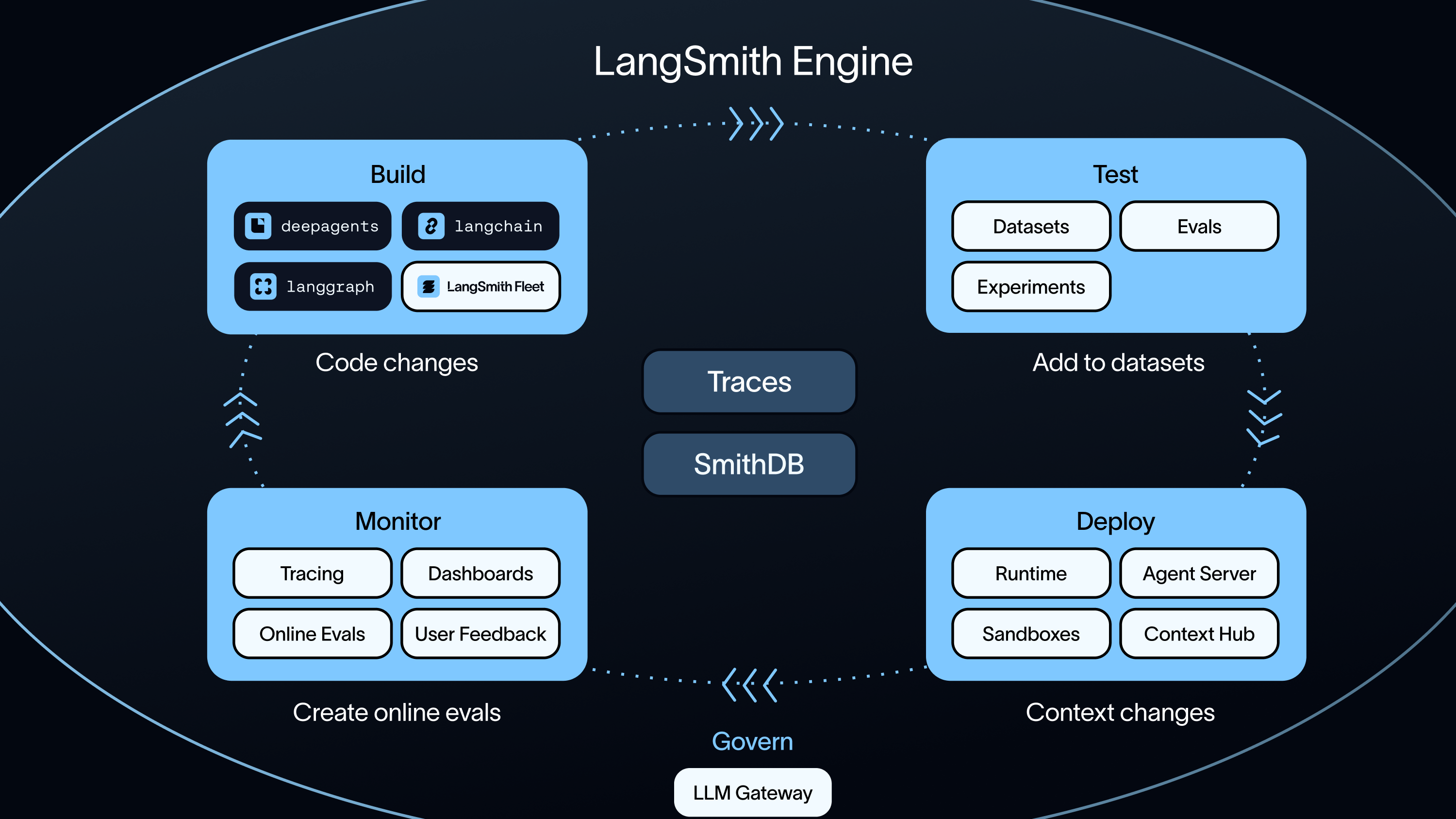
Enterprise agent deployment requires observability, audit logs, secrets management, and compliance controls. Managed platforms bake these in. The FIM dashboard gives you execution traces, token usage, and cost attribution out of the box. With Microsoft Agent Framework, you are assembling an observability stack from separate components — OpenTelemetry exporters, tracing backends, or logging pipelines — and then maintaining them.
Source: langchain.com
That is not to say open-source frameworks cannot scale. Large organizations run them in production successfully. But they invest engineering time proportional to that success. If your team is two developers and a product manager, that time is rarely available.
Control and Extensibility: The Open-Source Advantage#
The strongest argument for Microsoft Agent Framework and similar frameworks is control.
Custom runtime behavior#
With open source, you can change how the agent loop works, add custom tool-calling semantics, or fork the codebase. If you have unusual compliance needs — air-gapped deployment, custom data residency, or bespoke model routing — an open-source framework may be the only option. A managed agent platform runs in FIM's cloud, which means data flows through FIM's infrastructure. For some industries, that is a non-starter regardless of contractual safeguards.
Integration flexibility#
Open-source frameworks integrate with anything you can write code against. Your agents can call internal gRPC services, proprietary databases, or niche SDKs. FutureX exposes tool-calling and APIs, but the set of connectors is defined by the platform, not by you.
Portability#
If you build with Microsoft Agent Framework, you can migrate vendors or hosts with your codebase. With a managed agent, your workflow definitions may be portable, but the runtime is not. Lock-in risk is real, even if managed platforms generally make it easy to export logs and definitions.
This tension is fundamental: managed AI agents optimize for time-to-value; open-source frameworks optimize for optionality.
A Practical Decision Matrix#
A quick heuristic for team sizes:
Solo developers and small teams#
Choose FutureX if you want to ship agentic features without becoming infrastructure engineers. The speed of vibe coding — writing a prompt, seeing the agent act, iterating — is the entire point.
Mid-size product teams#
Evaluate both. If your product is the agent itself, and differentiation comes from orchestration logic, open source gives you room to innovate. If the agent is a feature among many, a managed agent reduces your surface area.
Enterprise and regulated environments#
Open source initially looks safer for compliance. But assess whether deep customization is genuinely required. Many enterprise agent deployment stories succeed on managed platforms because governance, auditing, and role-based access control are already implemented.

Source: github.com
Conclusion#
The FutureX vs open-source debate is not about which AI agent framework is more powerful. It is about where you want your engineering effort spent. Microsoft Agent Framework gives you complete control and demands complete ownership — infrastructure, scaling, observability, and updates. FutureX, as a managed AI agent on FIM, trades that control for immediate productivity, built-in enterprise guardrails, and predictable operations.
For small teams moving fast, the managed option is usually the right call. For teams whose core product is agent orchestration, open source remains a strong foundation. The mature approach is to define your constraints first — team size, data residency, runtime flexibility — and let those constraints pick your framework.
Related reading
The Open-Source Agent Framework Race: Microsoft's Move and What It Means for AI Coding
Microsoft's Agent Framework enters a crowded open-source field, and developers need to understand how it and other AI agent frameworks shape vibe coding workflows with agents like FutureX.
Microsoft Agent Framework7 min read

From Vibe to Production: Scaling Your Solo Project with FutureX
Learn how to move from vibe coding to production with FutureX, a technical guide for solo developers scaling AI coding into enterprise-grade workflows.
Vibe Coding6 min read
From Prototype to Production: Orchestrating Multi-Agent Workflows with FutureX
A practical guide to using the FutureX coding agent to move multi-agent workflows from experimental prototypes to production-grade deployments.
multi-agent orchestration5 min read