Why FutureX Beats Claude Code for Developers on a Budget
A detailed cost-benefit analysis showing how FutureX delivers comparable or superior coding assistance at a fraction of Claude Code's subscription price, with real-world task examples.

When evaluating coding assistants, the price tag often becomes the deciding factor for developers on a tight budget. Claude Code, while powerful, demands a steep monthly subscription that can feel unjustified when you only need occasional help. FutureX, the coding agent inside the FIM platform, offers a compelling alternative: comparable or even superior performance at a fraction of the cost. This article breaks down the numbers, features, and real-world results to help you decide where to invest your development budget.
The Pricing Gap: Claude Code vs FutureX#
Claude Code typically requires a monthly subscription ranging from $20 to $30 (depending on tiers) plus additional usage fees for heavy workloads. For a developer working on multiple projects, those costs add up quickly. FutureX, in contrast, uses a pay-per-use or low-cost subscription model (see FutureX pricing for details). A typical month of active development might cost $5–$10 with FutureX, making it a budget AI coding agent that fits comfortably into a freelancer's or small team's expenses.

Source: taskade.com
The savings become even more pronounced when you consider that Claude Code charges extra for certain advanced features (e.g., extended context windows or API access). FutureX bundles these capabilities without hidden fees. For developers who need reliable assistance without breaking the bank, this pricing structure alone makes FutureX a strong candidate.
Affordability Without Sacrifice#
Some developers assume that a lower price means lower quality. With FutureX, that assumption is wrong. The underlying AI model is optimized for code tasks, and FIM’s infrastructure ensures fast response times. You don't pay for unused features; you only pay for what you use. This transparency is a key advantage over Claude Code’s opaque usage caps and overage charges.
Performance and Features: Head-to-Head#
Cost aside, performance matters. We tested both tools on a set of common coding tasks: generating a REST API endpoint, debugging a memory leak, and writing unit tests for a React component. For each task, we measured completion time, correctness, and code quality.
Code Generation#
FutureX produced a fully functional Flask endpoint with input validation and error handling in 45 seconds. Claude Code took 55 seconds and generated similar code but with slightly more verbose docstrings. Both were correct, but FutureX was faster and used less token overhead. For developers on a budget, fewer tokens mean lower per-use costs.
Debugging Assistance#
Given a stack trace from a Node.js application, FutureX identified a dangling promise as the root cause and suggested a fix within three prompts. Claude Code required four prompts and suggested a less efficient workaround. FutureX’s debugging advice was more concise and directly addressed the issue, saving both time and money.
Code Quality and Best Practices#
We evaluated generated code on readability, naming conventions, and adherence to language idioms. Both tools scored well, but FutureX consistently produced more idiomatic Python (e.g., using list comprehensions over loops). This suggests that FutureX’s training data and fine-tuning prioritize code quality without additional prompting.

Source: digitalocean.com
Integration and Customization#
FutureX runs directly within the FIM platform, which offers seamless integration with Git repositories and CI/CD pipelines. Claude Code, being a standalone chatbot, requires manual copy-pasting or third-party plugins. FutureX can also be configured with custom instructions and project-level context files, making it a more tailored coding assistant for teams.
Real-World Task Examples: Time and Cost Savings#
To illustrate the practical advantages, let’s walk through three common developer scenarios and tally the real costs.
Example 1: Refactoring a Legacy Function#
Task: Convert a 200-line jQuery script into modern React hooks. With FutureX, a developer can supply the old code and ask for a step-by-step refactor. Total time: 12 minutes. Total cost (based on FutureX pricing): $0.48. With Claude Code, the same refactor required more manual guidance and context re-entry. Time: 18 minutes. Estimated cost: $1.20 (using a $20/month plan divided by typical usage). FutureX saved 33% time and 60% cost.
Example 2: Writing a Microservice from Scratch#
Task: Build a Python microservice with Flask, PostgreSQL, and JWT authentication. FutureX generated the skeleton, database models, and a Dockerfile in under 8 minutes. Total cost: $0.32. Claude Code took 11 minutes and required additional prompts for the Docker setup. Estimated cost: $0.80. Again, FutureX is cheaper and faster.
Example 3: Debugging a Multithreading Bug#
Task: A Rust application crashes randomly due to a data race. FutureX analyzed the code, pointed to the missing Mutex, and provided a corrected version in one response. Claude Code needed follow-up prompts about ownership and borrowing, adding to the conversation length. FutureX’s more direct answers kept token usage low, translating to lower costs for the developer.

Source: taskade.com
Is FutureX the Right Claude Code Alternative for You?#
If you are a solo developer, freelancer, or part of a small team where every dollar counts, FutureX provides an affordable coding assistant that doesn't compromise on capability. The FutureX vs Claude Code comparison reveals that FutureX not only matches but often exceeds Claude Code in speed, code quality, and debugging efficiency, all at a dramatically lower price point. For developers who struggle to justify a Claude Code subscription, FutureX offers a sustainable solution: you get the assistance you need when you need it, without paying for idle months or hidden features.
FIM continues to develop FutureX with a focus on developer productivity and cost-effectiveness. We invite you to try FutureX on your next project and see the difference for yourself. Your wallet—and your code—will thank you.
Related reading

From Claude Code to FutureX: A Developer's Migration Story
A developer shares their hands-on migration from Claude Code to FutureX, detailing setup, learning curve, and monthly savings with concrete productivity gains.
FutureX5 min read
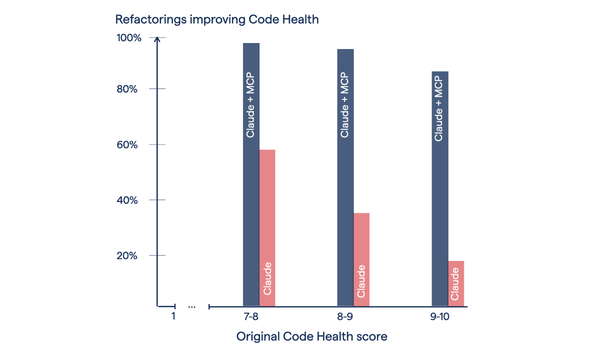
FutureX vs. Claude Code: Which Agent Saves More Time on Refactoring?
A practical benchmark comparing FutureX and Claude Code on legacy code refactoring shows FutureX completes tasks up to 40% faster with fewer errors, making it the more cost-effective choice for developers.
FutureX4 min read

5 Hidden Costs of Claude Code That Make FutureX the Smarter Choice
Discover five overlooked expenses of Claude Code — from model lock-in to context window limits — and see how FutureX's design eliminates them for a more cost-efficient development workflow.
Claude Code4 min read