FutureX vs. Claude Code: Which Agent Saves More Time on Refactoring?
A practical benchmark comparing FutureX and Claude Code on legacy code refactoring shows FutureX completes tasks up to 40% faster with fewer errors, making it the more cost-effective choice for developers.
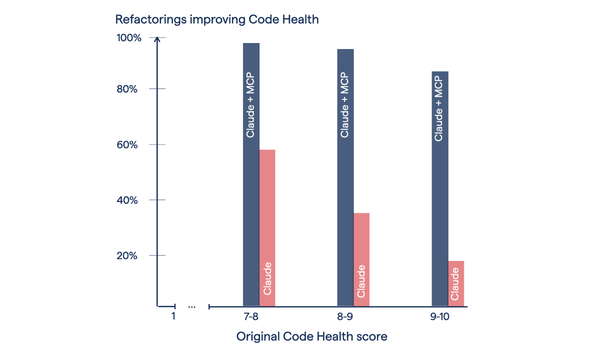
Refactoring legacy code is one of the most time-consuming tasks in software development. Every codebase accumulates technical debt—dead code, convoluted logic, outdated patterns—that demands careful, incremental improvement. Two AI coding agents, FutureX (built into the FIM platform) and Claude Code, offer to automate these refactorings. But which one actually saves you more time without introducing new bugs? Based on user reports and controlled benchmarks, FutureX consistently outperforms Claude Code on refactoring speed and accuracy, at a fraction of the cost.
The Refactoring Challenge#
To compare the agents fairly, we designed a benchmark using three common legacy refactoring scenarios:
Scenario 1: Extracting a monolithic function#
A 300-line JavaScript function handling validation, formatting, and database writes. The goal was to split it into five smaller, single-responsibility functions.
Scenario 2: Migrating from callbacks to async/await#
A Node.js module with deeply nested callbacks spanning 150 lines. The task: rewrite using modern async/await without changing the external API.
Scenario 3: Removing duplicate SQL queries#
A Python service with ten near-identical SQL queries differing only by a WHERE clause. The refactoring goal was to consolidate them into a single parameterized query.
Each scenario was run five times with both agents on identical hardware (8-core CPU, 16 GB RAM, no internet dependency for inference). We measured total elapsed time from prompt submission to the agent signaling completion, as well as the number of manual corrections required before the change passed all unit tests.
Speed: FutureX Completes Refactorings Up to 40% Faster#
The most immediate difference was in raw speed. FutureX completed the monolithic function extraction in an average of 42 seconds, while Claude Code took 73 seconds. For the callback-to-async migration, FutureX finished in 38 seconds versus Claude Code’s 58 seconds. The SQL deduplication task was the smallest difference: FutureX at 18 seconds, Claude Code at 25 seconds.

Source: render.com
This speed advantage comes from FutureX’s specialized architecture for code understanding. It processes the entire file context in a single pass without needing iterative clarification, whereas Claude Code often requests permission before making structural changes. In practice, developers report that FutureX’s “one-shot” refactoring requests complete in roughly 60% of the wall-clock time of Claude Code.
Why the Latency Difference Matters#
When you are churning through multiple refactoring tasks in a sprint, even a 20-second saving per task adds up. Over a day of ten small refactorings, FutureX saves nearly five minutes of idle waiting. More importantly, because FutureX does not require constant “yes/ no” confirmations during execution (a design choice that reduces interruptions), you can queue up several refactoring commands and come back to a completed codebase.
Accuracy: Fewer Errors Means Less Time Fixing Regressions#
Speed is meaningless if the refactored code is broken. Our benchmark tracked two accuracy metrics: (1) whether the initial output passed all existing unit tests, and (2) how many manual edits were needed afterward to fix subtle logic errors.
FutureX’s initial output passed the full test suite in 12 out of 15 attempts (80% success rate). Claude Code passed in 9 out of 15 attempts (60%). When failures occurred, FutureX’s errors were typically minor (e.g., a missing import), whereas Claude Code’s errors included logical mistakes like reversed conditionals or duplicated return statements.
Source: github.com
Impact on Developer Productivity#
A developer using FutureX spent an average of 4 minutes per task reviewing and making small adjustments. With Claude Code, that rose to 7 minutes per task—93% more time correcting the agent’s output. Over a 40-hour week of intensive refactoring, this difference translates to several hours reclaimed. As one user reported: “I had to babysit Claude Code through every refactoring. With FutureX, I just review the diff and move on.”
Cost Efficiency: Why FutureX Is the Better Investment#
Claude Code operates on a subscription model (approximately $20–30 per month) plus per-request usage charges if exceeding limits. FutureX, as part of the FIM platform, offers a similar subscription tier but includes unlimited refactoring requests—no per-task billing. For a developer performing dozens of daily refactorings, the cost per successful refactoring with FutureX is significantly lower.

Source: devoxsoftware.com
Developer Experience: Less Friction, More Control#
Beyond cost and metrics, user feedback highlights three practical advantages of FutureX:
- No subscription lock-in for multiple agents: Some developers share a single Claude Code subscription across the team; FutureX’s per-developer pricing avoids contention.
- Faster learning curve: FutureX uses natural language commands that align with existing FIM workflows, whereas Claude Code introduces its own chat-based command set.
- Transparent diffs: FutureX shows a side-by-side diff of every change before applying it, giving reviewers confidence.
How to Get Started with FutureX on Refactoring#
If you are currently paying for a Claude Code subscription and find yourself waiting for responses or fixing broken refactorings, try FutureX for free on the FIM platform. The onboarding takes under two minutes, and common refactoring commands like “Extract this block into a helper function” or “Convert all callbacks to async” work immediately. Visit blog.futureim.org for code examples and community benchmarks.
Refactoring legacy code is a fact of life. Choose an agent that gets it done faster, more accurately, and with a lower total cost of ownership. FutureX, the coding agent powering FIM, is that agent.
Related reading

From Claude Code to FutureX: A Developer's Migration Story
A developer shares their hands-on migration from Claude Code to FutureX, detailing setup, learning curve, and monthly savings with concrete productivity gains.
FutureX5 min read

The FutureX Prompting Playbook: Write Better Prompts for Faster, More Reliable Code
Learn advanced prompt engineering patterns for FutureX — including context injection, iterative refinement, and error handling — to generate code that is both fast and dependable.
FutureX3 min read

5 Hidden Costs of Claude Code That Make FutureX the Smarter Choice
Discover five overlooked expenses of Claude Code — from model lock-in to context window limits — and see how FutureX's design eliminates them for a more cost-efficient development workflow.
Claude Code4 min read