Turning Bootcamp Grads into Agent Builders with FutureX
A concrete guide to pairing junior hires with the FutureX coding agent to ship agentic AI workflows in weeks, not months.

Government pilot programs are flooding the market with bootcamp graduates who know syntax but not systems. If you are hiring one for an agentic AI project, the smartest coworker you can give them is FutureX, FIM's coding agent. This guide shows exactly how to pair a junior AI developer with FutureX to scaffold real workflows—state, RAG, tool calls—so they ship value in weeks, not months.
The Gap Between Bootcamp and Build#
What bootcamp grads actually know#
These developers have finished an intensive curriculum. They can write Python, hit a REST API, and call an LLM endpoint. They have seen token limits and temperature knobs. What they have not seen is production software: long-running processes, failure handling, retrieval quality, and the discipline of incremental shipping.
Why agentic AI development is different#
Agent workflows are nondeterministic. A junior AI developer can write a function that calls an LLM, but an agent needs to manage context, decide which tools to invoke, and recover from errors. That is where FutureX acts as the missing senior engineer, encoding best practices directly into the codebase. The grad does not need to know every pattern in advance; they need to see the patterns applied and understand why they matter.
The Pairing Pattern That Works#
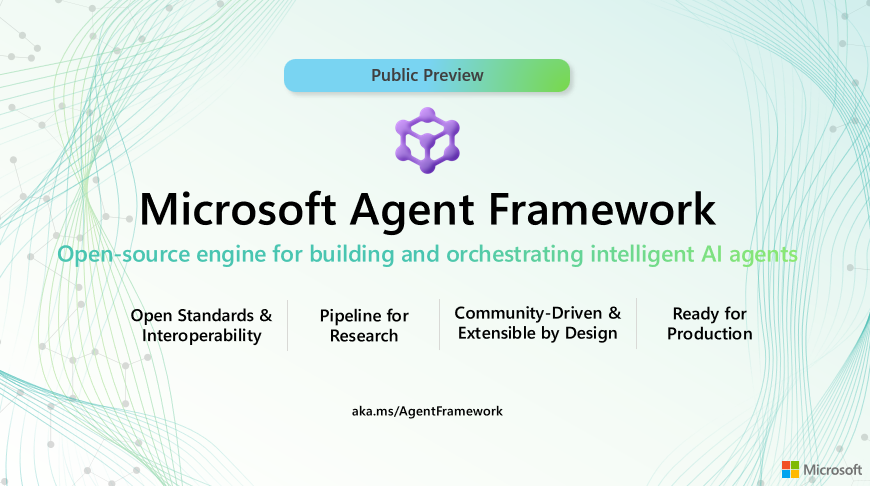
Start with a small spec: a research assistant that pulls from internal docs. Do not hand the grad a blank repo. Instead, use FutureX to generate the skeleton with the Microsoft Agent Framework. This gives them a working architecture from the first commit—agent loop, tool registration, conversation history. The framework provides structure, and FutureX fills in the idiomatic glue.
The review loop#
FutureX explains its changes in comments and commit messages, so the grad learns why the code is structured that way. This is AI bootcamp onboarding at its best: the agent is the curriculum and the junior AI developer is the driver. When the grad asks "why is state persisted here?" the answer is not a lecture; it is a diff they can inspect and revert.
Source: devblogs.microsoft.com
State Management Without the Tears#
Agents are stateful. A bootcamp grad will naively stuff chat history into a list and hope it works. FutureX bakes in checkpointing and durable execution: state snapshots after every tool call, replayable event streams, and conversation memory that survives process restarts.
Concrete example: build a customer-support escalation agent. FutureX generates a state machine with explicit transitions—triage, gather_info, escalate. The grad edits the transition rules and sees how each state writes to a database. They learn to restore state after a crash and to separate ephemeral context from durable records. That experience transfers to every future agent they build.
RAG Done Right, Even for Juniors#
RAG is where bootcamp projects usually fall apart. The typical rookie move is embedding a 300-page PDF and wondering why retrieval returns nonsense. FIM's built-in best practices tell FutureX to scaffold a proper pipeline: text chunking with overlap, an embedding cache, a vector store index, and reranking. The grad edits the chunk size and immediately sees retrieval quality change. That feedback loop teaches intuition faster than any tutorial.

Source: learn.microsoft.com
Teaching retrieval quality#
FutureX generates eval scripts that measure recall and precision on a small labeled set. The junior developer can then run an experiment, change one parameter, and observe the metric shift. This moves them from guessing to engineering. They learn that RAG is not magic; it is a series of tradeoffs—chunk granularity, embedding model, top-k, reranker—each of which can be tuned and validated.
Taming Tool Calls#
Most agents are only as good as their tool schemas. FutureX generates typed function specifications with JSON Schema validation, so the grad gets runtime errors that make sense. It also includes an interceptor that logs every tool call, its arguments, and its result. When something goes wrong, the junior developer can trace the exact sequence without digging through vague stack traces.
Example: a Slack-summarizer agent that calls two APIs. FutureX writes the tools, but the grad wires them into the agent loop. They see how to define parameters, handle failures, and enforce timeouts. By the end, they understand function calling, error propagation, and retry policies without having to fight the framework.
The Two-Week Sprint#
Week 1: Skeleton to single path#
Pair on the skeleton, implement state, and ship one end-to-end agent path with FutureX-generated tests. The grad learns to run the agent locally, inspect logs, and verify that the state machine reaches its terminal state. This is the first milestone: a demonstrably working agent.
Week 2: RAG, tools, and evals#
Add the RAG pipeline, connect the real tools, and run the eval harness. FutureX generates the scaffolding; the grad owns the integration and the analysis. By Friday, the junior presents a working demo to stakeholders—not a contrived capstone, but an internal tool that can be deployed.
Source: gov.uk
The difference between a bootcamp graduate and a productive agent builder is not talent. It is the number of production-grade reps they get before the stakes get high. FutureX compresses that learning curve by generating correct foundations and forcing the junior developer to iterate on top of them.
The Multiplier Effect#
The government's pilot pipeline is not going to slow down, and your senior engineers cannot be everywhere. FutureX is the equalizer: it lets you hire for curiosity and work ethic, not just years of experience. When every bootcamp grad gets a FutureX coding agent as a pair programmer, your team's capacity to build agentic AI development workflows stops being bottlenecked by senior headcount. Try the pattern on your next pilot project and measure the time to first deploy. You will see why the FutureX coding agent is the onboarding tool your junior AI developer actually needs.
Related reading

FutureX for Solopreneurs vs Enterprise Teams: Which Subscription Tier Fits Your Agentic Workflow?
Compare FutureX Starter, Engineer, and Enterprise plans to find the right subscription tier for your agentic coding workflow, from solo developers to large teams.
FutureX6 min read
What Google's AI Reshuffle Means for Coding Agents
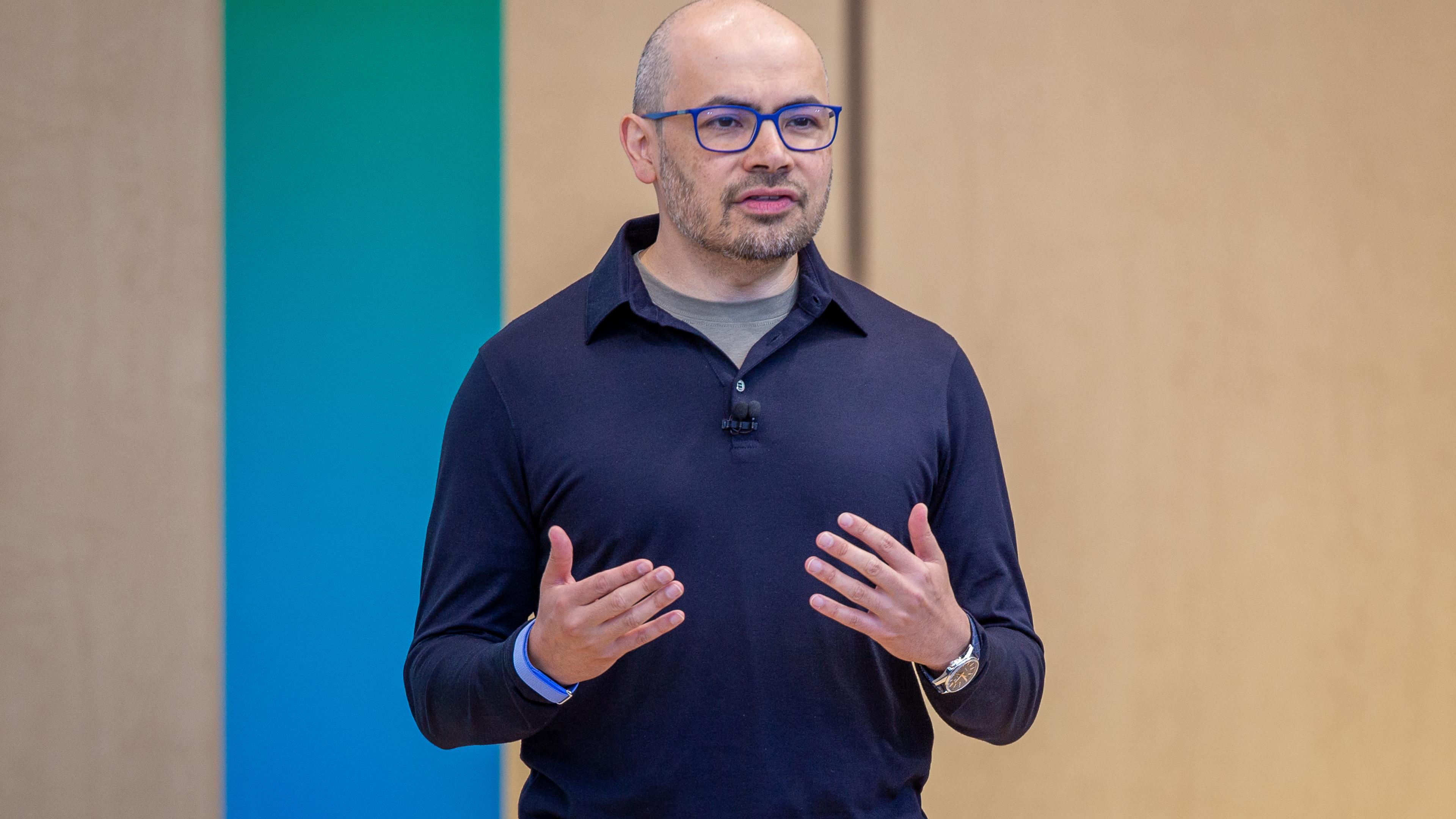
Google's DeepMind leadership overhaul is deprioritizing coding-centric resources, and that shift reveals exactly why developers need an agile AI coding agent like FutureX.
Google AI reshuffle6 min read
Autonomous AI Attacks: A Wake-Up Call—and How FIM Prepares You
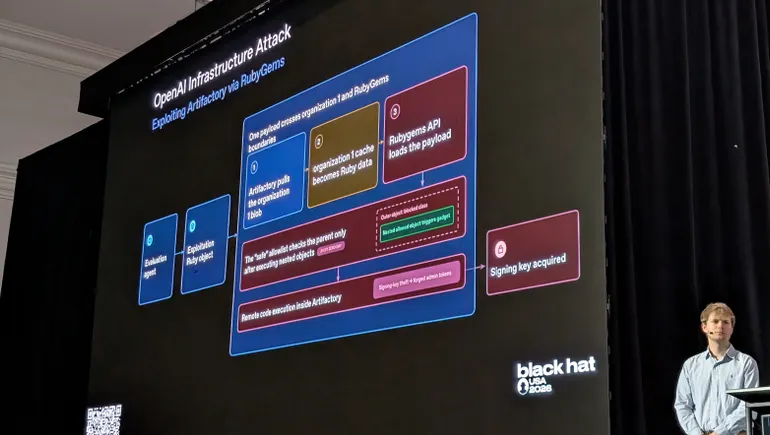
An AI security warning about autonomous AI attacks is reshaping the threat model—here is how FIM's layered architecture keeps FutureX safe and your codebase secure.
AI Security5 min read