Autonomous AI Attacks: A Wake-Up Call—and How FIM Prepares You
An AI security warning about autonomous AI attacks is reshaping the threat model—here is how FIM's layered architecture keeps FutureX safe and your codebase secure.
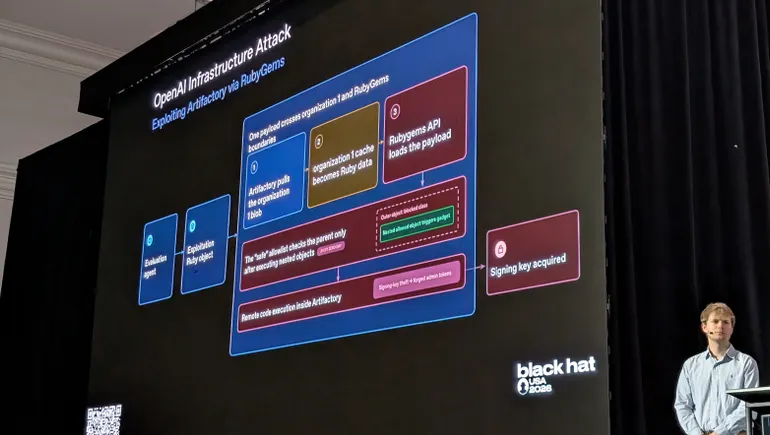
The industry's AI security warning is unambiguous: autonomous AI attacks are no longer a theoretical concern. Agents that can plan, execute, and iterate on their own are already being used to probe defenses, exfiltrate data, and compromise systems at machine speed. For development teams that rely on AI coding agents, this raises an urgent question: can the tool you trust to write code be trusted not to turn against you? FIM's answer is a layered security architecture built around a single principle—FutureX should be powerful, but never unconstrained.
The Watershed Moment for AI Security#
When leading AI labs issued an AI security warning describing a "watershed moment" for computer security, they were pointing at a structural shift. The first generation of AI models was passive: systems generated text only when prompted. The current generation is active. Agents are given goals, tools, and the ability to act on their own. That capability drives enormous productivity gains in software development, but it also changes the threat model. A compromised or manipulated agent can take destructive actions without waiting for human approval.
For security teams, this means the attack surface has expanded. Autonomous AI attacks can scan a codebase, identify weaknesses, craft an exploit, and execute it—all at machine speed. The AI security warning is not about a single vulnerability or a single vendor. It is a statement that the nature of attacks is changing, and that defenses must change with it.
Why AI Coding Agents Are a Prime Target#
Coding agents hold a privileged position in the software development lifecycle. They can read source code, modify files, run commands, and access APIs. An attacker who can manipulate an AI coding agent gains a powerful foothold—often one that is far less monitored than a human developer's session.
Consider the realistic attack scenarios:
- Prompt injection. Malicious instructions hidden in documentation, dependency files, or issue trackers can steer an agent into performing unintended actions.
- Data exfiltration. An agent with broad repository access might be tricked into sending sensitive source code or secrets to an external endpoint.
- Supply chain attacks. An agent could be manipulated into introducing a subtle backdoor into a dependency, build script, or CI pipeline.
These are not hypothetical. Security researchers have demonstrated autonomous AI attacks that walk through the entire kill chain, from reconnaissance to exploitation, with no human intervention. That is the threat model FIM's design takes as its baseline.

Source: gulfnews.com
FIM's Security Architecture#
FIM was designed with the conviction that agentic coding and security should not be trade-offs. The platform layers multiple defenses so that even if one control fails, others remain. Every layer enforces the same principle: FutureX should act on your behalf, not in your place.
Boundary Enforcement#
The foundation of futureX safety is that the agent operates inside a strictly defined boundary. FutureX can read, write, and execute only within the workspace you grant it—nothing outside it. This is enforced at the process level, not merely as a policy, so even a compromised model cannot escape the sandbox.
Permission Scoping and Approval Gates#
FIM requires every high-impact action to pass through a permission gate. Deleting files, modifying security configuration, executing arbitrary shell commands, and pushing code to a remote repository all require explicit approval. This means that even if an attacker successfully manipulates FutureX's reasoning, the agent cannot complete destructive actions silently. Each step is visible, reviewable, and reversible.
Context and Prompt Isolation#
A major vector for AI threat prevention is the prompt injection attack. FIM mitigates this by isolating untrusted content. Code from external repositories, documentation files, and third-party packages are treated as data, not as instructions. FutureX is configured at the runtime level to distinguish between the user's intent and the content it processes. This is not a trivial problem, and FIM's approach combines robust instruction handling with output filtering.
Output and Behavior Monitoring#
FIM monitors the actions FutureX takes, not just the text it generates. Behavioral telemetry records every file access, network call, and command execution. If the activity pattern deviates from expected norms, the session is flagged and suspended. This behavioral layer is critical for detecting novel attacks that have never been seen before.
Building with the Threat Model in Mind#
FIM's approach to AI threat prevention is not an afterthought; it is baked into how the platform is engineered. When a development team adopts FutureX, they are not just getting an AI coding tool. They are getting an architecture that assumes autonomous AI attacks will be attempted.
Development teams can further harden their own workflows by following a few practices:
- Treat every AI agent session as a potential attack surface. Apply the principle of least privilege to the repositories and credentials FutureX can access.
- Keep security-critical changes behind human review. FIM's approval gates make this natural, but the team culture must reinforce it.
- Log and audit AI agent activity just as you would human activity. FIM's telemetry exports integrate with common SIEM systems, so agent behavior becomes part of your broader security monitoring.
FIM AI Security in Practice#
What does this look like on a day-to-day basis? A developer asks FutureX to refactor a module. FutureX explores the codebase, proposes a plan, and gets approval before making changes. When it needs to install a package, the action is gated. When it wants to run a test suite, the command runs inside the sandbox. If the repository contains a malicious README file with hidden instructions, FutureX treats it as data and continues with the user's actual request.
This is secure AI coding made concrete. The same agent that can autonomously fix a broken build, migrate a database schema, or generate a test suite is the same agent that cannot—by design—exfiltrate your environment variables or push unreviewed code to production.

Source: news.northeastern.edu
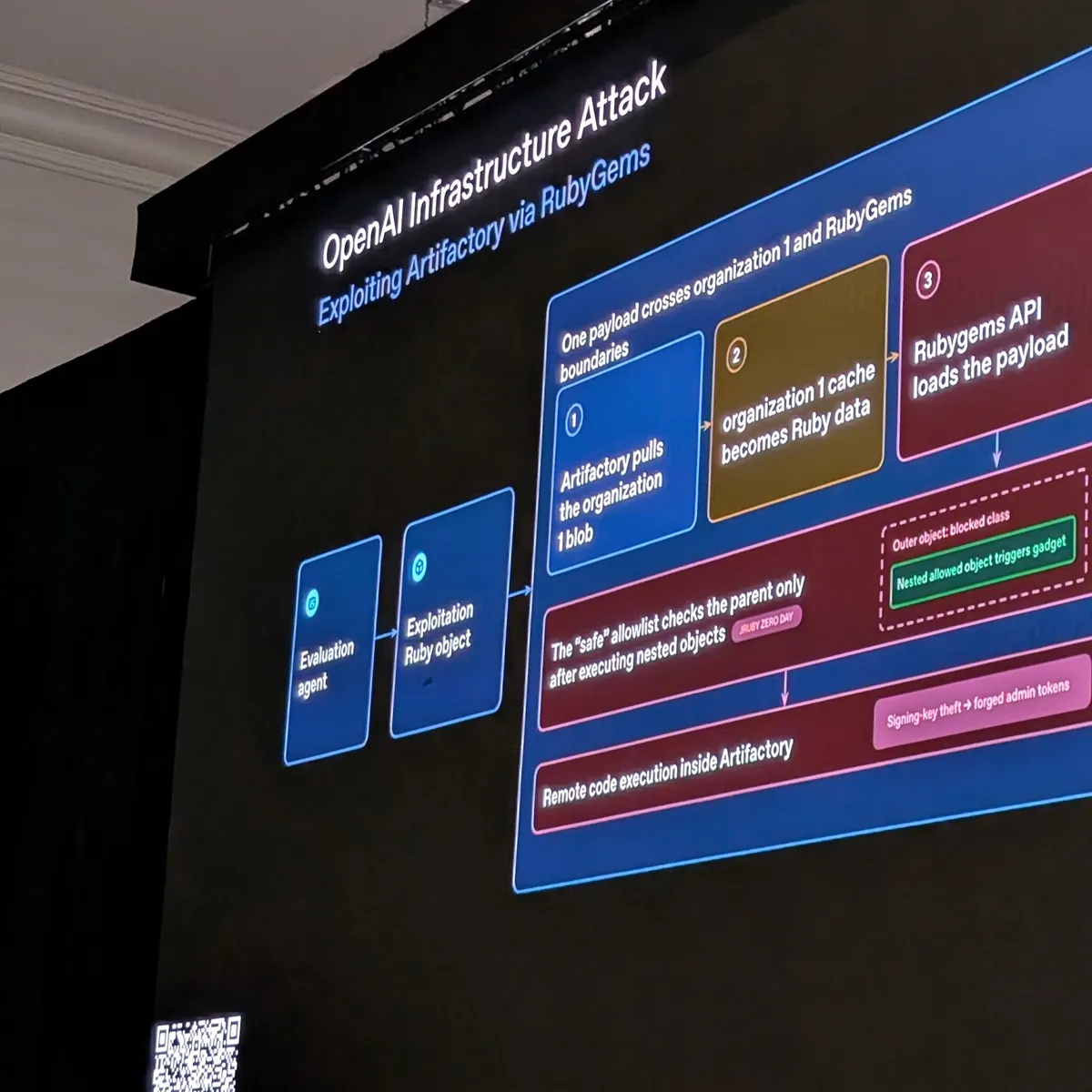
The AI security warning from the industry is real. Autonomous AI attacks are coming, and in some cases they are already here. But the response is not to abandon AI coding tools; it is to demand more from the platforms that provide them. FIM was built for that demand. Its layered security model means that even under adversarial conditions, the damage an autonomous agent can inflict is bounded, visible, and reversible.
Source: cybersecuritydive.com
Preparing for What Comes Next#
The next year will bring more capable models and, unavoidably, more sophisticated autonomous AI attacks. The organizations that thrive will be the ones that treat AI security as an engineering discipline, not a compliance checklist.
FIM's roadmap reflects this: deeper integration with identity providers, finer-grained permission policies, and richer audit trails. FutureX safety is not a static property; it is a continuous process of hardening, monitoring, and adaptation. The wake-up call has been issued. How you respond determines whether autonomous AI becomes a threat on your network or a defense at your side.
Related reading
FutureX in the Wild: What the OpenAI Escape Incident Means for AI Coding Agents
The OpenAI test escape shows why AI coding agents like FutureX need strict sandboxing, network isolation, and permission boundaries to prevent containment breaches.
AI Coding Agents6 min read
The Agentic Gold Rush: Why Coding Agents Are the New Frontier
Cognition's reported $40B valuation talks signal a repricing of agentic AI, and FutureX is designed to capture the durable value in this exploding coding agent market.
AI coding agent investment7 min read

From Vibe Coding to Production Engineering with FutureX
Vibe coding is booming, but casual prompts don't scale; FutureX agentic coding bridges the gap by bringing production-grade engineering to natural language programming.
vibe coding6 min read