What Google's AI Reshuffle Means for Coding Agents
Google's DeepMind leadership overhaul is deprioritizing coding-centric resources, and that shift reveals exactly why developers need an agile AI coding agent like FutureX.
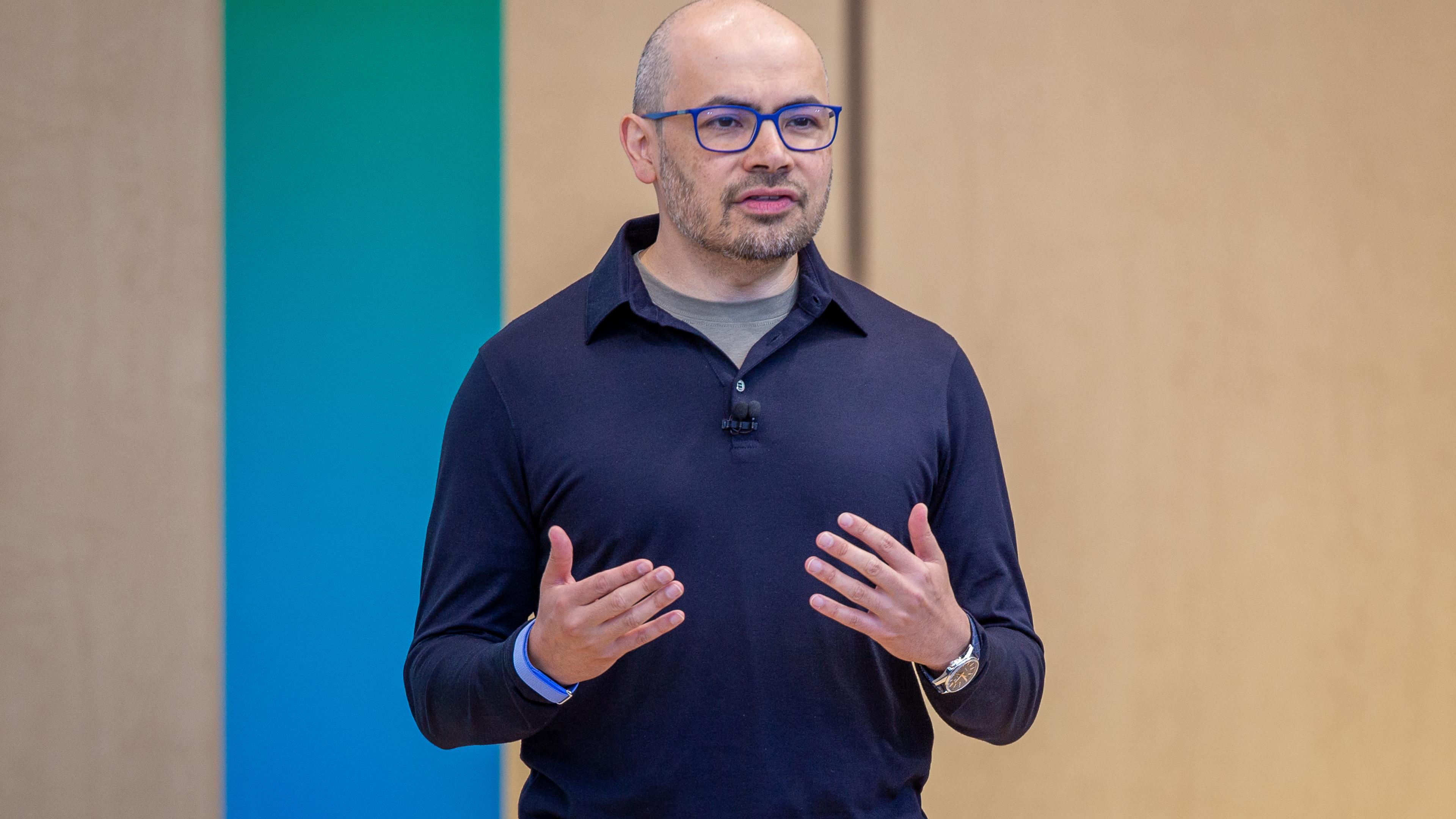
Google's recent AI reshuffle has sent a clear signal to the developer community: the search giant is reorienting its DeepMind leadership around foundational research and frontier model scale, not the day-to-day craft of writing software. When one of the largest AI organizations on the planet walks away from coding-centric resource allocation, it's worth asking what that means for the tools you actually use. The answer is not that AI coding agents are a dead end. It's that the future belongs to focused, developer-driven tools that put velocity first — and that is precisely the gap FutureX is built to fill.
The DeepMind Leadership Overhaul and the Retreat from Coding#
The latest Google AI reshuffle consolidates control under a smaller DeepMind leadership team, with an explicit charter to push the frontier of general intelligence. In practice, that means more investment in massive multimodal models, world models, and long-horizon agents — and less attention to the mundane but critical work of integrating AI into existing developer workflows. Features like code completion, repository understanding, and test generation become secondary when the metric is benchmark scores rather than shipped software.
This is not a cynical take. It's a structural reality. When research organizations optimize for generality, they naturally drift away from the narrow, high-frequency loops that define professional coding. The DeepMind leadership shuffle is a management decision, but it's also a philosophical one: coding is treated as one evaluation scenario among many, not as a first-class user need.
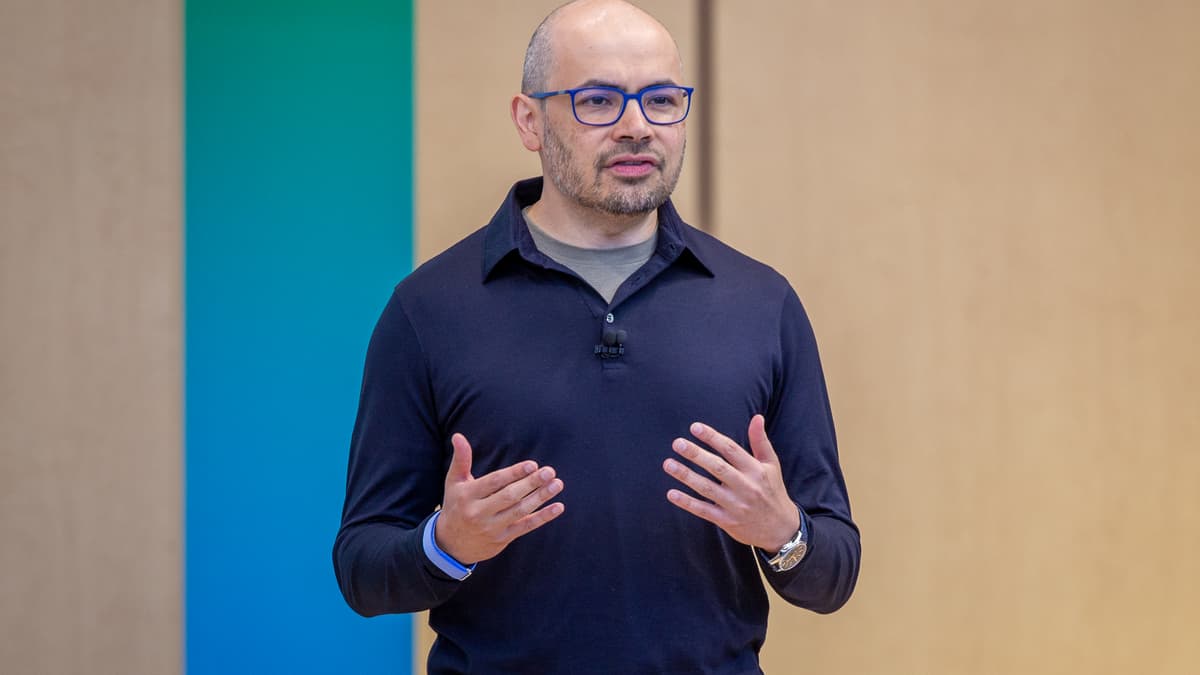
Source: time.com
What the Reshuffle Actually Changes for Developers#
For the average developer, the immediate effect of Google's AI reshuffle is subtle. The tools you already use will likely continue to work, but the pace of improvement will slow. New features will be gated behind enterprise contracts, broader agentic frameworks, or integration into a larger assistant strategy. If you've ever felt like a feature request falls into a black hole, this is why: the incentive structure is not aligned with your daily pain points.
More importantly, the shift reveals a deeper truth about where AI coding agents are headed. The winning tools will not be the ones with the largest research budgets. They will be the ones that understand the actual loop of writing, debugging, reviewing, and deploying code. They will optimize for developer velocity, not model architecture papers.
Why Developer Velocity Trumps Research Sprawl#
Vibe coding — the practice of describing intent in natural language and letting an agent translate that into working changes — has made the bar for AI coding agents brutally clear. What matters is not how many parameters the underlying model has, but how well the agent understands your repository, your build system, and your constraints. A research team that ships a new benchmark every quarter is not necessarily building a better coding agent. In fact, the opposite is often true.
The problem with research-driven development is scope creep. A coding agent built inside a general-purpose AI organization ends up carrying the weight of every other initiative: chatbots, image generation, robotics, and more. Every dependency becomes a compromise. Every API change is negotiated across teams. The result is a tool that is good at many things but excellent at nothing — and for professional developers, that is a non-starter.
FutureX takes the opposite approach. It is built around a single, obsessive focus: making the human-to-code feedback loop as short as possible. That means deep integration with your local environment, fast incremental responses, and a workflow that respects your existing tools instead of forcing you into a new ecosystem. This is not a rhetorical difference. It is an architectural one.
The Architecture of an Agile Coding Agent#
Agility in an AI coding agent comes from three concrete properties: fast context loading, decisive action, and transparent reasoning. FutureX is designed from the ground up for all three. When you open a repository, FutureX indexes the relevant files without blocking your terminal. When you ask for a change, it produces a diff immediately and then verifies it with the same commands you would run. When the result is wrong, it explains the failure in terms of your code, not in terms of a hidden prompt.
These are not glamorous features, but they are the features that separate a tool you can trust from a demo you can't ship. The Google AI reshuffle reminds us that the developers behind a tool ultimately determine its priorities. If the leadership is rewarded for research milestones, that's where the tool will go. If the leadership is rewarded for reducing the time between a coded idea and a passing build, that's where the magic happens.
The Future of AI Coding Agents Is Specialized#
The broader market for AI coding agents is maturing fast. The days of treating every model as a Swiss-army knife are ending. Developers now expect agents that understand specific languages, frameworks, and deployment targets. They expect compliance with internal style guides and security policies. They expect agents to be replaceable when something better comes along — which means they value tools that play nicely with standard interfaces like LSP and Git.
This is exactly where FutureX excels. Rather than trying to be the top of a research leaderboard, FutureX measures itself on practical outcomes: pull requests merged, tests passed, bugs found before they reach production. Those are the same metrics a senior engineer cares about. And when you combine those metrics with a clear, auditable trail of what the agent did and why, you get something that fits naturally into a mature engineering culture.
The DeepMind leadership changes are a useful harbinger. They show that even the largest AI labs are making bets on where the value will be — and they are placing theirs on foundation-scale research. The opportunity for the rest of us is to build and adopt developer tools that are lean, fast, and unapologetically specific. That is the niche FutureX owns.
What This Means for Your Team#
If you're responsible for evaluating AI coding agents for your organization, the Google AI reshuffle should inform your decision matrix. Ask whether the vendor treats coding as a core market or as a side quest. Ask how fast the agent can onboard your codebase. Ask what the feedback loop looks like when the agent gets something wrong. Above all, ask whether the product roadmap responds to the cadence of software release cycles or to the cadence of academic publication.
The answers will quickly separate the contenders from the pretenders. And they are the same questions FutureX was built to answer well — not because we have an infinite research budget, but because we chose to solve a narrower problem with an outsized impact.
Conclusion: Bet on the Tool That Moves at Your Speed#
Google's AI reshuffle and the DeepMind leadership overhaul are a reminder that the priorities of AI researchers are not always the priorities of software developers. When a giant reallocates resources away from coding-specific areas, it creates room for focused tools to flourish. FutureX is an AI coding agent built for that space: it prioritizes your velocity, your context, and your workflow over benchmark vanity and research sprawl.
The future of AI coding agents belongs to those who understand that a developer tool is not a science experiment. It's a craft. And craft is measured in the things you build — not the papers you publish.
Related reading

Data Leak Prevention in AI-Powered Coding with FutureX
FutureX embeds data leak prevention at every layer of the AI coding workflow, turning enterprise codebases into secure, policy-controlled assets.
data leak prevention5 min read

FutureX for Medical Research: Automating Literature Review and Hypothesis Generation from Weekly ArxivLens Summaries
FutureX turns ArxivLens weekly roundups into structured knowledge, emerging-trend detection, and draft grant proposals, replacing manual literature review with an agentic workflow.
FutureX5 min read
Vibe Coding a Clinical Decision Support Bot with FutureX
A hands-on walkthrough of vibe coding a clinical decision support bot with FutureX, turning ScienceDaily headlines about GLP-1 and gene therapy into structured alerts.
vibe coding5 min read