The $200 Cap Is Dead: FutureX Pricing Teardown
A pricing teardown showing how FutureX's per-minute billing removes the $200/month coding agent cap and saves developers money.

Since the latest generation of AI coding agents came out, the premium tier has been strangely uniform. Claude Code, Codex, and Cursor all land on $200 per user per month. That number is supposed to signal "serious use", but in practice it has become the most expensive way to pay for bursty, agentic workflows. FutureX pricing is different. It drops the flat rate and charges per agent-minute, which changes the entire cost equation. This teardown looks at where the $200 cap hurts, what FutureX charges instead, and why the developer cost savings are not a marketing story.
The Cap Problem#
A flat $200 subscription feels simple, but it hides a lottery. You are not buying coverage. You are buying a quota. That quota gets consumed by every tool call, every file edit, and every long context window. For agentic coding workflows, consumption is aggressive. A single PR that touches 20 files can consume hours of what the plan calls "time", and the meter starts ticking the moment an autonomous agent begins a long refactor.
The Quota Is a Throttle#
Claude Code charges $200 per month for its premium tier. Codex does the same. Cursor charges $200 for its Ultra tier. At that price, all three promise faster responses and larger context windows. But none of them promise unlimited throughput. Once a usage threshold is crossed, the product degrades: responses queue, agents get paused, or work is silently moved to a lower-priority execution lane. The Claude Code price hike in 2025 pushed many teams into exactly that situation: paying more than before for the same fragile quota.
The word "cap" does not appear in most marketing pages. Instead, you will see "fair use" or "extended usage" or "priority access". The effect is the same. Heavy use is penalized, and the penalty is specifically designed to hit teams that are most benefiting from the agent.
Active Time vs Wall Time#
Subscription caps measure time in a way that penalizes the tools that made these agents useful. Long pauses while you review a diff, retries after a failed test, and parallel subtasks all consume quota even when you are not typing. FutureX measures the agent's actual compute time. If the agent is waiting on you, the meter is not running.
FutureX Pricing: Pay for the Agent, Not the Seat#
FutureX does not have a $200 tier. It has four model tiers: fx-pro, fx-fast, fx-mini, and fx-eco. Billing is per agent-minute. Fx-pro handles hard architecture work at $0.03 per minute. Fx-fast is $0.05 per minute for low-latency interactive loops. Fx-mini is $0.01 for routine automation. Fx-eco is $0.005 for batch tasks that can tolerate longer execution times.

Source: tech-insider.org
Because there is no seat-based cap, there is also no cliff. A solo developer can spend $15 a month when they are doing code review. A team running 20 parallel agents over a weekend might spend $80. Both are below $200, and neither gets throttled at an arbitrary point. The cost is linear in the amount of work performed.
Why Per-Minute Beats Per-Token#
The alternatives to flat caps are usually per-token pricing, but token counts are invisible to developers. You cannot easily predict how many tokens a complex refactor will consume, and vendors do not expose the prompt and completion split in a way that maps to engineering effort. Per-minute pricing has a clearer signal. You know how long a task took, and you know that the time was spent on your problem. This is more measurable, more predictable, and easier to explain to a finance team.
Comparing Total Cost of Ownership#
Let us look at three realistic workload profiles and compare the capped plans against FutureX with fx-pro.
| Workload | Claude Code / Codex / Cursor | FutureX with fx-pro |
|---|---|---|
| Occasional assistant, 10 hours/month | $200 | $18 |
| Daily driver, 40 hours/month | $200 | $72 |
| Heavy parallel agent, 100 hours/month | $200, plus a second seat after the cap | $180 |
Source: aimadetools.com
The third row is where the cap hurts most. At $200 per month, a heavy user is told to wait for the window to reset. With FutureX, they pay $180 and still get the full speed for those 100 hours. A second seat on the capped plans would push the cost to $400. At that point, FutureX is 80% cheaper.
The Break-Even Point#
At $0.03 per minute for fx-pro, the financial break-even against a $200 flat plan is 6,667 minutes, or about 111 active agent hours per month. That is more than 3.7 hours of non-idle, fully active agent time every single day. Few developers sustain that level of continuous agent execution. Most use agents in bursts: a deep debugging session in the morning, a long test run at night, a weekend migration sprint. Those bursts are exactly where flat-rate caps force you to ration your own productivity.
The numbers assume a 50/50 split between interactive coding and autonomous agent work. In practice, agentic use is even more expensive under cap-based plans because autonomous agents make many more tool calls in a single session than a human would. That is the same reason teams are already moving off flat-rate coding agent caps.
Why Developers Hit the $200 Cap Fast#
A common complaint across engineering forums is not that the tools are slow, but that they stop working mid-sprint. The cap is not a budget you plan against. It is a wall you hit by surprise.
Context Window Sprawl#
Agentic coding maintains a large context to keep the repository state consistent. A 200k-token context charged per request consumes quota much faster than short chat interactions. Claude Code and Codex charge quota for both input and output tokens. A single 40k-token file read can be more expensive than most developers think. FutureX charges by agent minute, so expensive context handling is part of the work itself, not an invisible tax.
Parallel Agents Amplify the Cost#
One of the most popular agentic patterns is running multiple agents across independent modules. With Cursor or Codex, each agent in a parallel spawn draws from the same monthly quota. This creates an exact inverse of elasticity: the more work you do, the faster you hit the cap, so you slow down at the exact moment you are most productive. The $200 cap is effectively an anti-parallelism tax.

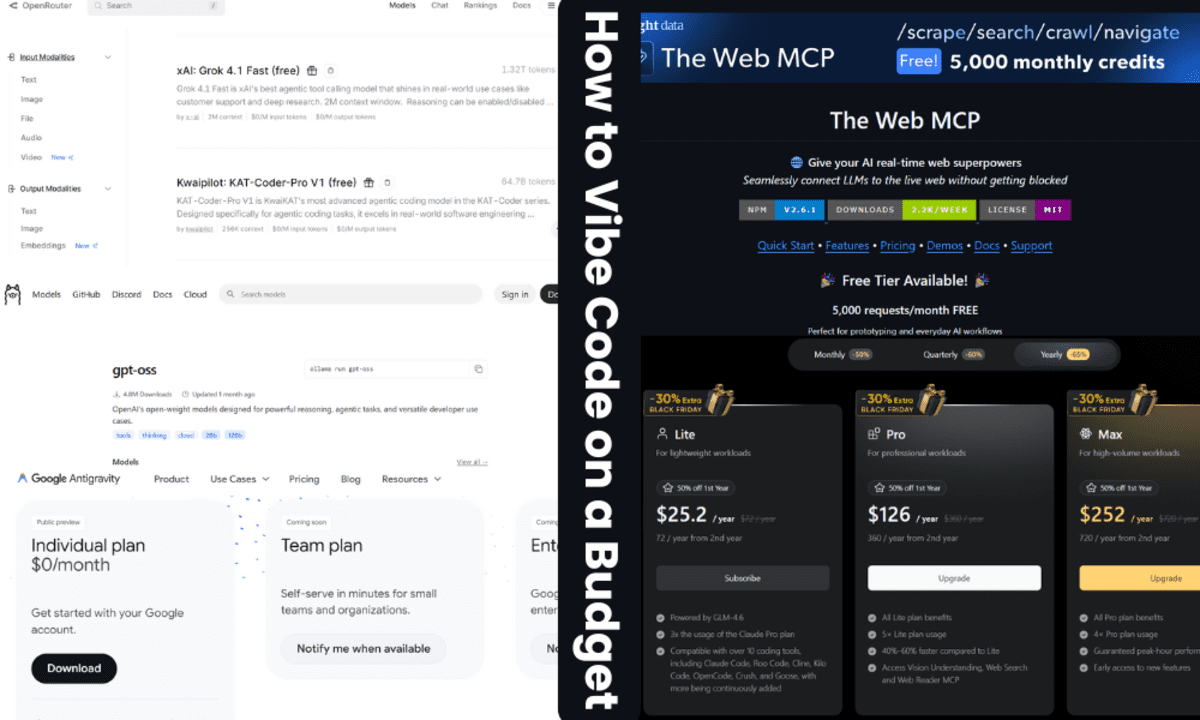
Source: pasqualepillitteri.it
Vibe coding, where the developer writes loose instructions and the agent iterates over visual output, amplifies this effect. Every rendering and feedback loop is a separate API cycle. The cap model assumes a human in the loop. Vibe coding turns that assumption upside down.
Cost Predictability Without a Ceiling#
A cap is not a budget. A budget is an amount you choose to spend. A cap is an amount that forces you to spend nothing after a vendor-defined threshold. FutureX's meter starts at zero and stays linear. If you use the agent for 20 minutes, you pay for 20 minutes. If you use it for 20 hours, you pay for 20 hours. There is no step change at $199.99.
A Predictable Meter, Not a Surprise Bill#
Some developers fear variable pricing because they have seen a $200 bill appear after a weekend of heavy use. That fear is backward with this pricing structure. A weekend of heavy use on FutureX costs at most a few dollars. The meter resets every week, but it does not punish you for using less in one week than another. Spending is a pure function of agent execution time, which is the metric developer teams already use to plan work.
When the Cap Is Better#
To be fair, a flat $200 plan can be better for a team that uses the agent for more than 111 active hours every month without pause. But that is a niche pattern. Most teams use agents in bursts, and bursts are exactly the pattern that a cap punishes. For sustained, always-on workloads, the flat plan wins on paper, but even then the throttling policies mean you often cannot actually consume the full $200 of value.
Migrating Without Losing Velocity#
Switching pricing models should not mean switching workflow. FutureX works as a drop-in replacement for Claude Code, Codex, and Cursor workflows. Set up the repository, choose a model tier, and run. The few minutes spent configuring the agent are recovered in the first session.
The Hybrid Approach#
Start with fx-mini for mechanical tasks like formatting, dependency updates, and test generation. Escalate to fx-pro when you need deeper reasoning about architecture or security. Since billing is per minute, you can route each task to the cheapest tier that can handle it. That is impossible under a single flat cap, where every task draws from the same expensive pool.
Keeping Your Budget Under Control#
You can set a hard dollar threshold in the FIM dashboard. When the month-to-date spend reaches your threshold, FutureX pauses optional agents and shows the current bill. No surprises. No throttling. The cap is not enforced by the vendor; it is chosen by the developer. That is the right direction for AI coding pricing, and it turns budget management from a reaction into a policy.
The New Normal for Agentic Coding#
The $200 cap was designed in an era when coding agents were assistants, not coworkers. Today, they run multi-hour refactors, spin up test suites, and review large diffs without supervision. That kind of usage deserves a pricing model that scales gracefully instead of punishing depth.
FutureX pricing shifts the question from "how many seats do I need?" to "how much agent work do I need done?". For most teams, that makes the $200 cap look like a relic. The Claude Code price hike and the broader movement toward coding agent caps have created an opening for a more honest meter: pay for the agent, not for the possibility of using it. The developer cost savings are not just about avoiding a $200 bill. They are about aligning your tool spend with the actual value produced, one agent-minute at a time.
Related reading

FutureX vs Codex: Full Workflow Match for Less
A feature-by-feature comparison showing how FutureX delivers the same agentic planning, codebase awareness, and review workflow as OpenAI Codex at a fraction of the monthly cost.
FutureX6 min read

From CLAUDE.md to FUTURE.md: Porting Your Memory System to FutureX
A practical walkthrough of porting the CLAUDE.md file-hierarchy memory system to FutureX in FIM, with hooks, subagents, and guardrails intact.
Claude Code migration7 min read
Vibe Code Full-Stack Apps for Under $10/Month
Assemble a complete vibe coding environment around the FutureX API—including MCP servers, the futurex CLI, and full-stack scaffolding—for under $10/month.
vibe coding5 min read