Vibe Coding Without Fear: 5 FutureX Privacy Practices
Five concrete controls and isolation techniques FutureX applies to keep vibe coding private, plus what you can do to harden your own AI coding loop.
- vibe coding security
- AI coding data privacy
- FutureX data protection
- agentic AI security
- secure AI code generation
- prompt injection defense

Vibe coding lets you express intent in plain language and let an agent write the implementation. The productivity gains are real, but so are the risks: AI-enabled attacks, accidental data leakage, and supply-chain contamination. If you are going to hand an autonomous agent access to your repository and your environment, you need defenses that match the speed of the loop. Here are five practices FutureX builds into its architecture, and the same patterns you can adopt today.
1. Threat Model the AI Coding Loop#
Traditional threat modeling assumes humans read code before it runs. Vibe coding inverts that: the agent reads your code and often writes code that executes immediately. Attack surfaces shift from pull requests to prompts, context windows, and the tool calls the agent makes.
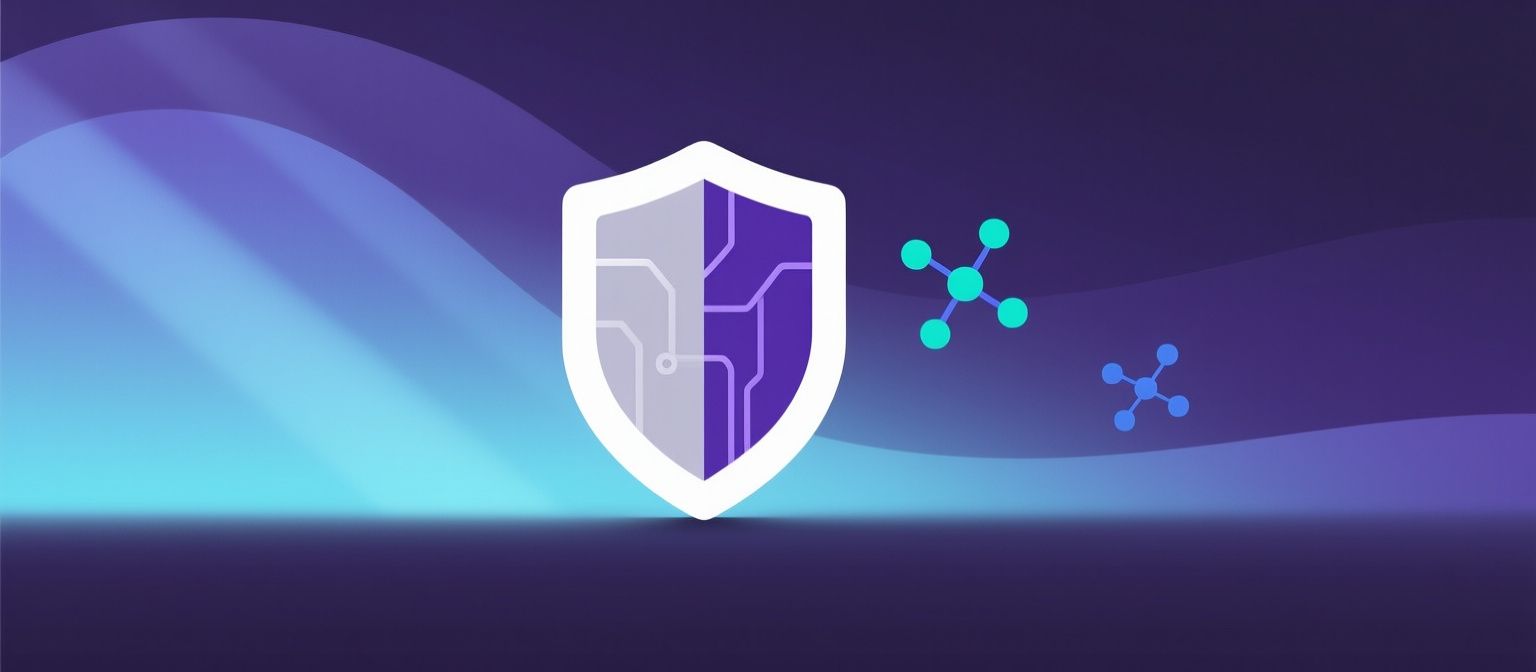
FutureX treats the agent as a semi-privileged actor, not as an extension of the developer. Every file read, command run, or package install is scoped against an explicit permission set. This is the first layer of vibe coding security: defining what the agent may touch before it ever sees your source.
Source: acefortis.com
Why vibe coding security is different#
Unlike a linter or formatter, an agentic tool can invoke side-effecting operations on its own judgment. A malicious prompt injection hidden in a README could instruct the agent to exfiltrate tokens. That is not a theoretical scenario; it is the core threat model for agentic AI security practices. You need to assume the context window is untrusted and enforce boundaries on the tool layer.
What FutureX isolates#
FutureX runs each coding session in a disposable sandbox with its own network namespace, filesystem view, and credential vault. The sandbox has no persistent state between sessions unless you explicitly commit. That means secrets stored in environment variables are mounted read-only, and the agent cannot write to them. For your own setup, that translates to one command: run your coding agent inside a container with --network none unless it needs to reach a package registry, and mount only the working directory.
2. Network Egress Isolation and Zero-Trust Data Flow#
A coding agent that can talk to the internet is useful. A coding agent that can talk to any internet endpoint is a liability. FutureX maintains a strict egress allowlist: only package registries, git remotes, and API endpoints you have approved are reachable from the sandbox. Everything else, including cloud metadata services such as 169.254.169.254, is blocked at the network layer.
This is a defensive control against both exfiltration and misdirection. If a prompt injection asks the agent to send data to an attacker-controlled URL, the request fails before it leaves the sandbox. For AI coding data privacy, network egress filtering is arguably more important than encryption because it stops sensitive code from ever becoming someone else's input.
Denying by default#
FutureX uses a default-deny proxy. The agent can only reach hosts that match patterns you configure, for example registry.npmjs.org or github.com. DNS resolution happens inside the proxy, so the agent cannot learn internal hostnames. If you are building your own workflow, run a local proxy or use a sidecar with firewall rules to deny all egress except ports 443 to specific domains.
What you can do on your side#
Even without an enterprise proxy, you can set HTTPS_PROXY to a forwarding proxy like Squid with an allowlist. Combine that with NO_PROXY left empty so all traffic goes through the filter. This is one of the simplest high-impact moves for secure AI code generation in local environments.
3. Context Minimization and Just-in-Time Permissioning#
FutureX's data protection model follows the principle of least privilege applied to information. The agent does not automatically read your entire repository. Instead, it starts with the file you are editing plus a small index of symbols. When it needs more context, it requests specific paths, and that request is subject to the same permission engine as any tool call.
Limiting what the agent sees#
The context window is not just a cost concern; it is a blast-radius concern. Every token is an opportunity for exfiltration or for an injected instruction to be processed. FutureX trims irrelevant files before they enter context and redacts high-entropy strings, such as API keys and database URLs, even when they appear in files the agent is allowed to read. For your own workflow, use a dedicated directory for each task and keep secrets in a separate secrets manager; do not place them in .env files inside the working tree.
Building your own allowlist#
If you use an extensible agent, define a tool policy that says "read path" and "write path" are separate capabilities. Revoke write access globally and grant it only for the file you intend to produce. This turns the agent into a proposal engine rather than an executor, and it is the essence of agentic AI security practices you can implement in an afternoon.
4. Encryption Everywhere, Including In-Memory#
FutureX data protection is not just about a connection with TLS. All code and prompts are encrypted at rest in storage and in transit between your local client and the sandbox. Beyond that, FutureX uses memory encryption in the sandbox host, so even a compromised kernel module cannot easily dump the raw context. Key material is held in a separate key management service, and keys are rotated after every session.
Data at rest and in transit#
For vibe coding security, you should insist on end-to-end encryption rather than transport-only. If your AI provider stores your code in plaintext for training or for telemetry, that is a data breach waiting to happen. FutureX does not use customer code for model training, and it offers user-managed key options for enterprise. Locally, that means you should encrypt your disk with LUKS or BitLocker and ensure your code editor itself is not writing fragments to unencrypted swap files.
Key rotation and attestation#
FutureX's sandbox is launched only after an attestation step that verifies the host's secure boot state and the image digest. This is the same model you would use with confidential computing: the code generation process runs inside a verified boundary. For your own pipelines, use signed container images and pin their digests, then rotate credentials that the agent consumes at the end of each session.
5. Auditability, Logging, and Reproducible Builds#
You cannot secure what you cannot see. FutureX records every tool call, file access, and network request in an immutable audit log that is separate from the sandbox. The log includes the prompt input, the command executed, and the output digest. This lets you reproduce exactly what the agent did, step by step, which is essential for both incident response and for building trust in the code generation process.
Verifiable trails for agentic AI security practices#
For a vibe coding session, ask: can I list every command that was run? Can I tell which file changed the lockfile? FutureX exposes that through a session transcript that you can replay. That transcript is also stored hashed, so you can prove it was not tampered with. On your side, drive your agent through a terminal multiplexer that logs all output, and commit a manifest of the agent's actions alongside your code.
Reviewing what the agent did#
Reproducible builds are the final safety net. If your CI pipeline builds from a committed lockfile and a pinned environment, then no amount of agent creativity can introduce a hidden dependency. FutureX generates SBOMs for every recommended package, and you should adopt that practice for any AI-assisted project. A quick diff of dependency changes plus a scan for known vulnerabilities is a low-effort way to catch problems that the agent might have absorbed from a malicious package name.

Source: axis-intelligence.com
Bringing It Together: Your Vibe Coding Security Baseline#
FutureX is built to make these controls invisible until they matter. The sandbox, the egress proxy, the context minimizer, the encrypted memory, and the audit log work together so that the only thing you feel is the velocity of the agent. But the same principles apply to any tool, including a local script you wrote yourself.
Start with the easiest wins today. Put your agent in a container with a denied network and a single allowed package registry. Scrub secrets from the working directory. Grant write permission only to the target file. Turn on full command logging. Those four changes eliminate the majority of real-world AI coding data privacy incidents.
FutureX goes further because the threat landscape is not static. AI-enabled attacks are becoming more sophisticated, and prompt injection is now part of the standard attacker toolkit. By combining network isolation, least-privilege context, encryption, and auditability, you turn vibe coding from a trust exercise into a verifiable engineering process. That is the difference between hoping your code is safe and knowing it is.

Related reading
How FutureX Keeps AI Agents From Going Rogue
FutureX prevents AI agents from going rogue with sandboxing, permission gates, prompt-injection defenses, and human-in-the-loop oversight.
AI agent safety5 min read
Claude Code Leak 101: Lessons for AI Agent Security
The Claude Code source leak exposed dangerous assumptions in AI coding agents — and shows why enterprises must audit every tool they adopt.
AI coding agent security7 min read

FutureX for Medical Research: Automating Literature Review and Hypothesis Generation from Weekly ArxivLens Summaries
FutureX turns ArxivLens weekly roundups into structured knowledge, emerging-trend detection, and draft grant proposals, replacing manual literature review with an agentic workflow.
FutureX5 min read