Why Thrive's $2B Bet Reshapes Enterprise AI
Thrive's $2B OpenAI-backed acquisition engine shows how AI roll-ups turn legacy firms into agentic enterprises, and why developers must build deployable workflows.
- enterprise AI
- AI roll-up
- Thrive Holdings funding
- AI agent deployment
- agentic workflows
- OpenAI-backed enterprise
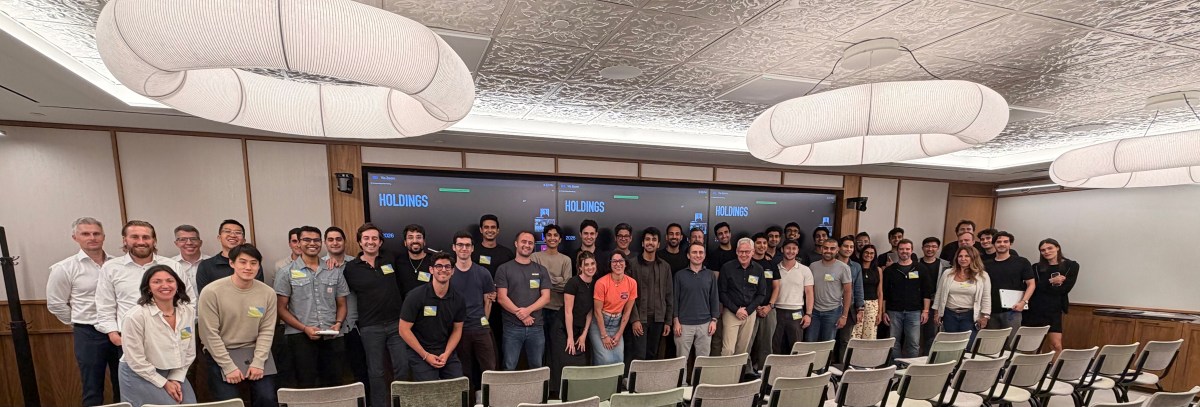
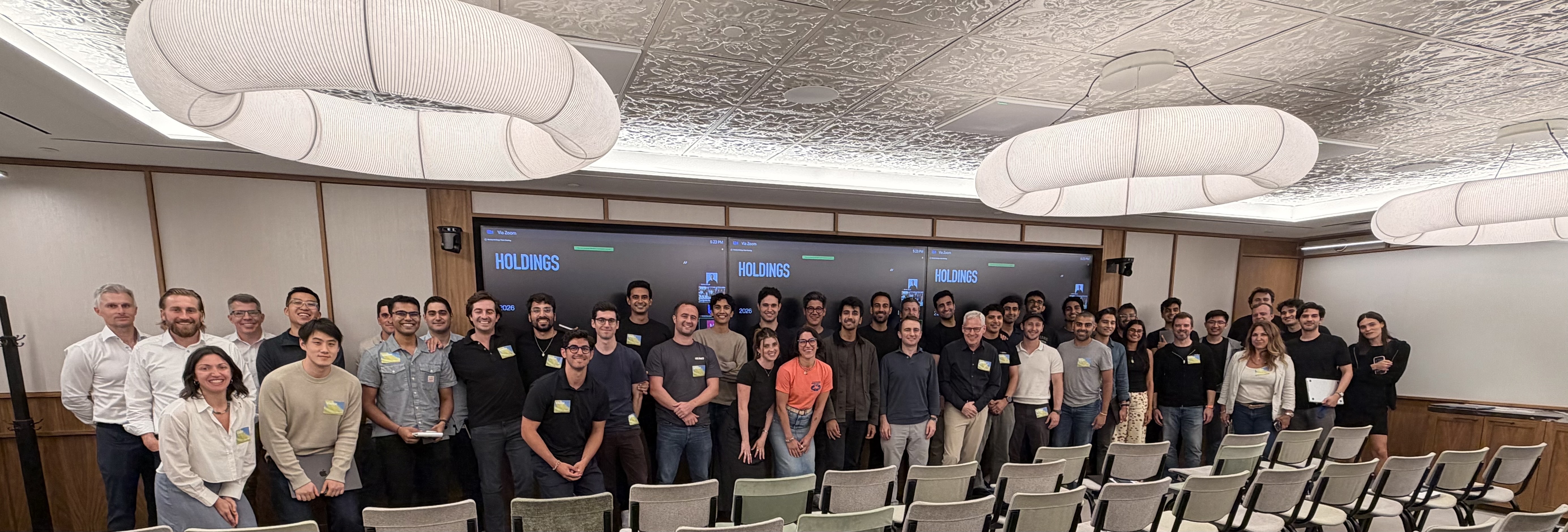
Thrive Holdings has closed a $2B round backed by OpenAI to acquire traditional firms and embed AI across their operations. This is not another enterprise AI product launch; it is an AI roll-up with a synthetic thesis: legacy companies have become the most efficient distribution channel for agentic software. For developers building agentic workflows, the strategy reveals something crucial: the value of enterprise AI is no longer in the model — it is in the deployment, the workflows, and the acquisition economics surrounding them.
The Roll-Up Thesis: Legacy Firms as AI Distribution Channels#
An AI roll-up follows a simple financial logic. Acquire predictable, unglamorous service and back-office businesses. Add AI agent deployment to compress cost structures and expand serviceable workflows. The newly acquired top line becomes a vehicle for selling automation that would take years to build go-to-market for from scratch. Thrive Holdings funding turbo-charges this model with enough equity and debt capacity to move quickly across industries.
What makes legacy enterprises attractive for this strategy?
Data Orthodoxy and Process Repetition#
Legacy firms accumulate decades of structured operational data: invoices, maintenance logs, contracts, customer requests. Their workflows are highly repetitive — precisely the conditions where AI agents perform well. A staffing firm with thousands of timecards a week, a property manager with routine lease renewals, or a logistics operator with exception handling — these are natural agentic candidates. The processes have low tolerance for hallucination but high tolerance for well-scoped automation.
Trust as a Moat#
Enterprises and mid-market buyers rarely purchase AI capabilities directly. They purchase outcomes from vendors they already trust. A roll-up acquires those trust relationships and turns them into deployment surfaces. The AI is not a separate sale; it is an embedded upgrade to existing service contracts. This is a fundamental shift in enterprise AI monetization: instead of selling licenses to AI features, you sell AI-powered outcomes on top of acquired recurring revenue.

Source: singularitymoments.com
The Integration Constraint#
The catch is integration. Legacy enterprises run on dated ERPs, custom on-prem databases, and fragile API surface areas. An AI agent that cannot invoice, update a case record, or query a fleet database is just a chatbot. The roll-up playbook only works when AI agent deployment is treated as a systems integration problem, not a model API problem. Developers who can wire agents into messy enterprise data environments become the critical asset.
The Thrive Playbook: Embedding AI from Back Office to Front Desk#
Thrive’s approach goes beyond a single acquisition. The strategy is to acquire a horizontal slice of labor-intensive businesses, then embed agentic workflows in each vertical. A typical deployment moves through stages rather than a big-bang rewrite.
Stage One: Instrumentation and Observation#
Before agents can act, the company needs an internal view of work. Roll-up engineers map processes, identify handoffs, and insert event-level telemetry into existing software. This is where agents learn the operational language of the business: what an SLA means, what a chargeback looks like, which approval chain matters.
Stage Two: Human-in-the-Loop Agent Deployment#
Early agents handle a narrow slice of tasks under supervision. For example, an AI agent pre-classifies incoming vendor invoices, flags exceptions, and suggests coding. A human reviews the borderline 20% and the agent learns from the corrections. This is a critical design pattern for enterprise AI: agents are deployed as augmentation first, then autonomy is expanded as confidence thresholds are validated.
Source: techcrunch.com
Stage Three: Workflow Composition Across Siloes#
Once isolated agents are stable, the roll-up composes them into larger workflows. The invoice agent links to the payment scheduler, which links to the vendor-rating system, which triggers renegotiation prompts. This is where agentic workflows become an institutional capability rather than a point solution. The acquired company’s repetitive operations become a staging ground for what are effectively autonomous business processes.
What This Means for Enterprise AI Monetization#
The Thrive model commoditizes standalone AI tools. When your acquisition already owns the relationship and the workflow, charging separately for an AI feature feels obsolete. Monetization moves to three places:
-
Contractual performance: Fees tied to measurable SLA improvements, such as cycle time reduction or error-rate drop.
-
Margin expansion: The AI roll-up keeps the cost savings from automation inside the acquired entity, boosting EBITDA and making the next acquisition more affordable.
-
Upselling horizontally: Once a company runs trusted agents in accounting, the same infrastructure extends to HR, compliance, and customer support.
This is a direct challenge to every AI vendor selling subscriptions by seat. An OpenAI-backed enterprise roll-up can give away model access for months to win the account, because the payback comes from operational purchase orders. As a developer, you must stop designing agentic software as a feature that gets licensed and start designing it as a component of an operating margin.
What Developers Building on FutureX Should Take Away#
For the developer community — especially those exploring vibe coding and rapid agent prototyping — the roll-up era changes what production AI looks like.
Build for Portability Across Acquired Stacks#
An AI roll-up will not re-platform every company it buys. Your agentic workflows must run against Oracle, Salesforce, NetSuite, legacy FTP folders, and custom internal tools. Build tool abstractions that separate business logic from transport details. Use connectors and adapter layers, and never assume a canonical data model.
Design for Gradual Autonomy#
An agent that either does nothing or does everything is unusable in a legacy environment. The most elegant agentic workflow is one that degrades gracefully: when a confidence score is low, it routes to a human; when an audit trail is missing, it pauses. FutureX gives you the scaffolding to define guardrails, escalation rules, and rollback policies in code. Treat those as first-class requirements, not afterthoughts.
Treat Enterprise Agents as Evaluation Problems#
The biggest failure mode in enterprise AI deployment is silent regression. When an acquired company changes a pricing rule, will your agent notice? Build evaluation suites that run against recorded operational history, and set up canary deployments where a new agent version processes synthetic transactions before touching production. The roll-up model rewards developers who can prove consistent behavior across a portfolio of businesses.

Source: singularitymoments.com
Focus on Unit Economics, Not Demo Effects#
Thrive’s bet works because AI directly improves the unit economics of low-margin services. That means your agentic workflows must be judged by throughput per human hour, exception handling rate, and time-to-value. Write metrics instrumentation into your agent code from day one. If you cannot report the cost per automated transaction, the workflow is not ready for an AI roll-up environment.
Conclusion#
Thrive Holdings’ $2B funding round signals that enterprise AI monetization is shifting from model access to business acquisition. The OpenAI-backed enterprise roll-up model treats AI agent deployment as a way to reshape cost structures and revenue margins across entire portfolios of legacy companies. For developers on FutureX, the lesson is to build agents that integrate deeply, degrade safely, and prove their worth in operational metrics. The next phase of enterprise AI won’t be won by the smartest model — it will be won by the most deployable agentic workflow.
Related reading

FutureX vs Codex: Full Workflow Match for Less
A feature-by-feature comparison showing how FutureX delivers the same agentic planning, codebase awareness, and review workflow as OpenAI Codex at a fraction of the monthly cost.
FutureX6 min read

The Agentic Gold Rush: Why Coding Agents Are the New Frontier
Cognition's reported $40B valuation talks signal a repricing of agentic AI, and FutureX is designed to capture the durable value in this exploding coding agent market.
AI coding agent investment7 min read

From Vibe Coding to Production Engineering with FutureX
Vibe coding is booming, but casual prompts don't scale; FutureX agentic coding bridges the gap by bringing production-grade engineering to natural language programming.
vibe coding6 min read