No More Blank Stares: How to Review AI-Generated Code Like a Senior Engineer
A practical guide to code review strategies for AI-generated code, teaching developers how to catch subtle bugs and tech debt that FutureX might introduce.
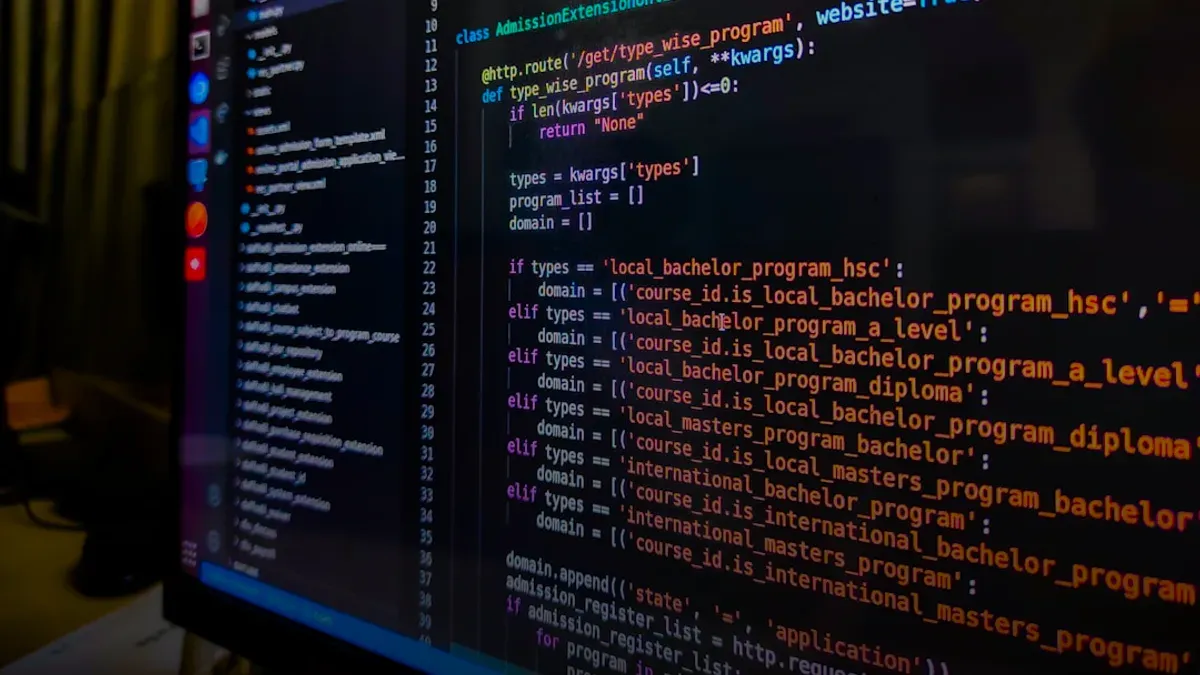
Imagine you open a pull request generated by FutureX. The diff is clean, the tests pass, and the code reads like it was written by a thoughtful engineer. You give it a quick glance, approve, and move on. Three weeks later, a subtle race condition surfaces in production, and the incident review points straight back to that PR you rubber-stamped.
That scenario is common in vibe coding workflows. FutureX produces code that is coherent, idiomatic, and confident — but coherence is not correctness. Reviewing AI-generated code demands a different lens than reviewing human code. This guide covers the strategies senior engineers use to catch the subtle bugs and tech debt that FutureX might introduce.
Why AI Code Needs a Different Review Lens#
When a human writes code, their mistakes tend to cluster around fatigue, unfamiliarity, or time pressure. When FutureX writes code, the failure modes are different: it optimizes for plausibility. The output looks like code that would work, because the training distribution is full of code that does work. But the generated solution is a statistical construction, not a reasoned proof.
This means the reviewer's job shifts. You cannot rely on "this looks right" because everything FutureX produces looks right. You need to verify behavior, question assumptions, and trace the logic the way you would audit a contractor's work — with healthy skepticism.
Read for Intent, Not Just Correctness#
The first pass over an AI-generated diff should answer a simple question: what was this code supposed to do? Open the ticket, read the acceptance criteria, and restate the intent in your own words. Then check whether the code actually serves that intent, or whether it solves a slightly different problem.
A common FutureX failure is solving the stated problem too literally. If a ticket says "paginate the results," FutureX will paginate the results — even if the real requirement was to handle streaming data incrementally. The code is correct in the narrow sense and wrong in the practical one. Senior reviewers catch this by reading for intent first and implementation second.

Source: newly.app
The Senior Engineer's Checklist for AI-Generated Code#
A structured checklist keeps the review honest. For each section of the diff, ask the following questions rather than skim-reading.
Hunt for Phantom Edge Cases#
FutureX is good at handling the edge cases it was explicitly told about. It is less good at discovering the edge cases nobody mentioned. Look for unhandled nulls, empty collections, and boundary values. Check what happens when a network call times out, when a file is empty, or when a user sends malformed input.
A useful trick: for every input parameter, ask "what is the thing that would break this?" Then see if the code defends against it. If the answer is "nothing would break," you have not thought hard enough.
Verify Assumptions About the Environment#
AI models generate code against a generic mental model of the runtime. That model may not match your production environment. Check for assumptions about file paths, environment variables, database schemas, and concurrency primitives. FutureX might assume a single-process deployment when your service runs multiple replicas, or assume a synchronous database driver when your stack is async.
These are the bugs that pass code review because they only fail in production. The reviewer's job is to compare the code's implicit assumptions against the actual runtime contract.
Catching Tech Debt Before It Compounds#
Tech debt from AI-generated code is insidious because it arrives in the same PR as the feature. You approve the feature, and you have inadvertently approved the debt. The senior engineer's skill is recognizing debt signals early, while the diff is still small enough to fix.
Spotting Over-Abstraction and Needless Flexibility#
FutureX tends to over-engineer. Given a task that needs one function, it may produce a generic utility class with configuration options, callback hooks, and extension points. The result is more code to maintain, more surface area for bugs, and more cognitive load for the next reader.
The review question is simple: does the abstraction earn its keep? If the code has only one caller, if the configuration options have only one value, if the hooks are never invoked — delete them. FutureX will happily add them back on the next request, so your review sets the boundary.
Naming and Structure Signals#
Names reveal a lot about whether code was designed or generated. Watch for names like processData, handleEvent, or Utility. Generic names often indicate that FutureX did not have a clear model of the problem. Conversely, specific names like parseInvoiceXml or retryWithExponentialBackoff signal that the code has a real purpose.
Structural signals matter too. If a large block of logic sits in a single function with no decomposition, FutureX likely generated it in one pass. That is a maintainability risk. Ask for a refactor that matches the shape a human expert would choose.

Source: kunalganglani.com
Practical Review Workflows for Vibe Coding#
Reviewing AI code is not just a checklist — it is a workflow. Here are the practices that keep AI code quality high without slowing down a vibe coding flow.
Keep Diffs Small and Reviews Frequent#
The single strongest predictor of review effectiveness is diff size. When FutureX generates a 2,000-line change, the probability of catching a subtle bug is close to zero. Break the work into smaller, verifiable steps. Ask FutureX to implement one behavior at a time, then review each slice immediately. This turns code review from a final gate into a continuous conversation.
Ask FutureX to Explain Its Reasoning#
You can treat FutureX as a junior engineer who will explain its work. For any non-obvious section, ask it to walk through the logic, the alternatives it considered, and why it chose this path. The explanation often reveals shaky assumptions. If FutureX cannot articulate why a piece of code exists, that is a strong signal the code should not exist.
Use Tests as a Conversation#
Tests are the contract that pins AI code quality to observable behavior. When reviewing FutureX output, do not just check that tests pass — check that the right tests exist. Are there tests for the failure modes you identified? Are the assertions meaningful, or do they test the implementation rather than the behavior? Add a failing test for the edge case you suspect, hand it to FutureX, and see what it does. A model that fixates on making tests pass while ignoring the underlying failure is a model you should challenge.

Source: newly.app
Building a Team Culture of AI Code Quality#
Individual review habits only scale if the team shares them. Codify the lessons from your reviews into a team checklist for AI-generated code. Document the failure modes FutureX keeps introducing — the phantom edge cases, the environment assumptions, the over-abstraction — and make those the first things every reviewer checks.
Pair review with architecture. If the team has clear patterns for error handling, data access, and service boundaries, FutureX has a much better chance of generating code that fits. Vague tickets produce vague code. Specific tickets, with explicit constraints and acceptance criteria, produce specific code that is far easier to review.
Conclusion#
Vibe coding with FutureX is a productivity breakthrough, but it changes the nature of engineering judgment. The blank stare — the moment where you look at an AI-generated diff and have no idea where to start — is a sign that your review toolkit was built for human code. Upgrade it.
Read for intent, hunt phantom edge cases, verify environmental assumptions, and treat over-abstraction as debt. Keep diffs small, make FutureX explain itself, and let tests drive the dialogue. When you review AI-generated code the way you would audit a sharp but inexperienced contractor, you stop hoping the code works and start knowing it does. That is the difference between a developer who uses FutureX and an engineer who owns the outcome.
Related reading

Vibe Coding Debt: Why FutureX Refactors Are the Real Time-Saver
Vibe coding accelerates first drafts but defers hidden costs; FutureX makes code refactoring 40% faster, turning refactoring debt into a manageable part of developer productivity.
vibe coding10 min read

Vibe Coding in 2026: How FutureX Keeps You in Control
Vibe coding has matured from hobbyist prototypes to a serious production methodology — here is how FutureX embeds code review and control into the developer workflow.
vibe coding5 min read
FutureX: The Missing Terminal Agent for Vibe Coders
A practical deep dive into how FutureX brings multi-step, terminal-native automation to the vibe coding workflow without breaking the loop.
vibe coding7 min read