From Gemini's Coding Gaps to FutureX: The Fallout of Google's AI Shuffle
Google's AI reshuffle diluted Gemini coding, and FutureX fills the void with a dedicated agent designed for the real developer workflow.
Google's AI reshuffle was billed as a way to move faster, but for developers leaning on Gemini for day-to-day coding, it felt like a retreat. Computational constraints, leadership disagreements, and a priority structure that rewarded broad consumer demos over deep developer workflows left Gemini coding in an awkward position: capable of generating useful snippets, but not reliable as an agentic system. FutureX closes that gap with a purpose-built FutureX coding agent that treats developer experience as the product, not the byproduct.
The AI Reshuffle Impact on Gemini Coding#
Google's reshuffle realigned teams around generative AI, but coding was treated as one use case among many. Compute budgets were allocated to flagship multimodal projects, while long-context inference and tool-calling infrastructure - two things that matter enormously for coding - received less attention. Leadership disagreements over open versus closed strategies and over whether assistants should act or only answer made it worse. Product planners wanted an agent that could execute; research teams wanted a general model that could react. Those agendas rarely converged.
For developers, the AI reshuffle impact was tangible. Endpoint latency targets drifted. Context-window limits became more aggressive. Tool-calling support varied by model variant and region. Vibe coding with Gemini worked when the task was small and well contained, but anything that required reading an unfamiliar repo, modifying multiple files, and running tests was a gamble.

Compute Constraints Are Real Coding Constraints#
Coding is not a single inference call. A typical agentic task - fix a failing test, refactor a module, add a feature across layers - requires a sequence of model calls with real feedback interleaved. The model must inspect file trees, read context, propose a plan, run a command, observe the output, and adjust. That loop is compute-hungry and latency-sensitive. If the underlying serving infrastructure is optimized for batch generation and consumer chat, the loop gets slow and brittle.
Google's computational constraints did not just limit throughput; they shaped behavior. Shorter context windows meant Gemini coding could not hold an entire repository in view. Tight cost controls encouraged the model to produce conservative, generic answers instead of exploring multiple viable designs. Underfunded coding efforts show up everywhere in the developer experience: in truncated traces, dropped tool calls, and answers that look correct but do not compile.
A dedicated coding agent needs a different resource equation. FutureX starts with the loop, not the chat. The FIM platform exposes purpose-tuned variants - fx-pro for complex agentic tasks, fx-fast for quick edits and reviews, fx-mini for lightweight completions, and fx-eco for high-volume background work - so developers can choose the right compute profile for each part of the workflow.
The Leadership Disconnect: Agents Are Not Speakers#
One of the most damaging dynamics in Google's AI shuffle was the confusion between chat assistance and agency. A chat model can answer a coding question well; an agent must act on it. Acting means reading the filesystem, invoking a linter, running tests, patching a file, and looping until the failure disappears. That requires a tight integration between model, runtime, and developer tools - something a generalized assistant team is rarely built to own.
When coding is a side project, agentic features arrive half-baked. The model might call a function, but there is no sandbox, no permission model, and no rollback mechanism. Developers are then blamed for using the tool unsafely. This pattern eroded trust in Gemini coding long before the reshuffle. It also made teams wary of the broader category: AI agent frameworks promised autonomy but delivered brittle prompt chains, and vibe coding got a reputation for producing code that could not be shipped.
The lesson is that coding agents are not chat interfaces with a few extra tools. They are systems with state, constraints, and accountability. FutureX treats them that way by giving the agent its own execution environment, explicit permission boundaries, and a reversible action model. If a change goes wrong, it can be reverted cleanly. If a test fails, the agent knows because it ran the test, not because it guessed.
FutureX: A Dedicated Coding Agent for Real Developers#
The FutureX coding agent was built to occupy the space that underfunded coding efforts vacated. It does not come as a general-purpose chatbot that happens to answer programming questions. It comes with first-class support for repository context, build tools, test frameworks, and shell commands. It is an engineering tool.
Purpose-Built Foundation#
FutureX organizes the entire workflow around a task. It plans first, then executes, then verifies. It can open a repository, map its structure, identify the relevant files, and produce a visible plan of action. Every step is traceable, so a developer can see not just the final patch but the reasoning and the intermediate commands. That is the developer experience developers actually want, and it is missing from most generic assistants.
The model variants behind FutureX are named for their jobs: fx-pro for deep agentic reasoning, fx-fast for snappy interactive edits, fx-mini for inline suggestions, and fx-eco for low-cost background work. This matters because coding workloads are heterogeneous. A full refactor does not need the same latency profile as an autocomplete. By exposing the choice explicitly, FIM gives developers control rather than hiding everything behind one oversubscribed endpoint.
Agent Frameworks, Without the Fragility#
Many AI agent frameworks introduce a steep learning curve and still fall apart on simple failure handling. FutureX includes practical agentic capabilities - multi-step planning, tool selection, error recovery - but hides the orchestration details. Developers do not have to write chain-of-thought prompts or manually manage a state machine. The agent handles the loop while the developer reviews and intervenes.
Measurable Developer Experience#
The AI reshuffle impact taught developers to ask hard questions: How much will this call cost? Why did the agent choose that file? Can I stop the run safely? FutureX answers all three. Every session includes timings, token usage, per-step costs, and tool calls. The interface is built for people who need to integrate AI with a production pipeline, not for someone having a casual conversation with a chatbot.
From Vibe Coding to Engineered Shipping#
Vibe coding is not the enemy. It is a fast way to explore, prototype, and get unstuck. But vibe coding needs a solid base layer to become engineering. When a developer says 'make this function faster' or 'add a retry loop with exponential backoff,' the agent should not just produce a plausible block of code. It should understand the surrounding code, check for edge cases, run the relevant tests, and show exactly what changed.
That is the gap Gemini coding left open. Google's AI shuffle pushed infrastructure and incentives away from the deep, looping, tool-driven workloads that define real software development. FutureX closes the gap with a coding agent that is dedicated, observable, and relentlessly developer-focused. For teams building with agents, the difference is the difference between a clever autocomplete and a reliable engineering assistant.
Conclusion#
The fallout of Google's AI shuffle is a reminder that coding agents are not an application of general AI. They are a distinct discipline with their own constraints: long context, tool integration, execution safety, and low-latency iteration. FutureX was built for exactly this discipline. It gives developers a path from a rough idea to a tested, mergeable change - and it does so without pretending that coding is just another chat use case. If you care about developer experience, it is time to stop waiting for a reshuffled roadmap and start using a dedicated FutureX coding agent.
Related reading
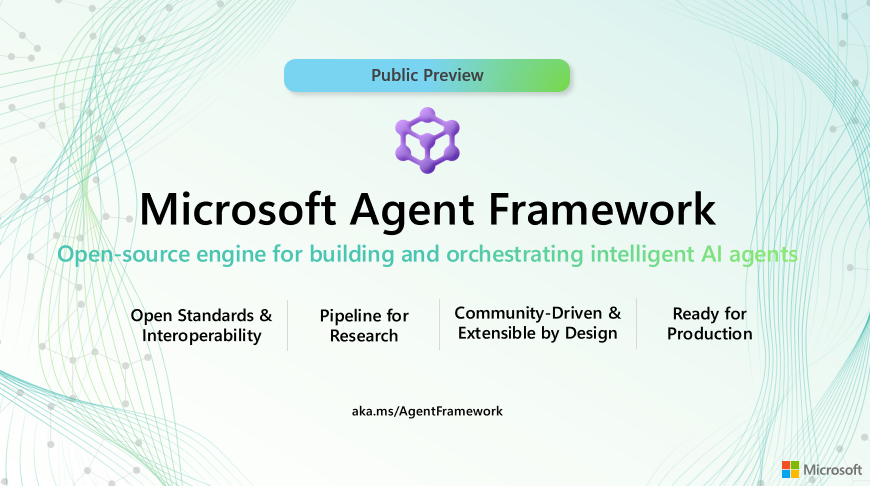
The Open-Source Agent Framework Race: Microsoft's Move and What It Means for AI Coding
Microsoft's Agent Framework enters a crowded open-source field, and developers need to understand how it and other AI agent frameworks shape vibe coding workflows with agents like FutureX.
Microsoft Agent Framework7 min read

The Agentic Gold Rush: Why Coding Agents Are the New Frontier
Cognition's reported $40B valuation talks signal a repricing of agentic AI, and FutureX is designed to capture the durable value in this exploding coding agent market.
AI coding agent investment7 min read

From Vibe Coding to Production Engineering with FutureX
Vibe coding is booming, but casual prompts don't scale; FutureX agentic coding bridges the gap by bringing production-grade engineering to natural language programming.
vibe coding6 min read