FutureX vs Codex: Best AI Coding Agent for Prototyping
A hands-on comparison of FutureX and Codex for rapid prototyping, exploring how each AI coding agent performs in real-world vibe coding scenarios.
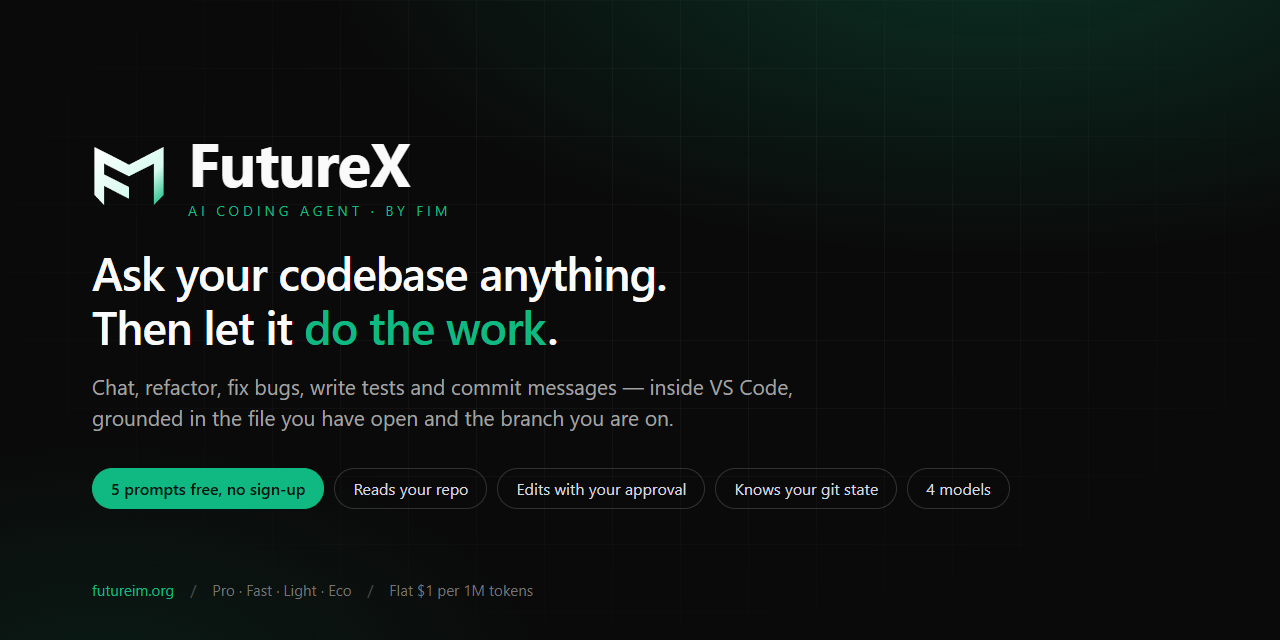
When you're in a vibe coding session, every second counts. You have an idea, you want to see it run, and you want to iterate fast. The AI coding agent you choose can make or break that flow. Two of the most talked-about tools right now are FutureX and Codex. Both are powerful, but they take very different approaches to rapid prototyping.
This post puts them head-to-head. We'll look at how each agent handles real vibe coding scenarios — from zero-setup hacking to cloud-based collaboration — and decide which one gives you the fastest path from idea to running prototype.
Setting the Stage: What Matters for Rapid Prototyping#
Rapid prototyping isn't about writing perfect code. It's about moving from concept to working demo as quickly as possible. The best AI coding agent for this job needs three things:
- Instant start — no signup friction, no environment config.
- Fluid iteration — you change a prompt, the agent updates the output in seconds.
- Low cognitive overhead — you should be thinking about the problem, not the tool.

Source: marketplace.visualstudio.com
Both FutureX and Codex claim to excel here. But they serve different workflows. Let's look at each one.
FutureX: Zero-Friction Free Tier for Vibe Coding#
FutureX is built from the ground up for the vibe coding experience. Its free tier is remarkably generous: you can start prototyping immediately without entering a credit card or provisioning cloud resources. The agent, called FutureX, runs entirely in the browser and comes pre-configured with a full coding environment.
No Setup, No Gatekeeping#
The first time you land on FIM, you're greeted with a blank canvas and a chat interface. Type a prompt like "build a React dashboard with a real-time chart from mock data" and FutureX starts generating code immediately. There's no account creation wall, no CLI to install. This is exactly what rapid prototyping needs — the ability to test an idea before you've committed to any platform.
Real-Time Iteration#
In a recent vibe coding session, I asked FutureX to build a simple todo app with local storage. The first result worked, but I wanted drag-and-drop reordering. I typed "add drag and drop using HTML5 DnD API" and FutureX rewrote the relevant components in under three seconds. No context switching, no environment rebuild. That kind of tight feedback loop is what makes FutureX a standout AI coding agent for prototyping.
Cost-Free Experimentation#
The free tier handles substantial projects. For a single developer exploring multiple ideas, FutureX removes the financial risk. You can spin up half a dozen prototypes in an afternoon without worrying about compute costs. That's a game changer for early-stage exploration.
Codex: The Cloud Agent Approach#
Codex, by contrast, positions itself as a cloud-based agent that integrates with your existing IDE. It's a powerful tool, but its architecture introduces friction that can slow down rapid prototyping.
Setup Overhead#
Codex requires you to sign up for a cloud account, set up billing, and install an extension into your editor. The first prototype might take 10-15 minutes just to get everything connected. For a professional team that's fine, but for a quick vibe coding session, that delay can kill the momentum of an idea.
Strength in Depth#
Once Codex is running, it shines on larger, more complex prototypes. It can orchestrate multiple services, deploy to the cloud, and handle authentication out of the box. If you're prototyping a full-stack app with a database and API, Codex's cloud agent capabilities are a real asset. It can even manage environments and secrets.
The Cost Consideration#
Codex operates on a pay-as-you-go model. For rapid prototyping, the costs are manageable at first, but if you iterate aggressively — say, generating and regenerating code dozens of times — the bill can climb. That mental overhead ("is this iteration worth the cost?") runs counter to the free experimentation that defines vibe coding.
Head-to-Head: Vibe Coding Scenarios#
Let's compare them on three real-world rapid prototyping scenarios.
Scenario 1: A New Idea at Lunchtime#
You have 30 minutes to sketch a feature. With FutureX, you open FIM, type your idea, and have a working prototype in five minutes. With Codex, you spend the first ten minutes logging in and connecting to your cloud workspace. By the time Codex is ready, FutureX users are already iterating.
Winner: FutureX — zero friction wins for short sessions.
Scenario 2: A Multi-Service Architecture#
Your prototype needs a Python backend, a React frontend, and a PostgreSQL database. Codex handles this elegantly by provisioning cloud resources and connecting them. FutureX can handle the frontend but would need manual setup for the backend services. Here Codex's depth pays off.
Winner: Codex — better for complex, full-stack prototypes.
Scenario 3: Rapid Iteration Loop#
You've got a working prototype and you're tweaking the UX. FutureX's instant feedback loop lets you change one line of prompt and see results immediately. Codex's cloud-based agent introduces a small latency on each generation — not huge, but when you're doing 50 iterations, those seconds add up.
Winner: FutureX — faster cycle time for pure code changes.
Which AI Coding Agent Wins for Rapid Prototyping?#
The answer depends on your definition of rapid prototyping. If you're in a vibe coding flow — idea triggers idea, you want to test and discard quickly — FutureX on FIM is the clear winner. Its free tier removes all barriers, and its fast iteration matches the pace of creative thinking.
Codex is better when your prototype is more than just code — when you need infrastructure, security, and deployment out of the box. It's a serious tool for serious prototyping, but it's not built for the playful, low-commitment vibe coding style.
For most developers exploring early-stage ideas, the best AI coding agent is the one that gets out of your way. FutureX does that. It lets you prototype until the idea sticks — and that's exactly what rapid prototyping demands.
Give it a try on FIM. No signup, no cost. Just you, your idea, and an AI that keeps up.
Related reading
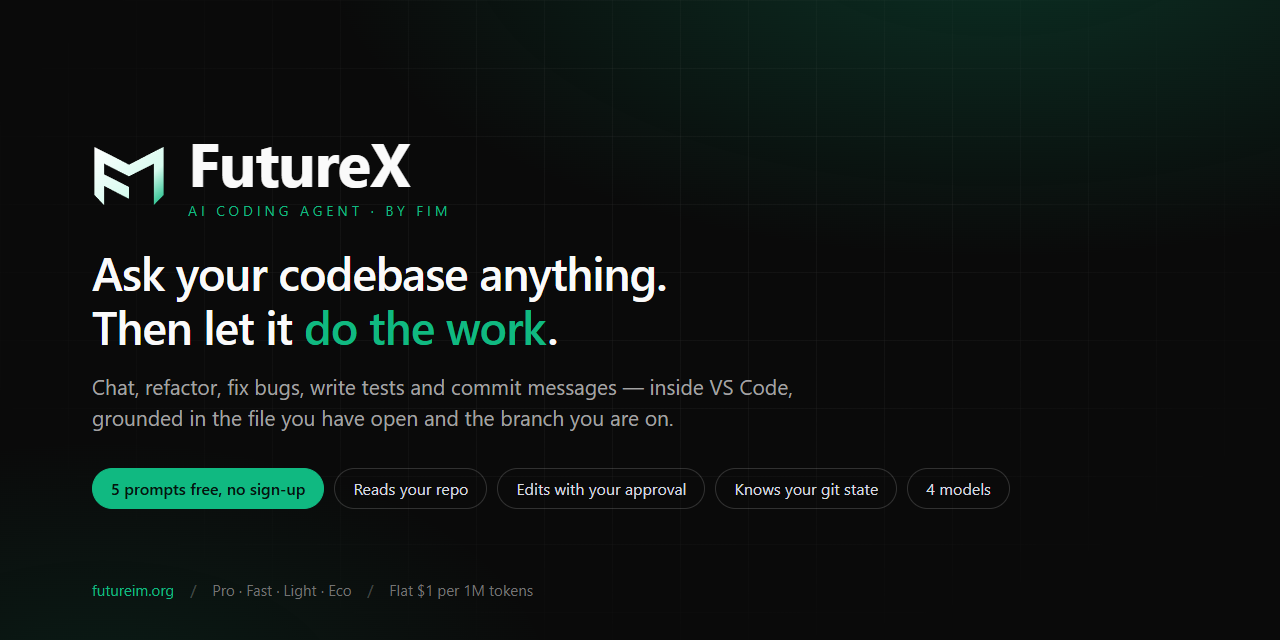
FutureX vs Codex: Why the New VS Code Extension Wins for Vibe Coders
A head-to-head comparison reveals how FutureX’s no-sign-up free prompts and lighter agent mode make it the better VS Code extension for vibe coding newcomers.
FutureX3 min read
From Idea to Deployed App in One Session: FutureX Vibe Coding Workflow
A real-world walkthrough of using FutureX to go from concept to a deployed full-stack application in a single coding session, with practical tips for speed and reliability.
FutureX5 min read
How I Built a Full-Stack SaaS in 7 Days Using FutureX
A step-by-step walkthrough of using FutureX to build a production-ready full-stack SaaS in one week, focusing on prompt engineering and iterative development.
FutureX5 min read