FutureX vs. the Agent Framework Wars: Built-In Beats DIY Orchestration
A technical look at why a purpose-built terminal AI agent like FutureX beats assembling AI agent frameworks by hand, and where the complexity really lives.
The AI agent framework wars are in full swing. Microsoft Agent Framework, LangGraph, CrewAI, and a dozen other options all promise to turn raw model calls into reliable, tool-using agents. If you are a developer who wants to get code shipped, though, these frameworks hand you something you did not ask for: a distributed-systems problem in miniature. FutureX takes the opposite route. It is a purpose-built terminal AI agent that brings AI orchestration with it, so the complexity stays inside the product instead of landing in your repo. This is a coding agent comparison that focuses on the one metric that matters after the demo videos end: how much of your time does it eat?
The Allure of the AI Agent Framework#
Frameworks are seductive because they give you building blocks. Microsoft Agent Framework, for example, provides agent primitives — tools, workflows, memory, and guardrails — and lets you compose them. You decide how many steps an agent can take, which tools it can call, how it recovers from failure, and how state is serialized between runs. That level of control feels like engineering. In practice, it is more like paperwork.
from agent_framework import Agent, Tool, Workflow

agent = Agent(
    name="coder",
    model="fx-pro",
    tools=[read_file, write_file, run_shell],
    max_iterations=25,
    recovery=ExponentialBackoff(retries=3),
)

workflow = Workflow()
workflow.add_step("parse", parse_task)
workflow.add_step("execute", agent)
workflow.add_step("validate", validate_output)
The snippet above is the happy path. It does not show the schema validation for every tool, the prompt templates you will tune, the token budget you will fight, or the state serialization you will debug at 2 a.m. By the time you have a working agent, you have built a small runtime. You are now maintaining AI orchestration code, which is exactly what you were trying to avoid.
Source: langchain.com
The Hidden Tax: AI Orchestration Becomes Your Job#
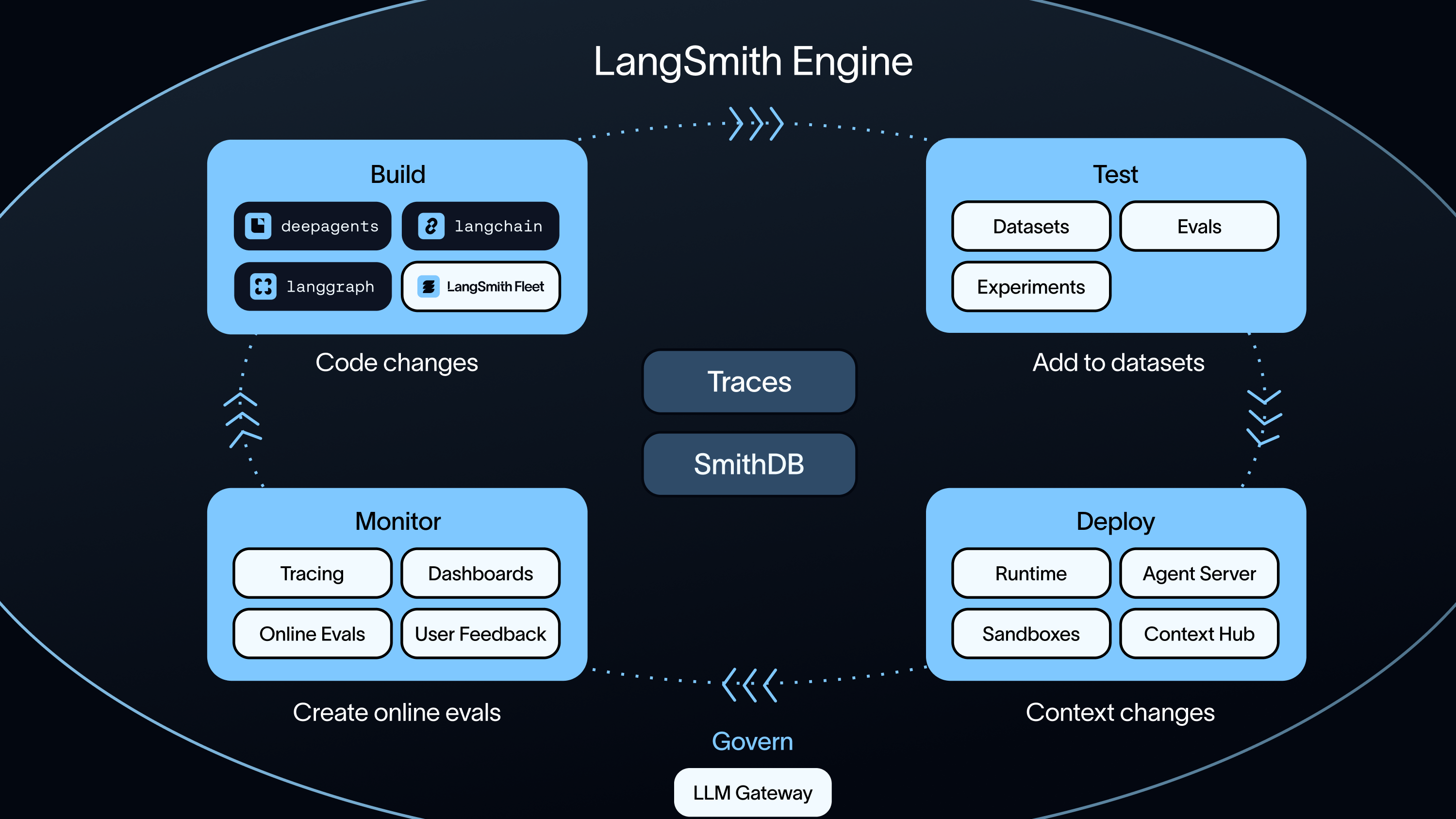
With a framework, the orchestration is in your hands — which means every failure is your failure. That has three consequences that rarely show up in the marketing material.
The Unpacking Problem#
Framework abstractions leak. When a workflow misbehaves, you do not get a clean error. You get a stack trace that walks through graph nodes, retry logic, and context-window truncation. You will spend more time unpacking what the framework did than fixing the original task. A purpose-built terminal AI agent hides that loop because the loop was designed, tested, and tuned by the people who built the model.
The Token Tax#
Generic AI agent frameworks are built for breadth. They cannot assume a specific protocol for context packing, so they use a generic one: replay the system prompt, append the full history, and hope. For code, that is inefficient. FutureX is a terminal AI agent that knows the shape of a repo — file structure, git status, recent diffs, and test output — and packs context accordingly. You do not pay for tokens describing files the agent has already seen.
The Dev-Tools Gap#
Most frameworks assume your agent runs in a notebook, a server, or a chat sidebar. A terminal AI agent runs where the code lives. That changes the feedback loop: FutureX can execute a test, read the failure, edit the source, and re-run the suite without you copying anything between applications. That is the difference between orchestrating an agent and using one.
What a Good Terminal AI Agent Does Without You Asking#
When you use FutureX directly, the features you would build in a framework are already there. No configuration required:
- Repo-aware context: it scans the project, identifies the language and build system, and loads the relevant files before the first step.
- Sandboxed execution: shell commands run in a controlled environment, so a bad
rmdoes not take down your machine. - Checkpoint and rollback: every edit is staged as a diff, and you can rewind a change the moment a test fails.
- Self-correcting loops: failed tests are not dead ends. FutureX reads the error, adjusts the approach, and tries again.
The point is not that frameworks cannot do these things. It is that with a framework, you build, test, and maintain them yourself. With FutureX, they are the product.

Source: github.com
FutureX vs Agent Framework: The Coding Agent Comparison#
Let's make the comparison concrete, using Microsoft Agent Framework as the representative DIY approach.
| Concern | DIY orchestration (Microsoft Agent Framework) | Built-in agent (FutureX) |
|---|---|---|
| Conversation loop | You configure step counts and termination conditions | Built in, tuned for coding tasks |
| Tool registration | You write schemas and wire dispatch | Pre-wired for file, shell, and git operations |
| Context packing | You manage prompts, history, and truncation | Automatic, repo-aware |
| Error recovery | You design retry and fallback policies | Built-in retries and self-correction |
| State persistence | You serialize and reload state | Automatic per session |
| Time to first useful run | Hours to days | Seconds |
This is the crux of the FutureX vs agent framework debate. It is not about whether frameworks have more features — they often do. It is about who carries the complexity. A framework distributes complexity across your codebase. FutureX concentrates it inside the agent, where it can actually be solved.
When AI Agent Frameworks Still Make Sense#
To be fair: AI agent frameworks are the right tool for some jobs. If you are building a multi-user SaaS product that embeds agents, a framework gives you the control you need for tenant isolation, policy enforcement, and custom billing. If your orchestration needs are unique — a proprietary planning algorithm, a non-standard tool graph — a framework is a reasonable foundation. But those are product-engineering problems, not coding-loop problems. For the local workflow, the one where you sit in a terminal and want code written, tested, and fixed, a generic framework is a tax on every session.
Conclusion: Simplicity Is a Feature#
The agent framework wars will continue, and that is fine. Each release brings better primitives and better AI orchestration. But the winning move for most developers is not to adopt a framework — it is to refuse the complexity altogether. FutureX is a terminal AI agent built to be used, not assembled. When you measure a coding agent comparison in terms of setup time, effort, and mental overhead, a built-in agent beats DIY orchestration every time. Use a framework when you are building infrastructure. Use FutureX when you are building software.
Related reading
From CLI to Context: Why VS Code Extensions Outshine CLI Agents
VS Code extensions provide the context-rich, multi-step environment that CLI agents lack, making them the natural home for modern agentic AI workflows.
agentic AI6 min read

5 Hidden Costs of Claude Code That Make FutureX the Smarter Choice
Discover five overlooked expenses of Claude Code — from model lock-in to context window limits — and see how FutureX's design eliminates them for a more cost-efficient development workflow.
Claude Code4 min read

Why FutureX Beats Claude Code for Developers on a Budget
A detailed cost-benefit analysis showing how FutureX delivers comparable or superior coding assistance at a fraction of Claude Code's subscription price, with real-world task examples.
FutureX4 min read