FutureX for Startups: Build Your MVP in Days Without Sacrificing Architecture
Learn how startup founders and solo developers can use FutureX to build an MVP quickly while maintaining a clean, scalable architecture.
Startups live and die by speed. The first version of your product — the MVP — needs to ship in days, not months. Traditional rapid development often leads to technical debt that cripples future iteration. FutureX, the coding agent built into the FIM platform, enables a different path: rapid development without sacrificing architectural quality. By combining AI-assisted generation with developer oversight, FutureX lets you produce production-ready code that scales from day one.
Why Architecture Matters in an MVP#
The Myth of "We'll Fix It Later"#
Every startup founder has heard the phrase: "We'll refactor after launch." In practice, the pressure to ship new features turns that promise into permanent debt. A sloppy MVP built with copy-paste patterns or monolithic codebases makes pivoting painful. FutureX helps you avoid this trap by generating code that follows clean architecture principles from the start.
Scalable Architecture vs. Over-Engineering#
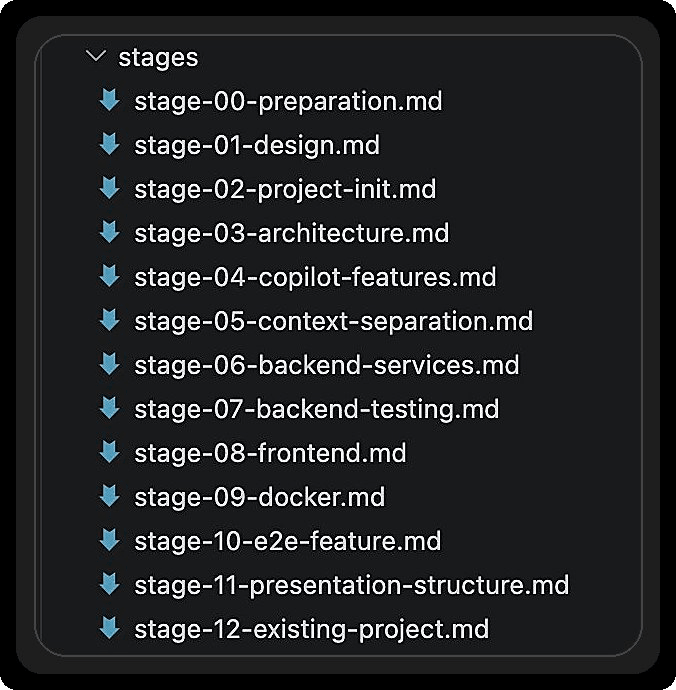
Scalable architecture doesn't mean enterprise complexity. For an MVP, it means modular components, sensible separation of concerns, and minimal coupling. FutureX encourages this by default — its generated code separates business logic from infrastructure, uses dependency injection, and follows domain-driven design patterns when appropriate.
Source: aristeksystems.com
Speeding Up Development with FutureX#
Context-Aware Code Generation#
FutureX understands your project's structure. Instead of dumping generic snippets, it analyzes your existing models, routes, and services before generating new code. For example, when adding a new endpoint, FutureX reads your ORM schemas and validation patterns to produce consistent, idiomatic code that integrates seamlessly.
Iterative Refinement Through Prompts#
You don't need to write everything from scratch. Describe the feature in natural language — "Create an order creation endpoint with validation for required fields and stock checking" — and FutureX generates the controller, service, validation, and test stubs. You review, tweak, and commit. This reduces development time by 60-80% compared to manual coding.
Testing Infrastructure as a Byproduct#
Every piece of code FutureX generates comes with unit and integration tests. For a startup, this means you don't have to choose between speed and test coverage. The tests not only validate the current behavior but also document assumptions for future developers — including your future self.
Keeping Architecture Clean During Rapid Iteration#
Enforcing Consistency Across the Codebase#
When you iterate fast, inconsistency creeps in. One developer uses a repository pattern, another uses raw queries. FutureX mitigates this by following the conventions you define. You can configure code style, architectural patterns (e.g., clean architecture, layered architecture), and naming conventions once in the FIM project settings, and FutureX applies them every time it generates code.
Refactoring Without Fear#
As your MVP evolves, you'll need to refactor. FutureX can help safely re-architect parts of the codebase: it understands dependencies and can propose refactoring steps with minimal risk. For example, if you need to extract a microservice from a monolithic module, describe the boundaries and FutureX generates the service interfaces, code migrations, and adapter tests.
Avoiding Common Startup Pitfalls#
Startups often make these mistakes:
- Over-coupling business logic to frameworks. FutureX encourages separation — your core logic stays independent of Flask, FastAPI, or Django.
- Neglecting error handling. FutureX always includes structured error responses and logging placeholders.
- Skipping configuration management. Generated code uses environment-var-based configuration, making deployments straightforward.
A Practical Example: Building a Subscription API#
To illustrate, imagine you're building an MVP for a SaaS product. You need user authentication, subscription plans, and payment integration. Without FutureX, you'd spend days wiring up auth, writing models, setting up webhooks, and testing edge cases.
With FutureX, you can:
- Describe the user model and authentication flow (e.g., email/password and OAuth).
- Generate the entire auth module — signup, login, password reset, token refresh — with proper async handling and rate limiting.
- Define subscription plans in a simple prompt: "Create subscription plans with monthly and yearly billing, stripe integration, and webhook handling for failed payments."
- FutureX generates the Stripe client, webhooks receiver, plan CRUD, and a flexible pricing model that supports feature flags.
All generated code follows SOLID principles, uses environment variables for secrets, and includes comprehensive tests. You spend most of your time validating the generated logic and making minor adjustments, not writing boilerplate.
Conclusion#
Startup development doesn't have to be a choice between speed and quality. FutureX empowers developers to ship MVPs in days while maintaining a scalable architecture that supports future growth. By generating context-aware, tested, and well-structured code, FutureX reduces technical debt from day one. The result: you move fast, sleep well, and spend more time on what matters — finding product-market fit.
Give FutureX a try on the FIM platform for your next MVP. Your architecture (and your future self) will thank you.
Related reading
Vibe Coding Best Practices: Lessons Learned from 10 Projects Built with FutureX
After building 10 projects with FutureX, we share practical lessons on code review, testing, and integrating AI code with manual refinements to maintain quality while moving fast.
vibe coding3 min read
From Weekend Project to Demo-Ready: Building a Chat App with FutureX
Learn how to build a fully functional chat application over two days using FutureX, with concrete prompt strategies and seamless backend-frontend integration.
FutureX4 min read

The FutureX Prompting Playbook: Write Better Prompts for Faster, More Reliable Code
Learn advanced prompt engineering patterns for FutureX — including context injection, iterative refinement, and error handling — to generate code that is both fast and dependable.
FutureX3 min read