The FutureX Advantage: Why Your Next Hire Will Be a Developer Who Masters AI Agents
Developers who orchestrate multi-agent systems with FutureX are outpacing their peers — and reshaping what developer hiring should look for.
The job description for "senior developer" is quietly being rewritten. For the past two years, most of the industry focused on single-agent assistance: one model, one chat window, one autocomplete. That era produced measurable gains, but it also produced a ceiling. A lone model, no matter how capable, has a bounded context window, a single point of failure, and one temperament. Developers who push past that ceiling are not writing longer prompts. They are building systems — multi-agent systems in which specialized AI agents plan, implement, review, test, and document code under a single orchestration layer. This post examines why those developers are outperforming their peers and how FutureX is lowering the barrier to building those systems.
From Copilots to Multi-Agent Systems#
The first wave of AI-assisted development was fundamentally reactive. A developer pasted code, asked for a fix, and reviewed the diff. Useful, but the developer remained the bottleneck: every step required a human round trip. Vibe coding took this further by letting developers describe features in natural language, but the results were prototypes, not production pipelines. Left to itself, a single agent produces code that compiles but does not integrate — no test strategy, no security review, no performance analysis.
Multi-agent systems invert the relationship. Instead of one agent guessing at the whole task, the developer designs a team of agents with distinct roles, then coordinates them. The developer becomes an architect of work, not a typist. This is the core skill separating the current cohort of high-output engineers from everyone else.
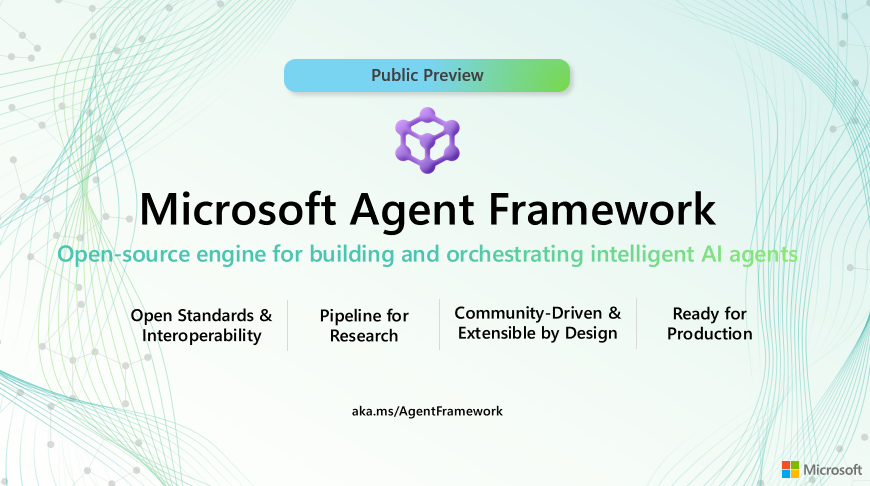
FutureX was built for this shift. It presents agent orchestration as a first-class programming model rather than an add-on. You define agents, their responsibilities, their tools, and their handoff rules in a declarative workflow. FutureX handles scheduling, context management, and result aggregation. The result is a development loop that runs like a well-managed engineering team: a planner breaks the work down, an implementer writes the code, a reviewer critiques it, a tester exercises it, and an editor polishes the output.
Source: devblogs.microsoft.com
Why Multi-Agent Systems Outperform Single Agents#
The advantages are not speculative; they fall out of how modern agent frameworks behave in practice.
Decomposition beats brute force#
A single agent solving a large task must hold the entire problem in context. Multi-agent systems decompose the problem into sub-tasks, each with a narrow scope. Narrow scope means focused context: the test-writing agent sees the module under test and test conventions, not the entire repository. Focused context means higher-quality output and fewer hallucinations.
Specialized roles produce better judgment#
Different tasks need different temperaments. A code-writing agent should be fluent and fast; a code-reviewing agent should be skeptical and deliberate. With FutureX you can assign different models per role — fx-fast for high-volume mechanical edits, fx-pro for architectural planning and code review, fx-mini for triage and classification. This is not possible in a single chat window, and it is the difference between a code review that rubber-stamps and one that catches real defects.
Parallelism collapses cycle time#
Workflows in FutureX execute agents in parallel where dependencies allow. An API refactor can trigger test regeneration and documentation updates at the same time. What previously took four sequential agent calls now takes one. Over a sprint, the compounding effect is dramatic.
Isolation contains failures#
When agents are isolated, a failure in one node does not poison the rest. A failing test writer does not corrupt the implementation. The orchestration layer can retry, route around, or escalate. In single-agent systems, a bad edit cascades into an unreadable conversation history and a broken codebase.
Source: alicelabs.ai
Building Multi-Agent Workflows with FutureX#
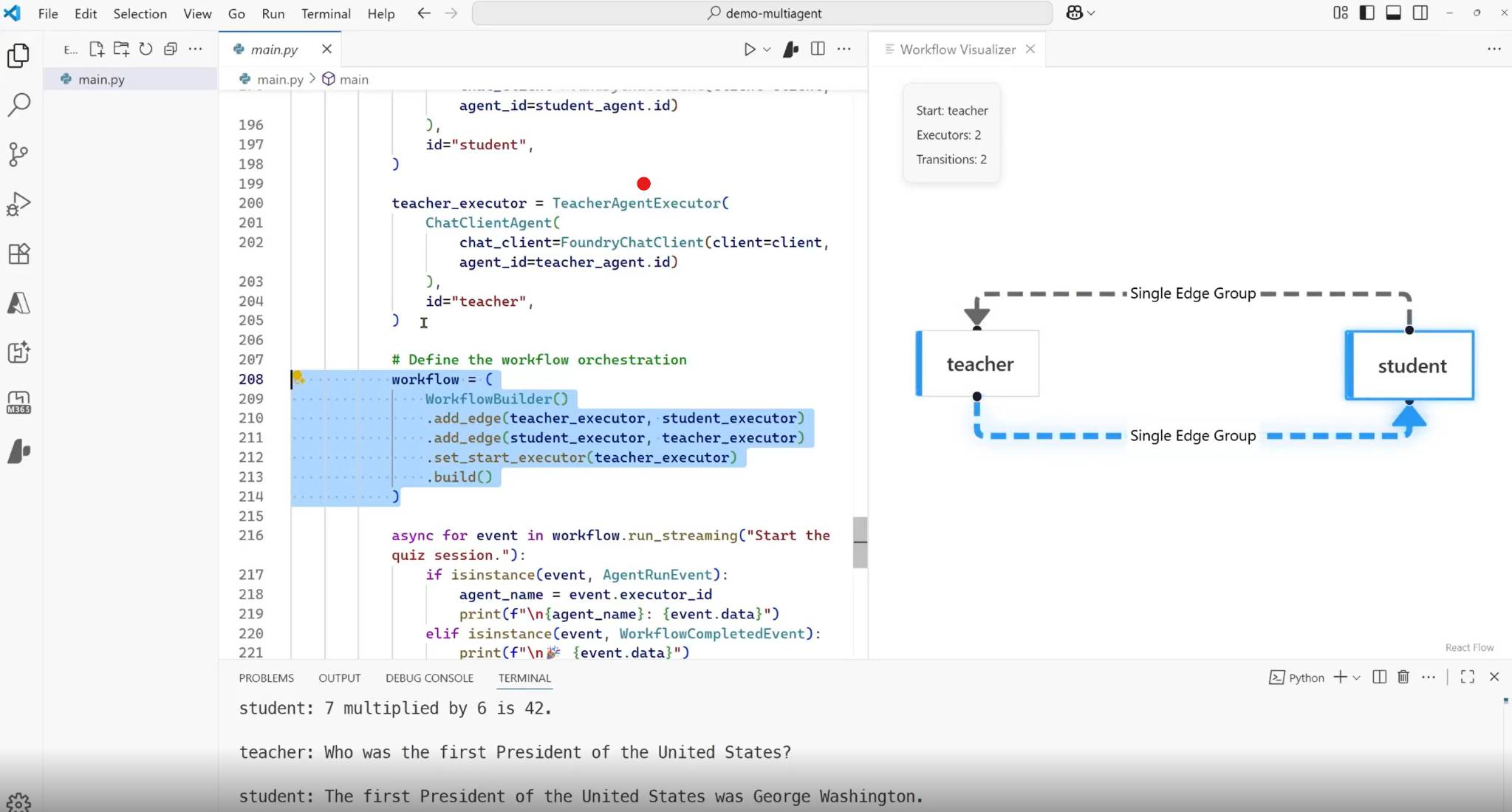
Concretely, a FutureX workflow is a YAML or TypeScript definition that declares agents and their interactions. Here is a minimal example for a code-refactoring pipeline:
agents:
  planner:
    model: fx-pro
    task: break the refactoring request into atomic sub-tasks
  implementer:
    model: fx-fast
    task: apply sub-task diffs to the codebase
  reviewer:
    model: fx-pro
    task: review diffs for correctness, style, and security
  tester:
    model: fx-fast
    task: generate and run tests for changed modules
  aggregator:
    model: fx-pro
    task: merge validated changes and write the final summary

workflow:
  - planner
  - implementer
  - reviewer
  - tester
  - aggregator
Every node in the graph is meaningful. The workflow engine executes the graph, maintains shared state, and produces an audit trail. That audit trail is one of the most underrated features of FutureX: every change is attributed to a specific agent, carries a rationale, and can be replayed — essential for debugging and compliance.
The declarative nature matters because it makes multi-agent systems inspectable. A single-agent prompt is a black box; a FutureX workflow is a document your whole team can review. That reviewability is exactly what vibe coding lacks and what enterprises require before they let AI agents touch production.
Escalation and guardrails#
Production workflows need guardrails. FutureX provides a human-in-the-loop gate: an agent can pause and request approval before destructive operations. In practice, developers define escalation policies — "ask for approval before deleting code, but proceed automatically on test additions." Treating approval as a first-class workflow primitive is what turns an agent framework into a delivery pipeline.
Choosing the right model per role#
FutureX exposes four model tiers, and role-based assignment is where they shine. Use fx-pro for planning, architecture, and review. Use fx-fast for mechanical transformation and test generation. Use fx-mini for classification, triage, and metadata extraction. Use fx-eco for bulk, low-stakes processing where cost matters more than latency. Developers who master role-to-model assignment get better quality at lower cost than anyone running a single model on every task.
Source: devblogs.microsoft.com
From Single Agents to Engineering Culture#
The teams adopting multi-agent workflows are not just faster; they are structurally different. The strongest pattern we see is the "agent squad": a small team of humans who maintain a library of reusable workflows. One developer owns the refactoring pipeline; another owns the release checklist pipeline. These workflows live in the repository, versioned, reviewed, and improved over time — exactly like regular code.
This has a profound implication for developer hiring: the skill that matters is no longer just "can write code." It is "can design and operate systems of agents that write code." The developer who understands multi-agent systems — who knows when to parallelize, when to enforce a human gate, and how to evaluate agent output — is worth several engineers who merely know how to prompt a chat window.
Developer Hiring Is Changing#
Recruiting pipelines are still tuned for the single-agent era. Job descriptions ask for "experience with AI code assistants," which is the equivalent of demanding familiarity with a keyboard. The real differentiator is experience with multi-agent orchestration. Forward-looking hiring teams are updating their signals:
- Portfolio reviews now include "workflow repos." Developers who commit their agent definitions and orchestration code alongside application code demonstrate a reproducible engineering practice rather than a one-off demo.
- Technical interviews now feature design exercises: "Given this codebase, design a multi-agent workflow to migrate it to a new framework." Candidates who decompose the problem, assign roles, and define guardrails outperform those who immediately start writing prompts.
- Pairing sessions evaluate whether a candidate can guide agents through a failed build, route around a stuck agent, and read the audit trail to diagnose a bad change.
None of this is hype. These are observable behaviors, and they predict performance better than trivia about language frameworks. The candidate who builds workflows is designing an automated team; the candidate who writes prompts is automating a single pair of hands.
Evaluating Agent Fluency in an Interview#
If you are a hiring manager, you can start evaluating agent fluency with concrete prompts. Ask candidates to sketch a small FutureX workflow on a whiteboard. Watch whether they ask about failure modes, about which model tier should handle which role, and about how to observe intermediate results. Strong candidates will immediately ask about retries, idempotency, and the audit trail — the details that separate toy demos from production systems.
For candidates, the path is clear: build multi-agent workflows publicly. Contribute to open-source agent frameworks. Write about your orchestration decisions. Create a workflow that regenerates your own website and commit it to the repository. Hiring managers are looking for evidence of judgment, not certificates.
The Future of Agent-Driven Development#
We are moving toward a world where most code is written and maintained by systems of AI agents, and humans focus on architecture, standards, and judgment. The transition will not be linear, and it will not be risk-free. But the direction is clear. Developers who internalize multi-agent thinking now will define the engineering practice of the next decade; those who wait for the tooling to mature will be catching up.
FutureX is designed to meet developers where this shift is happening. Because it treats agent orchestration as a programming model — with declarative workflows, role-based model routing, and human-in-the-loop gates — it rewards the same skills that make a great engineer: decomposition, communication, and careful review. The future of development is not a single superintelligent assistant. It is a well-engineered team of specialized agents, and the person building that team is the hire you want to make.
Related reading

I Used FutureX to Build a Bot in 3 Days: Costs and Lessons
A hands-on cost analysis of building a FutureX bot in three days, including the debugging traps, wasted API calls, and the exact process changes that would have cut the bill in half.
FutureX9 min read

Building an Internal Tool with FutureX: Token Costs and 3 Mistakes
A transparent breakdown of the token bill from building an internal dashboard with FutureX, including the three prompt and workflow mistakes that doubled it and how to avoid them.
FutureX11 min read

FutureX Built My Chrome Extension in 72 Hours
A technical retelling of building a Chrome extension with FutureX in 72 hours, covering the hidden costs of iterative vibe coding, a full cost breakdown, and the mistakes that almost broke the build.
FutureX8 min read