From Surveillance Pricing to Agentic Shopping: How FutureX Builds a Personal Price Watchdog
A technical walkthrough of vibe-coding a price watchdog agent on FutureX that monitors retailers, detects personalized price discrimination, and alerts you before you overpay.

Instacart's AI pricing experiments have put surveillance pricing on the developer radar. When a retailer can adjust the price you see based on your location, purchase history, or even the device you are holding, the old mental model of one price for everyone breaks. The practical countermeasure is agentic shopping: software that watches prices on your behalf. On FutureX, you can vibe-code a price watchdog agent that monitors retailers, detects personalized price discrimination, and alerts you before you overpay.
What Surveillance Pricing Actually Changes#
Instacart AI pricing is not speculative. Dynamic pricing systems have been studied in grocery delivery for years, and the disclosed experiments confirm that prices can vary by user segment. From the shopper's perspective, the problem is information asymmetry: the retailer has a detailed model of you, but you have no model of the retailer's pricing logic.
A price watchdog agent flips that asymmetry. Instead of checking five stores manually, you delegate the monitoring to an autonomous agent that runs on schedule, collects quotes, and compares them against a baseline. That is the core of agentic shopping: not just finding the cheapest price, but detecting when the price itself is being weaponized against you.
Designing a Price Watchdog Agent#
Before opening FutureX, it helps to sketch the components. A practical agent has four parts:
Data Collection#
The agent needs to fetch prices for a target product across retailers. This can be done through public APIs where available, or through scraper modules that parse product pages. For the personalization angle, the agent needs to collect prices from multiple vantage points: a logged-out session, a logged-in session, and ideally sessions from different locations.
Price History Store#
Raw scrapes are useless without history. Store every observation with a timestamp, the retailer, the product identifier, and the session context. A simple SQLite database or a lightweight document store is enough for a single-user deployment.
Baseline and Anomaly Detection#
Personalized price discrimination only matters if you can prove a price is anomalous. Compute a rolling baseline, such as the median price per retailer per product, and flag quotes that deviate beyond a threshold. The agent should distinguish between a genuine price drop and a personalized markup.
Notification Channel#
The whole point of a watchdog is that it barks. Emails and push notifications work, but a chat bridge (Slack, Telegram, or a local notification daemon) is easier to consume.

Source: cnbc.com
Vibe Coding the Agent on FutureX#
Vibe coding is the fastest way to build this. On FutureX, you describe the agent in natural language, and the coding agent scaffolds the project, writes the scraper, and iterates on your feedback. A good starting prompt looks like this:
Build a Python price watchdog agent. It should monitor the price of a given product on three retailers, store observed prices in SQLite, compute a rolling median baseline per retailer, and alert me via Telegram when a price deviates from the baseline by more than 5%. Also flag cases where a logged-in session sees a higher price than a logged-out session.
FutureX will generate the project structure, pick libraries (requests or httpx for fetching, BeautifulSoup for parsing, schedule or cron for orchestration), and produce a working first version. The vibe coding loop matters here: you run the agent, notice that one retailer blocks the scraper, and ask FutureX to add retries, rotate user agents, or switch to a headless browser.
Detecting Personalized Price Discrimination#
The most interesting component is the discrimination detector. A single price observation is not evidence; a pattern is. Here is the logic the agent uses:
def flag_personalized_markup(observations, baseline_price, threshold=0.05):
    for obs in observations:
        if obs.session_type == "logged_in" and obs.price > baseline_price * (1 + threshold):
            report = {
                "product": obs.product_id,
                "retailer": obs.retailer,
                "observed_price": obs.price,
                "baseline_price": baseline_price,
                "delta_pct": (obs.price - baseline_price) / baseline_price * 100,
            }
            yield report
The baseline comes from logged-out or incognito observations, which approximate the public price. When your logged-in price persistently sits above that baseline, you have a signal of personalized pricing. The agent can strengthen the signal by collecting prices from multiple IPs or locations, simulating different profiles that the retailer might segment.
Confounding Factors#
Dynamic pricing is not always discrimination. Surge pricing, stock levels, and time-of-day effects can move prices for everyone. The watchdog agent should therefore compare against the same conditions: same time window, same fulfillment method (delivery vs. pickup), and same geographic region. That is why the session context fields in the price history store matter as much as the price itself.
Alerting the User Without Noise#
A watchdog that alerts on every fluctuation becomes noise, and noise kills adoption. The agent applies two filters before sending a notification:
- Persistence: the anomaly must appear across at least two consecutive runs.
- Magnitude: the delta must exceed the configured threshold (5% is a reasonable default for groceries).
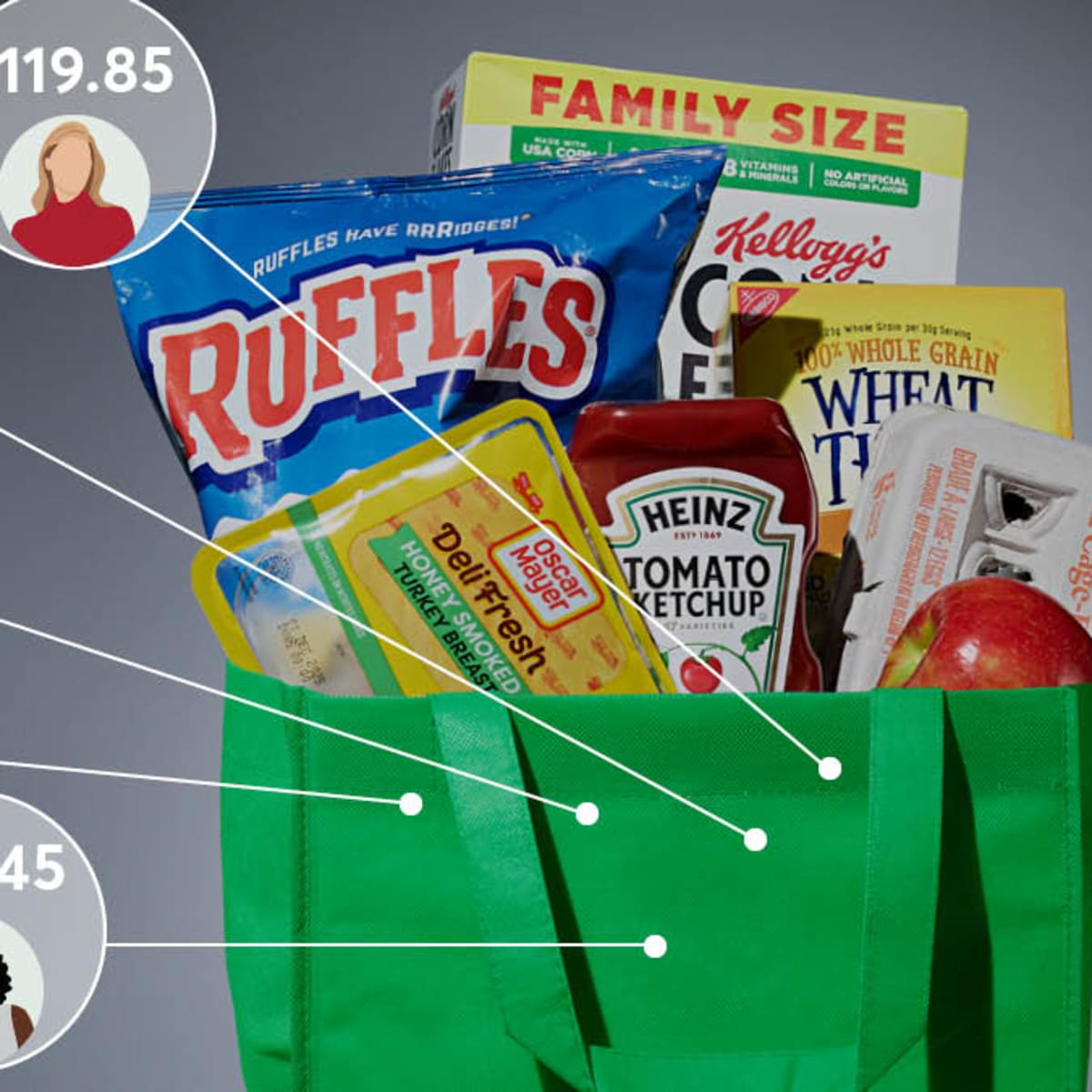
When both conditions hold, the alert should carry enough context to be actionable: product name, retailer, baseline price, observed price, and the percentage delta. If the agent has location data, it includes that as well, since a price difference across ZIP codes is a textbook surveillance pricing pattern.
Source: consumerreports.org
Running the Watchdog on a Schedule#
FutureX makes deployment straightforward. The agent can run as a recurring job; every six hours is a good cadence for grocery pricing, frequent enough to catch changes and gentle enough to avoid retailer rate limits. Each run appends to the price history store, recomputes baselines, and evaluates the alerting rules.
The same agent loop also supports on-demand queries. Ask FutureX to extend the agent with a command line interface, and you can trigger an immediate check before adding an item to your cart. That turns the watchdog from a passive monitor into an active shopping assistant, making the transition from surveillance pricing to agentic shopping concrete.

Source: cnbc.com
Limits and the Road Ahead#
Scraping retailer sites is a legal gray area. Terms of service often prohibit automated access, and retailers can serve captchas or fingerprinting scripts that break headless browsers. A production version of this agent should prefer official APIs or partner data feeds where possible.
There is also an adversarial angle: retailers will eventually try to detect watchdog agents just as they detect other bots. The durable defense is collective. If many users run the same open-source watchdog and share anonymized price observations, the baseline becomes a public dataset, and personalized price discrimination becomes much harder to hide. Community-run price feeds are the natural next step for agentic shopping.
Build Your Own Watchdog#
Surveillance pricing is a structural shift in how retailers set prices. The agentic response is not to shop more, but to delegate the watching. With FutureX and vibe coding, the barrier to building a personal price watchdog agent is almost zero: describe the behavior, iterate on the edge cases, and deploy it as a scheduled job. The code is simple, the data is yours, and every alert you receive is a small victory against asymmetric pricing.
Related reading
Fight Surveillance Pricing With a FutureX Counter-Agent
Learn how to vibe-code a low-cost agent on FutureX that detects when retailers use your personal data to raise prices.
vibe coding5 min read

Vibe Coding Meets Agentic Power: The FutureX Leap
FutureX is the AI coding agent that turns vibe coding prototypes into production-ready code, carrying features end-to-end with tests, review, and deployment.
vibe coding4 min read
Vibe Coding vs. AI Price Gouging: Build an Open-Source Alternative with FutureX and LangGraph
Use LangGraph and FutureX to vibe-code a transparent, consumer-side price monitor that exposes AI price gouging instead of falling for it.
LangGraph6 min read