Fight Surveillance Pricing With a FutureX Counter-Agent
Learn how to vibe-code a low-cost agent on FutureX that detects when retailers use your personal data to raise prices.
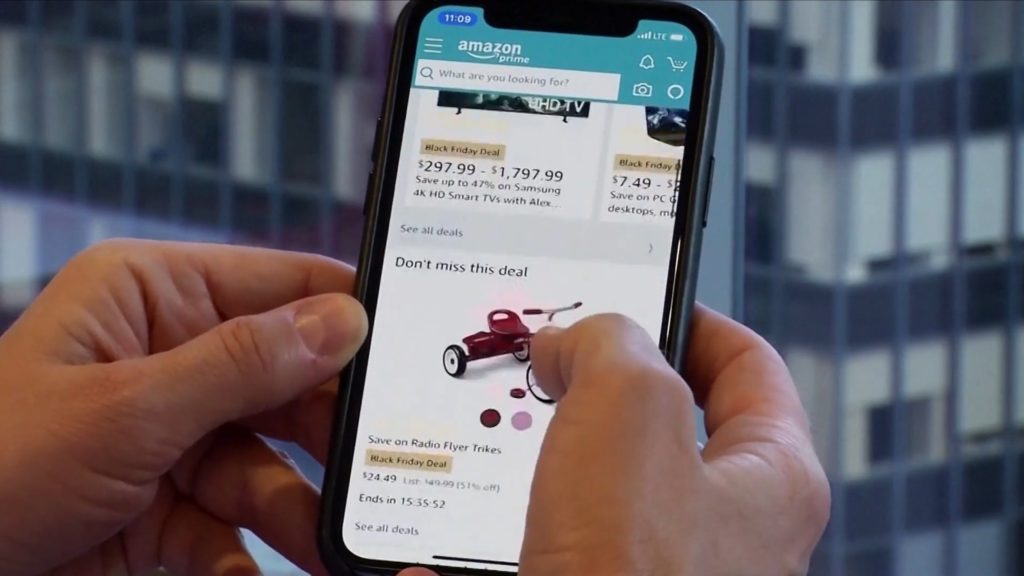
The recent surveillance pricing scandal exposed what privacy advocates have warned about for years: retailers are feeding loyalty-card data, browsing history, and location signals into AI models to tune prices per customer. The same data mining that powers targeted discounts quietly powers targeted price increases. You don't need an enterprise data team to fight back. With FutureX on FIM, you can vibe-code a counter-agent in an afternoon — and run it for pennies.
The surveillance pricing playbook#
Surveillance pricing works because the retailer has more data about you than you have about the market. Your cart, your click timing, your willingness to pay from past behavior — all of it becomes a feature vector in a dynamic pricing engine. When you visit a site twice in one day, that can nudge the price up. When your loyalty account shows you only buy premium brands, the algorithm adjusts accordingly.
How prices bend to your data#
The mechanics are straightforward once you know what to look for. A retailer embeds a tracking script in its product pages. That script fingerprints your browser, ties it to your purchase history, and sends a bid request to a pricing model. The model returns a multiplier. The page then renders a price unique to your session. If you are in an affluent postal code or have a history of abandoning carts with expensive items, the multiplier leans up.

Source: afr.com
This is not a conspiracy theory; it is a documented business practice. The scandal revealed internal documents where teams described capturing "willingness to pay" signals from app activity and social media correlation. The result is a market where the same product shows three different prices to three different people in the same city.
Vibe-coding a counter-agent on FutureX#
Vibe coding is the practice of describing what you want in plain language and letting an agentic AI build the scaffolding, iterate on failures, and refactor as you go. With FutureX, you can point that same energy at personal data protection. Instead of writing a formal requirements doc, you tell FutureX what data you want to monitor and how aggressive you want the detection to be.
What the agent does#
The counter-agent watches for the signatures of surveillance pricing. It periodically fetches the same product from a target retailer, but it varies the signals the retailer uses for price discrimination. One session runs with a clean browser profile. Another runs with your real profile. The agent records both prices and calculates the delta. If the delta exceeds a threshold across multiple products, it flags the retailer.
Why FutureX keeps the cost near zero#
Enterprise surveillance-pricing defenses cost six figures a year. They involve data lakes, dedicated engineering teams, and expensive monitoring platforms. FutureX flips that economics on its head. Because the agent is mostly orchestration around free or cheap APIs — browser automation, price scrapers, and a small database — the actual runtime cost is a fraction of a cent per scan. FutureX writes the glue code, so you do not spend days wiring together Selenium, Playwright, and a logging stack.

Source: milwaukeeindependent.com
Step-by-step: building the data-detection agent#
Here is the practical path. You do not need to be a senior backend engineer, but you should be comfortable with Python syntax and the idea of running a scheduled cron job. FutureX handles the boilerplate and the debugging loop.
Scaffold the probe#
The first step is to define the probe. Tell FutureX to create a script that fetches a product page from a chosen retailer, extracts the JSON-LD structured data, and pulls out the price field. Then have it run the same fetch with a curl command that passes no cookies, no browser fingerprint, and no referrer. That baseline is your control group.
# Rough sketch of what FutureX generates
import httpx

URL = "https://retailer.example/products/xyz"

def fetch_as_user(profile: dict) -> float:
    headers = {**profile["headers"], "User-Agent": profile["ua"]}
    resp = httpx.get(URL, headers=headers, cookies=profile.get("cookies"))
    data = resp.json()  # from JSON-LD
    return data["offers"]["price"]
Hook into your purchase history#
Next, the agent needs your actual data. Export your purchase history from the retailer if you can. Many loyalty portals allow CSV exports. FutureX can parse that export to build a profile of what the retailer knows about you: average order value, preferred categories, and how often you buy on weekends. The agent then uses that profile to generate realistic headers and cookies for the "tracked" session.
Detect price manipulation signals#
The core detection logic is a differential test. Run the clean fetch and the profiled fetch back to back, then compare. The agent records not just the price difference but also the timing, the page variant, and the request headers. It stores these in a local SQLite database. After a week of samples, FutureX can add a simple statistical layer — if the profiled price is consistently higher than the clean price across a wide range of products, that is a strong surveillance pricing signal.

Source: milwaukeeindependent.com
Hardening the agent#
A single retailer is easy. The real win is a broad personal data protection posture. Have FutureX generalize the agent to accept a list of retailers, a set of product URLs, and a schedule. Add a Telegram or email notification hook so you get an alert the moment a delta crosses 5%. You can also route the agent through a rotating proxy to avoid being rate-limited or blocked. FutureX can generate all of that from a few sentences of intent.
One caveat: do not use the agent to violate a retailer's terms of service. Keep request volumes low and treat this as a personal audit, not a scraping operation. The goal is to reveal when your data is being used against you, not to trigger a legal battle.
Conclusion#
Surveillance pricing is a data mining problem, and the only real fix is making the manipulation visible. Vibe coding a counter-agent with FutureX gives you that transparency for pennies. You get the same kind of agentic AI workflow that enterprise data teams use, but pointed at your own privacy. The code is yours, the schedule is yours, and the results are yours. Build it once, run it monthly, and you will never look at a "personalized" price the same way again.
Related reading

From Surveillance Pricing to Agentic Shopping: How FutureX Builds a Personal Price Watchdog
A technical walkthrough of vibe-coding a price watchdog agent on FutureX that monitors retailers, detects personalized price discrimination, and alerts you before you overpay.
vibe coding6 min read

Vibe Coding Meets Agentic Power: The FutureX Leap
FutureX is the AI coding agent that turns vibe coding prototypes into production-ready code, carrying features end-to-end with tests, review, and deployment.
vibe coding4 min read
Vibe Coding vs. AI Price Gouging: Build an Open-Source Alternative with FutureX and LangGraph
Use LangGraph and FutureX to vibe-code a transparent, consumer-side price monitor that exposes AI price gouging instead of falling for it.
LangGraph6 min read