Continue.dev Shut Down? FutureX Keeps Vibe Coding Alive
Continue.dev's shutdown marks the end of the standalone AI coding assistant era, but FutureX shows how autonomous, natural-language-driven development keeps vibe coding alive.
The shutdown of Continue.dev marks a turning point for AI coding assistant consolidation. Once a popular open-source tool for code completion and chat-based edits, Continue.dev has joined a growing list of projects that could not survive the market's shift toward full agentic platforms. But the end of one assistant is not the end of the movement it served. Vibe coding — building software by describing intent in natural language and letting an agent handle the implementation — is not dependent on any single vendor or interface. FutureX, the coding agent built into FIM, demonstrates how autonomous, natural-language-driven development keeps the vibe coding movement alive, and pushes it well beyond what chat-and-complete tools ever achieved.
What the Continue.dev Shutdown Actually Signals#
Continue.dev was an AI coding assistant that integrated with IDEs to provide inline completions, chat, and multi-step edits. Its shutdown was framed as a consequence of the difficulty of sustaining an independent assistant in a market dominated by tightly integrated platforms. That framing is accurate as far as it goes. The economics of AI coding assistants have shifted: model costs, context engineering, and evaluation infrastructure now favor products that route work across a fleet of models and a deep toolchain, rather than a standalone plugin.
For developers, the lesson is not that AI-assisted development was a fad. The lesson is that the assistant paradigm — where a human drives every keystroke and the AI fills in the gaps — is being absorbed into broader agentic platforms. Continue.dev was a copilot-style tool. It could complete a function or answer a question about a codebase, but it did not autonomously take a task from specification to merged pull request. That limitation, more than any business issue, is what made it vulnerable to the consolidation that has redefined the AI coding assistant category.
Why Vibe Coding Survives Tool Consolidation#
Vibe coding is often described loosely as "describe what you want and let the AI write it." That description undersells the discipline involved. A productive vibe coding workflow means breaking a feature into intent-bearing prompts, providing executable feedback loops, and verifying output against tests. The tooling matters far less than the loop: prompt, generate, run, observe, correct. Any platform that can close that loop participates in the movement.
The Continue.dev shutdown news has led some developers to ask whether vibe coding itself is fragile. It is not. What was fragile was a business model built around selling a thin client over someone else's models. Vibe coding is a methodology, not a product category. As long as there are models that translate natural language into code and agents that execute tools, the methodology survives. The consolidation of AI coding assistants is, in that sense, healthy for the practice. Fewer, more capable platforms mean better context management, deeper repository understanding, and longer agentic runs. The tools that remain are not just completing code; they are planning, executing, and self-correcting across an entire task. That is the direction FutureX has taken from the start.
How FutureX Approaches Autonomous Development#
FutureX is the coding agent that runs inside FIM. Where Continue.dev was an AI coding assistant designed to augment a human's every action, FutureX is designed to own a task from start to finish. You describe the outcome in natural language, and the agent plans the implementation, edits files, runs commands, and iterates until the work meets your stated criteria. This is the FutureX vibe coding model: human intent at the top, autonomous execution underneath.
Task-Level Autonomy Instead of Line-Level Completion#
The core difference is the unit of work. A copilot-style assistant operates at the granularity of a line or a function. FutureX operates at the granularity of a ticket or a feature request. Given a prompt like "add rate limiting to the public API and update the docs," FutureX will locate the relevant routes, select a strategy, modify the code, add tests, and verify the result. That is vibe coding in its strongest form: the human supplies the intent and the acceptance criteria, and the agent supplies the execution.
This distinction matters for the survivability of the movement. When an assistant is just a completion engine, it is easily replaced. When an agent is responsible for an entire task, it becomes infrastructure. FIM builds that infrastructure with a model family — fx-pro, fx-fast, fx-mini, and fx-eco — so tasks can be routed to the appropriate model based on complexity and cost. The platform, not the plugin, becomes the thing you build on.
Natural Language as a Real Interface#
FutureX treats natural language as a first-class interface to the development environment, not as a gimmick. A prompt can reference specific files, describe expected behavior, and specify constraints. The platform resolves the prompt against the actual repository state, which means the agent is never guessing about the surrounding code. This is where many early vibe coding setups fell short: they translated natural language into code without grounding it in the project's real structure.
FutureX also surfaces what it did and why. After a task completes, you get a summary of the changes, the tests run, and any deviations from the plan. That transparency turns vibe coding from a demo into a reliable workflow. It is also what makes it possible to trust an autonomous agent with non-trivial work — which, in turn, is what keeps the movement viable as standalone assistants disappear.
Verification Is the Difference Between Demos and Delivery#
The most common criticism of vibe coding is that it produces code that looks right but does not work. FutureX addresses that with a verification-driven loop. After writing code, the agent runs the relevant tests, lints, and builds. If something fails, it inspects the error and corrects its own work. This is not a novelty feature; it is the mechanism that makes autonomous coding viable.
Compare that to the assistant paradigm. With Continue.dev-style tools, the human was the verification layer. The AI produced code, and the human ran tests, diagnosed failures, and re-prompted. That worked, but it placed a hard limit on how much work could be delegated. FutureX closes that loop internally. A developer can hand off an entire feature and come back to a working implementation, not just a suggestion. That is the difference between an AI coding assistant and an autonomous coding agent.
What This Means for the Future of Vibe Coding#
The Continue.dev shutdown should be read as a milestone, not an obituary. The era of standalone AI coding assistants is ending because the era of autonomous coding agents is beginning. Vibe coding is evolving from a phrase used to describe casual experimentation into a term that describes a legitimate engineering workflow. The people practicing it now are not hobbyists; they are professional developers who have learned to specify intent precisely and use agents to amplify their output.
FutureX is positioned for that shift. Because FIM hosts the agent, the models, and the execution environment, there is no gap between what a developer asks for and what the system can do. The consolidation that ended Continue.dev is the same consolidation that makes FIM's approach possible: a platform that controls the full stack can deliver a quality of autonomous coding that a standalone assistant never could.
The Practical Takeaway#
If you have relied on assistants, the path forward is to move up the abstraction ladder. Instead of asking an AI coding assistant to complete a function, describe an entire outcome and let an agent like FutureX own the implementation. The skills that matter are shifting: writing precise intent, defining acceptance criteria, and reviewing synthesized changes meaningfully. Those are exactly the skills the vibe coding movement has been building for the past two years.
The FutureX approach to vibe coding is not a reaction to the Continue.dev shutdown. It is a different premise. An assistant waits for instructions. An agent executes a mission. The movement survives by making that distinction concrete, and FIM is where it lives in practice.
Related reading
Vibe Coding in 2026: How FutureX Keeps You in Control
Vibe coding has matured from hobbyist prototypes to a serious production methodology — here is how FutureX embeds code review and control into the developer workflow.
vibe coding5 min read

The Future of Vibe Coding: 7 Trends Every Developer Should Know
A developer-focused look at the seven vibe coding trends that will define 2026, and how FutureX's roadmap is built around them.
vibe coding7 min read
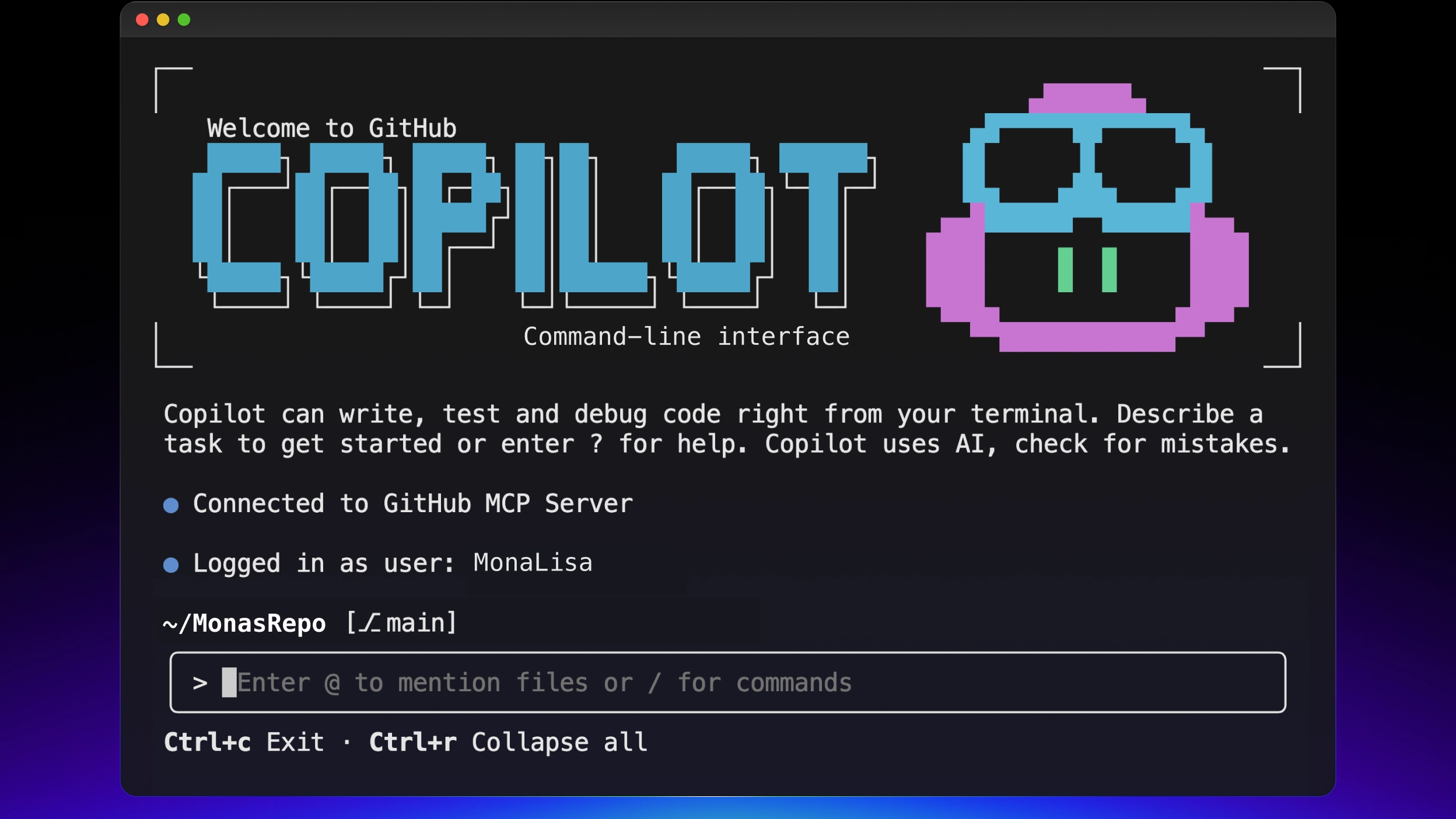
Vibe Coding Beyond Autocomplete: Why FutureX Beats Copilot CLI for Whole-Project Prompts
FutureX treats the entire repository as a promptable unit, letting you vibe a feature end-to-end while Copilot CLI still forces you through autocomplete-era diff babysitting.
vibe coding7 min read