The Claude Code Leak: CI/CD Lessons for AI Agents
An npm packaging error leaked Claude Code's internal prompts, exposing how fragile AI agent distribution pipelines are and how FutureX enforces build isolation to prevent it.
- CI/CD pipeline security
- AI agent source leak
- npm packaging error
- FutureX secure deployment
- AI coding tool vulnerabilities
- secret management
In early 2025, a routine npm publish turned into a public relations incident for Claude Code. What should have been a normal release included a hidden file containing Anthropic's internal system prompts and directives, exposing exactly how the AI coding tool was orchestrated. The root cause was not a sophisticated supply chain attack or a rogue employee: it was an npm packaging error. A missing ignore rule allowed a development-only directory to slip into the published artifact. For every engineering team distributing AI agents, the incident is a reminder that the code that writes code demands a higher security bar than ordinary packages.
The Packaging Error That Leaked Production Prompts#
The Claude Code leak was an AI agent source leak, but it was also a classic artifact hygiene failure. The npm package tarball was assembled without a strict allowlist of files. When the package was published, a directory holding internal prompts and framework guidance was bundled alongside the application code. Users who extracted the tarball could read the exact system instructions that governed the agent's behavior.
The deeper issue is that npm packaging, like most artifact pipelines, treats the repository as the source of truth and assumes that accidental extra files are harmless. For a regular library, a stray README or test fixture is noise. For an AI coding tool, the system prompts are proprietary secrets — they define safety rails, evaluation criteria, and undocumented behaviors. Leaking them hands attackers a manual for privilege escalation, prompt injection, and jailbreak attempts.

Source: ai-stack.ai
Why CI/CD Pipelines Fail AI Agents#
CI/CD pipeline security has traditionally focused on protecting source code and build outputs from external attackers. The Claude Code incident exposes two additional failure modes that matter specifically for AI agents: build-time isolation and secret awareness.
The Reusable Build Trap#
Most teams build on shared runners with persistent caches and broad access to the repository. This is convenient, but it normalizes a contaminated build environment. If a runner has write access to multiple namespaces or can execute test scripts from untrusted branches, a malicious pull request can modify the build process itself. For AI agent packages, the blast radius is larger because the artifact contains executable logic and behavioral prompts. A compromised runner can silently replace a prompt file, inject a backdoor into a tool-calling layer, or commit changes that will be signed automatically by the release pipeline.
The Claude Code leak did not come from a malicious runner; it came from a missing configuration. Yet the same lack of sandboxing makes it impossible to answer a simple question: what exactly is going into the tarball? Build isolation answers that question by limiting every build to an ephemeral, network-restricted environment and by capturing a complete provenance record.
Missing Secret Awareness Gates#
Conventional secret scanners look for API keys and tokens, not for structured instructions that happen to be sensitive. Internal system prompts are a gray zone: they are not syntactically secret, but semantically they are. An npm packaging error can slip past scanners because no gate is looking for files that resemble model instructions or internal guidance. The Claude Code leak happened because no step in the pipeline validated the artifact contents against the publisher's intent.
This is an AI coding tool vulnerability that standard security tooling does not address. Your secret management strategy must extend beyond credentials to include any internal context that would reduce the value of the AI system if disclosed.
Best Practices for AI Agent Distribution#
For any team shipping AI agents as packages, containers, or binaries, the CI/CD pipeline must be treated as the security boundary. Start with these practices:
- Maintain an explicit file allowlist. Use the
filesfield in npm and similar mechanisms to list exactly what goes into the artifact. A deny-list or.npmignoreis insufficient because it depends on the developer remembering to update it. - Scan artifacts, not just repositories. After building, unpack the artifact and scan it for sensitive patterns, unexpected files, and hard-coded prompts. Treat this as a release gate that fails the build when anything unexpected appears.
- Use least privilege for publishing. The bot or role that publishes packages should have access only to the package namespace, never to the entire organization. It should also require multi-step approval.
- Attest every artifact. Record hashes, build timestamps, and pipeline metadata in a signed provenance log so that a leak can be traced to a specific commit and build.
- Rehearse incident response. If an AI agent source leak happens, the response must include revoking any embedded credentials, analyzing how the prompt data might be abused, and patching the pipeline — not just republishing.
How FutureX Enforces Build Isolation#
FIM's FutureX agent is engineered around the assumption that a coding AI will eventually handle sensitive code and internal instructions. Rather than hoping developers remember to exclude secrets, FutureX bakes the guardrails into the build pipeline itself.
Sandboxed Compilation and Provenance#
FutureX runs inside an isolated build environment that is created per session and destroyed when the task finishes. The environment has no persistent network access, no cached credentials, and no write access to external repositories. Every action FutureX performs is logged, and the resulting diff, test results, and artifact contents are bound together in a signed manifest. If a package is later found to contain an unexpected file, the provenance record instantly reveals which session and which tool invocation introduced it.
This strict build isolation also means that a malicious prompt injection from a dependency cannot silently modify another project in the same workspace. The agent cannot cross boundaries it was not granted, so a single compromised package cannot trigger an AI agent source leak that affects other tenants.
Secret Management by Default#
FutureX does not store secrets in files that could be accidentally bundled into an npm package or a Git commit. Instead, secrets are injected at runtime from an external secret manager, exposed to the agent only through a restricted in-memory interface. The agent can reference credentials in configuration files or CLI commands, but those values never appear in build logs, shell history, or the artifact itself.
Because the secret manager operates at the platform layer, even a severe packaging error cannot expose raw API keys or internal system prompts. The prompts, evaluators, and policy data that guide FutureX are held outside the codebase and are referenced by ID, not embedded in source files. This removes the entire class of leaks that Claude Code suffered: there is no sensitive file in the repository to accidentally publish.
FutureX Secure Deployment in Practice#
With FutureX, teams configure release pipelines that use the same environment for local AI-assisted development and for production packaging. Since every FutureX workflow begins in a reproducible, sandboxed environment, deployment is not a separate hardening phase — it is the default state. The platform supports publishing to npm, PyPI, container registries, and internal artifact stores through verified connectors that check for the presence of a provenance attestation before completing the upload.
FIM offers multiple models — fx-pro for the most complex reasoning, fx-fast for routine coding tasks, and fx-mini and fx-eco for cost-sensitive Tier 1 workflows — but the security posture is identical across all of them. The model you choose affects latency and quality, not the integrity of the build pipeline.
Conclusion#
The Claude Code leak is not a story about a careless publisher. It is a warning that CI/CD pipeline security matters even more for AI agents than for traditional software. A packaging error becomes a catastrophic disclosure when the artifact contains invisible behavioral contracts. FutureX prevents that outcome by enforcing strict build isolation, externalized secret management, and signed provenance for every artifact it produces. For teams that treat AI coding tools as part of the production attack surface, those are not optional features — they are the minimum viable defense.
Related reading
Claude Code Leak 101: Lessons for AI Agent Security
The Claude Code source leak exposed dangerous assumptions in AI coding agents — and shows why enterprises must audit every tool they adopt.
AI coding agent security7 min read

AI Chat Data Leaks: How FutureX Stops Coding Agent Exposure
The Claude chat Google leak showed how default-public AI sharing exposes source code; FutureX stops it by encrypting and isolating every coding agent conversation.
ai-chat-data-leaks6 min read
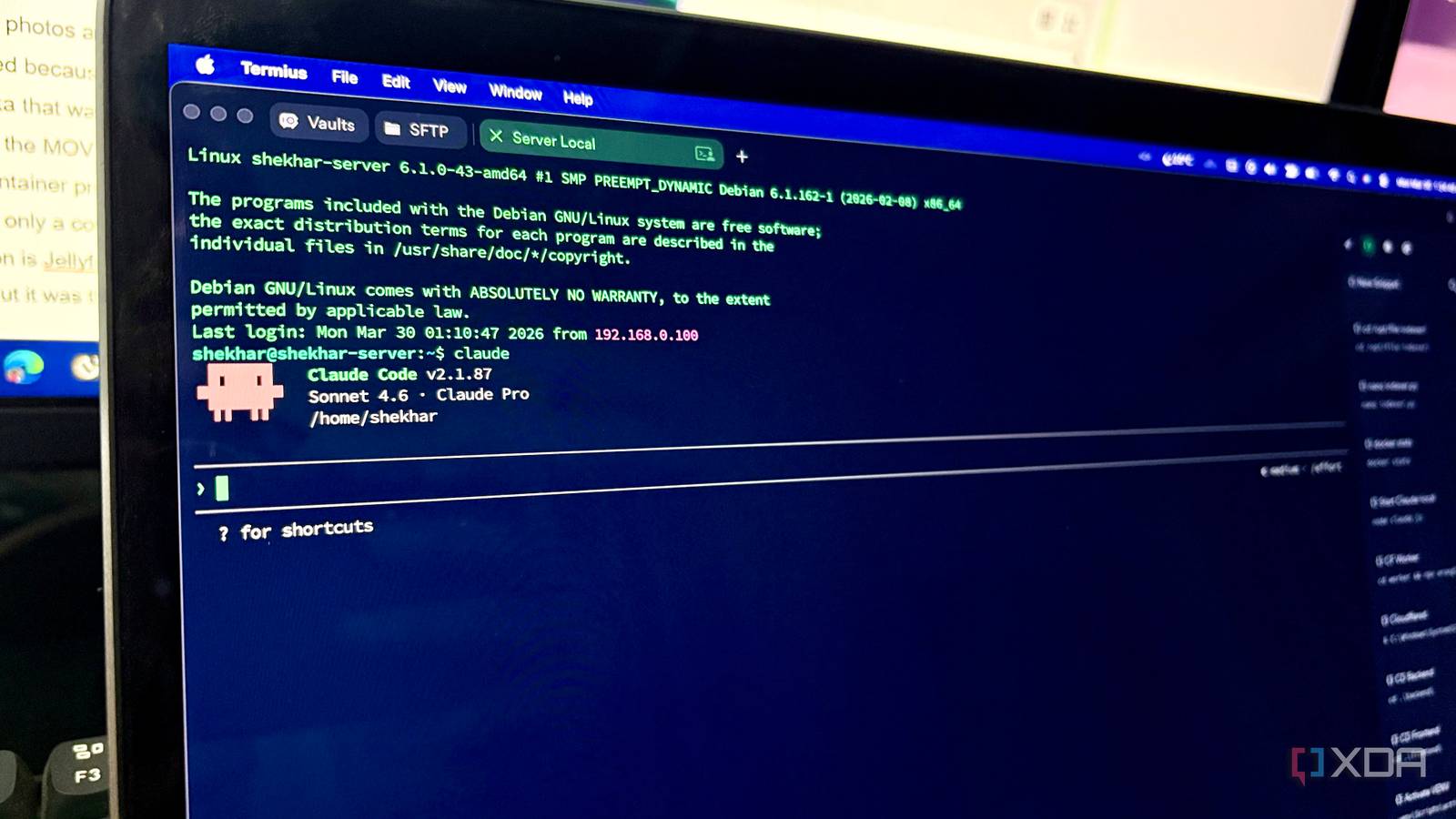
Claude Code Leak vs FutureX: The Agent Logger Problem
A leaked Claude Code build exposed a background daemon logging file paths, commands, and system activity; here is how FutureX keeps telemetry opt-in, anonymized, and context in memory.
Claude Code leak7 min read