Claude Code Leak vs FutureX: The Agent Logger Problem
A leaked Claude Code build exposed a background daemon logging file paths, commands, and system activity; here is how FutureX keeps telemetry opt-in, anonymized, and context in memory.
- Claude Code leak
- AI coding tool logging
- FutureX privacy
- agent telemetry security
- source code leak analysis
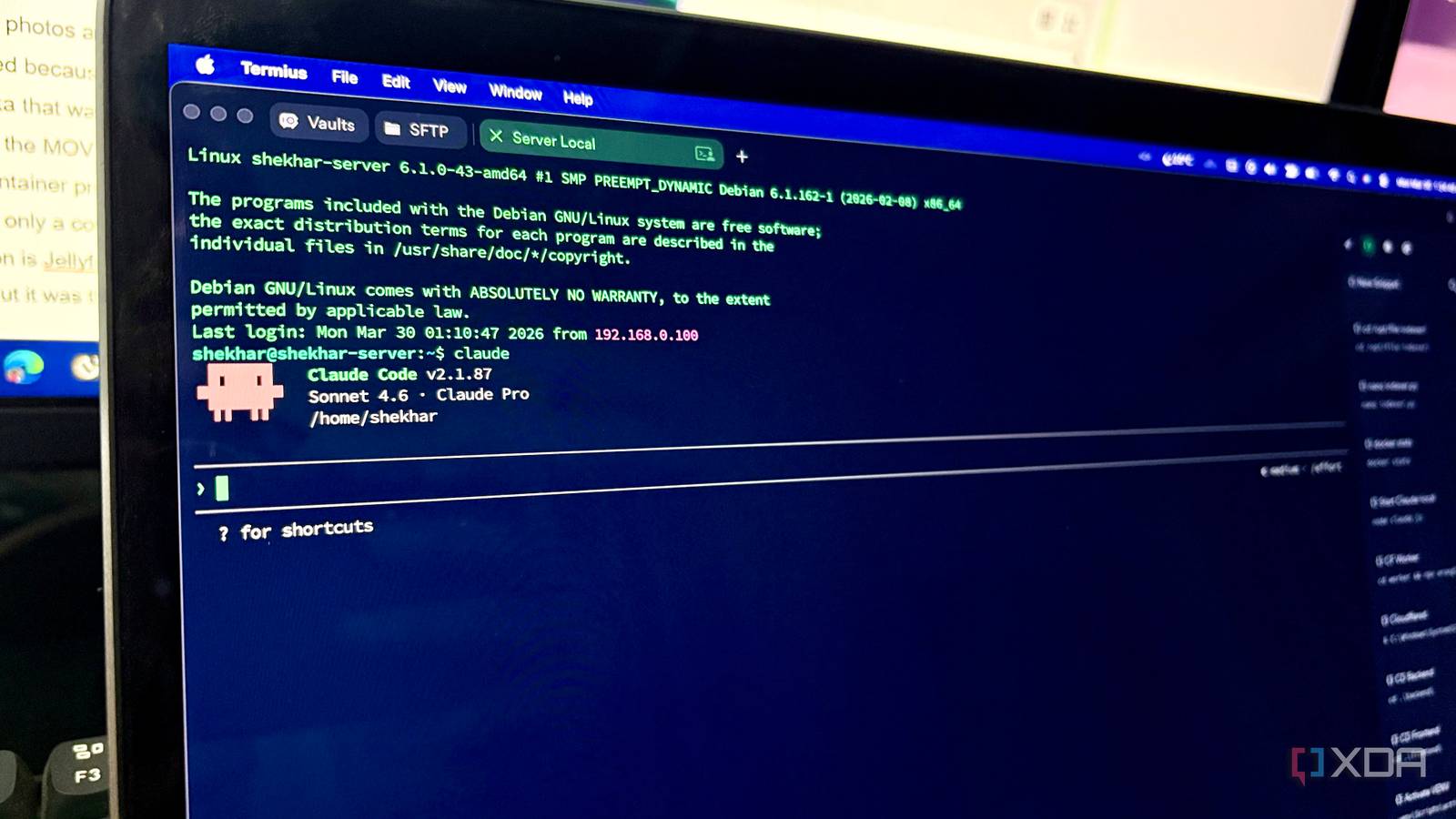
A recent source code leak from Claude Code has reignited a debate that every security engineer working with AI pair programmers should care about. The leaked code revealed a background daemon that collects file paths, shell commands, and broader system activity as the agent works. What was designed as a convenience feature became, in the eyes of many developers, a machine-level surveillance layer. This is not a marginal issue: an AI coding tool that logs everything on your workstation is effectively a persistent third party with read access to your repository, your environment, and your terminal history.
This post is a source-code-leak analysis of what the Claude Code logger actually does, why default background logging is dangerous, and how FIM's FutureX takes a fundamentally different approach. FutureX treats the local repository as the boundary of trust: telemetry is opt-in, anonymized by default, and contextual memory stays in memory rather than being written into an always-on daemon log.
What the Claude Code Leak Actually Showed#
The leaked code did not show a simple error reporter. It described a background process that watches the filesystem and terminal activity while the coding agent runs. The daemon records file paths whenever a file is opened, modified, or moved; commands when they are executed in the shell; and system-level signals that allow the agent to reconstruct what the developer was doing at any moment.
From a product standpoint, that data makes sense. But from a security standpoint, it crosses a line. A file path alone can be a secret: internal/payments/fix-card-refund.ts tells an observer what the codebase is about, what part of the stack is changing, and how the team names its modules. When thousands of paths are aggregated, they form a map of the engineering organization. Commands add another layer: kubectl get secrets, ssh prod-db, or gh repo clone disclose infrastructure, credentials in use, and deployment workflows.
Source: capolla.com
The Problem Is the Default, Not the Feature#
Many tools collect telemetry. The difference is consent and persistence. Claude Code's daemon runs by default, logs continuously, and makes the local session data available to a broader system. The leak itself did not prove that every keystroke was exfiltrated, but the architecture makes it possible. For a security-conscious team, what matters is not only what the code does today but what a future update, a compromised dependency, or a leak in the logging pipeline could cause.
This kind of AI coding tool logging is especially dangerous in regulated environments. If your CI/CD pipeline runs in an isolated network, the last thing you want is an agent daemon that accumulates a local log of every path and command, then syncs it to a vendor service. That is not telemetry; it is a data retention policy written by someone else.
Why Background Logging Is a Security Boundary Violation#
Developers are used to tools that observe the workspace: linters, language servers, git hooks. The key difference is that those tools are local, transparent, and bounded. A background daemon that sends logs out of the machine treats the developer's workstation as part of the vendor's system. That reframing has concrete consequences.
File Paths Are a High-Entropy Data Leak#
File paths reveal project structure, naming conventions, and business priorities. A log of every path touched by the agent over a week is effectively a directory listing of everything you worked on. If the repository is private, the path log can leak more than the code itself: it leaks the organization of the work, the frequency of changes in sensitive modules, and the existence of projects that may not even be public.
Commands Are Credential Neighbors#
Shell commands often contain arguments that are accidentally sensitive. Even when the command itself is innocuous, the surrounding environment matters. curl https://internal-metrics.example.com followed by export API_TOKEN=... in the same session makes the log a credential-adjacent artifact. Stripping secrets from logs is possible, but only if the logger knows what a secret looks like. The leaked Claude Code code showed no evidence of rigorous secret redaction at the filesystem level.
System Activity Is a Behavioral Fingerprint#
System activity goes beyond the repository. Window focus events, process starts, and clipboard usage can be used to reconstruct a developer's habits. That fingerprint can be used to identify an individual across sessions even after identifiers are removed. Agent telemetry security therefore has to consider not just content, but metadata: the timing and sequence of events is itself personal data.
FutureX Privacy: Telemetry That Respects the Developer Machine#
FIM built FutureX around a different assumption: the developer machine is the user's private environment. FutureX does not run a hidden daemon, and it does not log every path and command by default. Instead, the agent uses an opt-in telemetry model where developers explicitly choose what to share.
Source: tech-insider.org
Opt-In Telemetry with Explicit Consent#
When FutureX is installed in a repository, it asks what kind of diagnostics the developer is willing to share. The default is minimal and actionable: crash reports, performance anomalies, and anonymized usage counts. Nothing is sent until the user enables it, and the configuration lives in a clearly documented place in the project workspace. This contrasts sharply with a background daemon that starts logging the moment the agent is launched.
Anonymized by Design, Not by Redaction#
FutureX's anonymization is applied before any telemetry leaves the process. Event data is stripped of paths, command arguments, and environment variables. The telemetry payload contains only aggregate signals: which operation finished, how long it took, and whether it failed. There is no session replay, no path trace, and no way to reconstruct the developer's behavior from the event stream.
In-Memory Context Means the Session Does Not Persist Locally#
One of the most important architectural decisions in FutureX is that its working context lives in memory. The agent remembers the conversation, the files it has analyzed, and the plan it is executing within the current session. It does not write a running log of every file path and shell command to disk for later upload. If you close the session, the context ends. This makes source code leak analysis much less dangerous: even if a log file were to leak from the FutureX client, it would not contain a machine-readable transcript of your local activity.
The in-memory design also means there is no stealthy data accumulation over weeks or months. There is no long-term behavioral profile being built on the developer machine. FIM takes the position that a coding agent should be a stateless worker that only persists what you explicitly ask it to save.
Source Code Leak Analysis: How to Audit an AI Coding Tool#
After the Claude Code leak, every engineering team should add a small checklist before approving an AI coding tool. First, look for background processes that start during installation or first run. A daemon that remains active outside the editor session is a red flag. Second, search the source or documentation for logging statements that include paths, command arguments, or environment variables. Third, check what happens when the tool syncs context: is it a one-time upload, or a continuous stream?
The Claude Code leak data collection issue is a reminder that AI coding tool logging is not just about the tool's code. It is about the tool's supply chain. A future version, a compromised update server, or a dependency with a backdoor could turn an already aggressive logger into a data exfiltration channel. FutureX minimizes that risk by keeping the agent's memory in-process and by making telemetry opt-in. Fewer logs, fewer file paths, and less command history means a smaller blast radius if anything goes wrong.
What This Means for Your CI/CD Pipeline and Team Policy#
Security teams should treat AI coding agents as new endpoints in the software supply chain. A background daemon that logs file paths and commands is effectively a new service running on every developer machine. That service introduces a data flow that must be reviewed under the same rules as any other vendor integration.
FutureX privacy is not a separate mode; it is the default behavior. When the FIM platform runs FutureX in CI/CD, the agent has no hidden logger, no background sync, and no persistent local transcript. The context is built from the repository and the explicit conversation, and it disappears when the job finishes. Teams can run the same agent on sensitive codebases without granting a vendor an ambient read stream into their work.
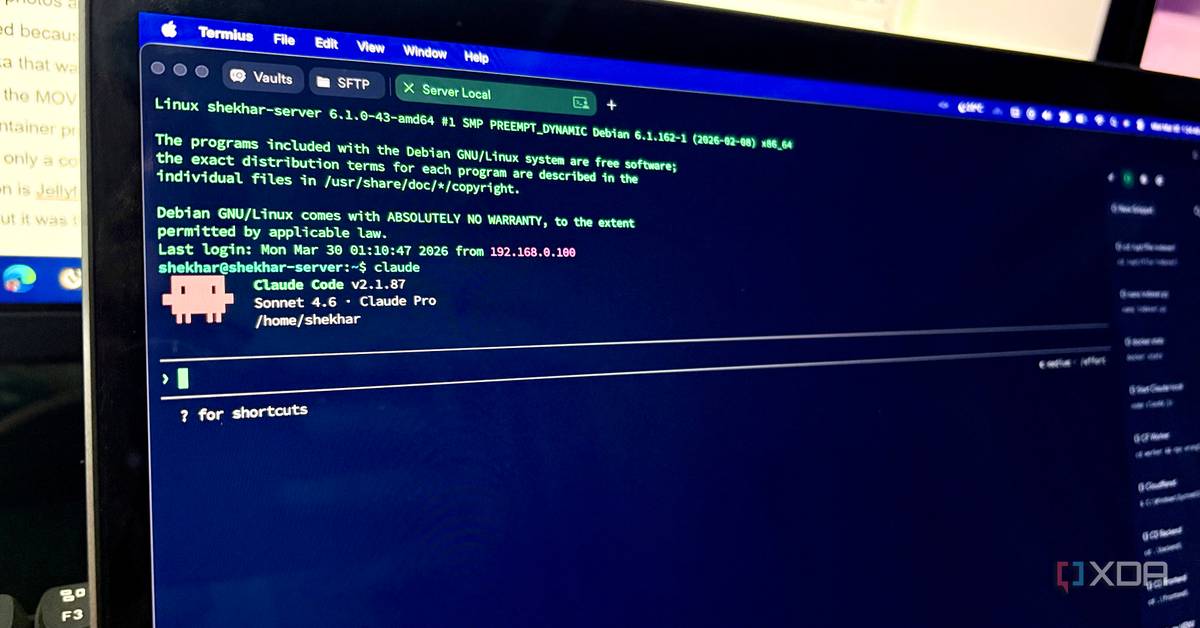
Source: xda-developers.com
Conclusion: Privacy Is a Design Decision#
The Claude Code leak turned a product flaw into a public lesson: agent telemetry security must be decided in the architecture, not added later as a patch. FutureX was built on the FIM platform with the opposite default. No hidden daemon, no continuous path logging, and no command recording unless the developer explicitly enables telemetry. When telemetry is enabled, it is anonymized at the source and stripped of file paths and command arguments. Context is held in memory for the session and then released.
For developers, the question is not whether an AI coding tool should collect diagnostics. Some telemetry is reasonable, and crash reporting helps everyone. The question is who owns the session data and how far it reaches. FutureX's answer is simple: the session belongs to the developer. FIM's agent is a guest on the machine, not a resident observer. That boundary is the difference between a tool that helps you write code and a tool that quietly writes a report about how you work.
Related reading
Claude Code Leak 101: Lessons for AI Agent Security
The Claude Code source leak exposed dangerous assumptions in AI coding agents — and shows why enterprises must audit every tool they adopt.
AI coding agent security7 min read
The Claude Code Leak: CI/CD Lessons for AI Agents
An npm packaging error leaked Claude Code's internal prompts, exposing how fragile AI agent distribution pipelines are and how FutureX enforces build isolation to prevent it.
CI/CD pipeline security6 min read

AI Chat Data Leaks: How FutureX Stops Coding Agent Exposure
The Claude chat Google leak showed how default-public AI sharing exposes source code; FutureX stops it by encrypting and isolating every coding agent conversation.
ai-chat-data-leaks6 min read